




01. Edit your form online
Type text, add images, blackout confidential details, add comments, highlights and more.

Type text, add images, blackout confidential details, add comments, highlights and more.

Draw your signature, type it, upload its image, or use your mobile device as a signature pad.

Send it via email, link, or fax. You can also download it, export it or print it out.
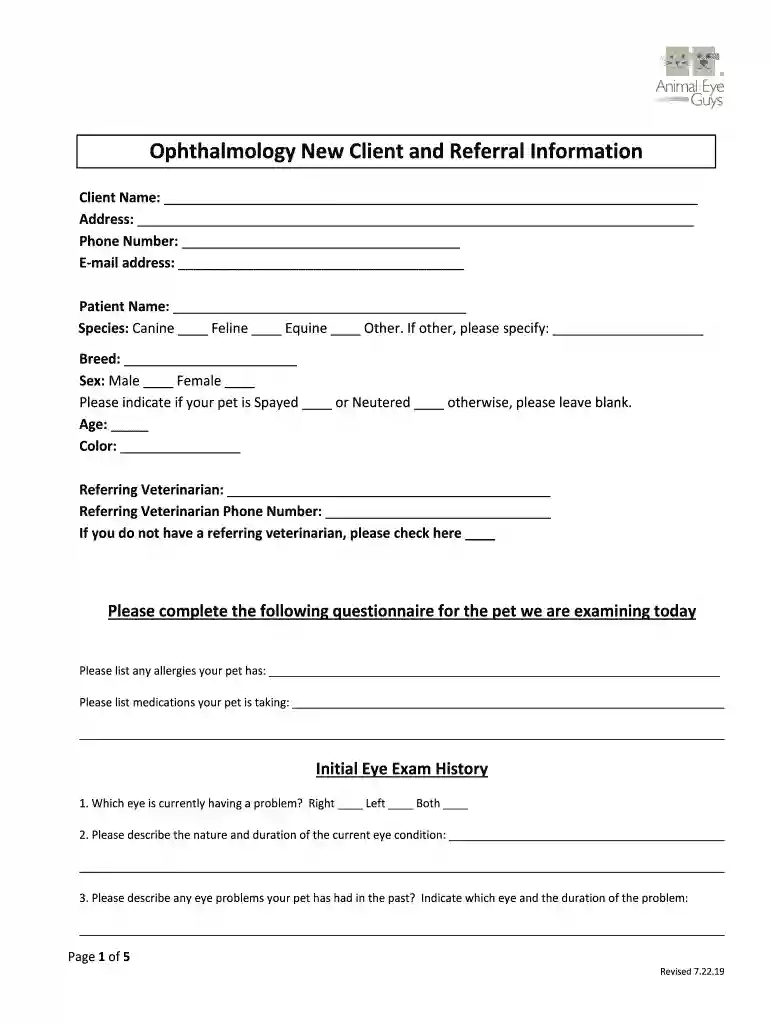
"SAMPLE FORMSCOMPANION ANIMALS" refers to a specific type of document intended to collect and manage information about companion animals, such as dogs and cats, often utilized in veterinary practices or animal care services. This form captures crucial details about the animal and its owner, including medical history, identification information, and any specific care requirements. Often required for first-time veterinary visits or when enrolling an animal in care programs, this form ensures that the necessary information is available for the animal's well-being.
Owner Information: Typically includes the owner's full name, contact details, and address. This section ensures clear communication between the service provider and the animal owner.
Animal Details: Contains fields for tracking the animal's name, breed, age, sex, and any identification markings. This information helps in correctly identifying the animal during visits or in cases of lost pets.
Medical History: Records past veterinary visits, treatments, vaccinations, and any existing health conditions. This information is critical for ongoing care and monitoring of the animal's health.
Current Health Issues: Documents any present conditions the animal is experiencing, such as allergies, infections, or behavioral issues. It guides the veterinary team in prioritizing medical attention.
Consent for Treatment: A legally binding section where the owner authorizes specific treatments and acknowledges the associated costs. It may also include consent for the use of the animal's data in educational or marketing materials.
Filling Out the Form: Begin by completing the owner and animal details accurately. Ensure all contact information is current for effective communication.
Medical and Health Information: Provide detailed medical history, including previous vaccinations and treatments. Accurate records ensure effective treatment plans.
Provide Consent: Carefully review the consent section to understand treatment authorizations and agree on potential costs. Sign and date the section to formalize your consent.
Submit the Form: Return the completed form to the veterinary office or relevant service provider in person, via email, or through a designated online platform.
Gather Information: Collect all necessary documents such as past medical records, identification papers, and proof of address. Ensure this information is up-to-date.
Complete Sections: Carefully fill out each section of the form. Pay attention to mandatory fields indicated by asterisks or boldface.
Review: Double-check all entries for accuracy, especially medical information, as it is vital for proper animal care.
Submission: Once the form is complete, submit it according to the instructions provided, which may vary depending on the veterinary practice or organization.
Veterinary Clinics: Use the form to maintain comprehensive records of all animals under their care, facilitating efficient treatment and follow-up.
Animal Shelters: Implement the form to assess new arrivals and make informed decisions about their health management.
Pet Owners: Required to complete this form during the initial visit to a new veterinary service or when updating information about their companion animals.


Confidentiality: Ensures that all personal and medical data collected is used in compliance with legal standards for privacy and data protection.
Consent and Liability: Protects both the service provider and the pet owner by clearly outlining consent for treatments and understanding of potential risks and expenses involved.
Identification for Owner: Such as a driver's license or state-issued ID to verify identity.
Animal's Medical History: Including vaccination records and past veterinary reports to provide a complete picture of the animal's health.
Proof of Address: Typically a utility bill or lease agreement to establish the owner's address.
Digital Forms: Offer convenience and time savings by allowing pet owners to fill out and submit information online, sometimes integrating with other digital health records.
Paper Forms: Still widely used in various settings and offer a tangible record that can be easily archived by the service provider.
We've got more versions of the SAMPLE FORMSCOMPANION ANIMALS form. Select the right SAMPLE FORMSCOMPANION ANIMALS version from the list and start editing it straight away!
At DocHub, your data security is our priority. We follow HIPAA, SOC2, GDPR, and other standards, so you can work on your documents with confidence.
This page contains guidance documents, template forms, and training resources to support preparedness and response activities for companion animals.
Companion Animal Sample Submission Form PLEASE COMPLETE ALL FIELDS AND PRINT LEGIBLY Referring Veterinarian* Zoo/Exotic/Wildlife:
May 10, 2016 Burger and her team collected samples from nearly 1,100 extant dromedaries and compared these with archaeological samples from wild and early-Read more


