




01. Edit your form online
Type text, add images, blackout confidential details, add comments, highlights and more.

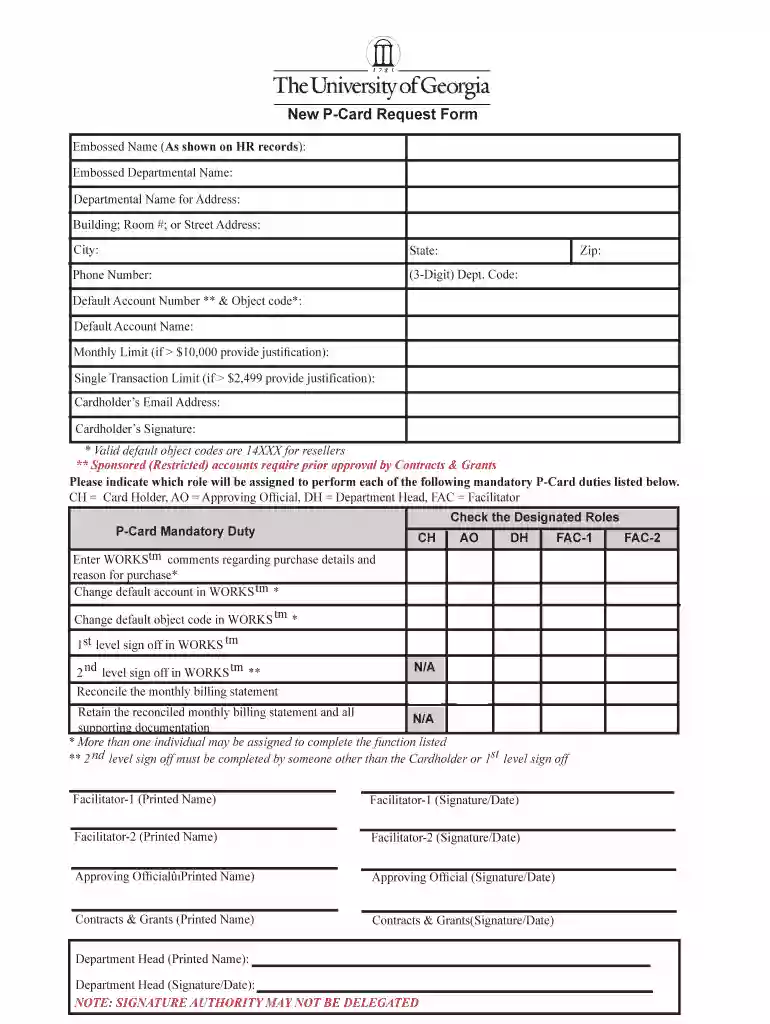
Type text, add images, blackout confidential details, add comments, highlights and more.

Draw your signature, type it, upload its image, or use your mobile device as a signature pad.

Send it via email, link, or fax. You can also download it, export it or print it out.
The Procurement Card (P-Card) Manual for the University of Georgia serves as a comprehensive guide outlining the policies and procedures related to the management and use of procurement cards at the university. It aims to ensure that all transactions facilitated through the procurement card system adhere to university and state financial regulations. The manual defines key terms related to procurement card usage, provides clear instructions for compliance, and establishes the roles and responsibilities of cardholders, approving officials, and departmental heads.
The manual is designed to be a practical resource for cardholders and administrative staff involved in the procurement process. Users should refer to it when they need information about eligible purchases, spending limits, and compliance with state policies. The manual provides step-by-step instructions for reporting lost or stolen cards, ensuring secure and accountable financial transactions, and detailing the necessary processes for card renewal and cancellation.
Eligibility to receive a P-Card is restricted to faculty and staff members who require frequent access to purchasing capabilities for university-related expenses. The manual outlines the application process, which typically involves:
The application process also involves a review of the intended purchasing purpose and the applicant's responsibilities.
The manual details the respective roles and responsibilities of parties involved in the procurement process. This includes:
Understanding what constitutes allowable versus unallowable purchases is critical for cardholders. The manual lists specific categories of goods and services that are eligible for purchase, such as office supplies and travel expenses, while also identifying restricted categories, such as personal items or large capital expenditures.
Compliance with the Procurement Card Manual is mandatory to ensure integrity and accountability within the university's financial transactions. The manual describes procedures for regular audits, the necessary documentation to retain for each purchase, and the required steps for reporting discrepancies or potential misuse of the procurement card.
To obtain and maintain a procurement card, university employees must complete mandatory training sessions designed to educate them about the proper use and management of the cards. Training sessions often cover the submission of monthly reconciliations, understanding spending limits, and the procedures for reporting lost or stolen cards.
The manual outlines the penalties for failing to comply with set policies, ensuring that all users understand the importance of adhering to guidelines. Consequences range from warnings and required remedial training to the revocation of card privileges or disciplinary action, depending on the severity of the violation.
The University of Georgia must adhere to specific state laws governing procurement card usage. The manual tailor-fits these guidelines to align with Georgia's state regulations, including spending limits and reporting requirements, ensuring compliance within the state's legal framework.
We've got more versions of the PROCUREMENT CARD (P-CARD) MANUAL - University of Georgia form. Select the right PROCUREMENT CARD (P-CARD) MANUAL - University of Georgia version from the list and start editing it straight away!
At DocHub, your data security is our priority. We follow HIPAA, SOC2, GDPR, and other standards, so you can work on your documents with confidence.
A P-Card can only be assigned to a permanent (regular) employee of the University and can be used to purchase goods and services valued at $2,499 or less.
May 1, 2023 The State of Georgia Purchasing Card Program (the P-Card Program) streamlines payments for goods and services for State business use by
(Required for credit cards) Credit card or purchase card number. For P Purchase Card. C Corporate Card. B Business Card. U Unknown (default). N None.


