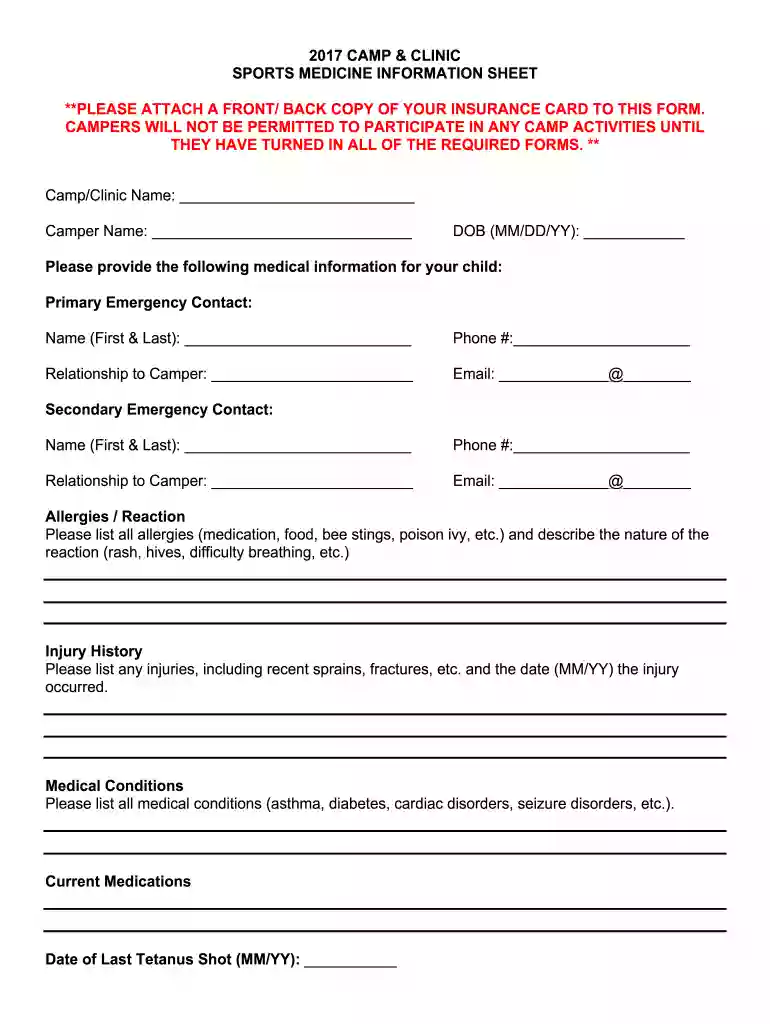
2016 Medical History Form doc-2026

Get Form
2016 Medical History Form doc Preview on Page 1

Here's how it works

01. Edit your form online
Type text, add images, blackout confidential details, add comments, highlights and more.

02. Sign it in a few clicks
Draw your signature, type it, upload its image, or use your mobile device as a signature pad.

03. Share your form with others
Send it via email, link, or fax. You can also download it, export it or print it out.

Definition and Meaning of the 2016 Medical History Form doc

The 2016 Medical History Form doc serves as a comprehensive record designed to capture a patient's past and present medical conditions. It plays a critical role in facilitating appropriate medical care by providing healthcare providers with crucial information about a patient's health background. This document typically includes sections for listing allergies, previous medical procedures, family medical history, current medications, and known medical conditions. The form's primary goal is to ensure that medical professionals have immediate access to a complete and accurate health overview, which is particularly essential in emergency situations or when introducing a new treatment plan.

How to Use the 2016 Medical History Form doc

To effectively utilize the 2016 Medical History Form doc, it should be filled out meticulously with attention to detail. Users should begin by gathering all necessary medical information and documents, such as past medical records, medication lists, and contact information for healthcare providers. The form typically involves several sections:

  • Personal Information: Fill out with the patient's full name, date of birth, and contact details.
  • Emergency Contacts: List primary contacts who can be reached in case of a medical emergency.
  • Medical History: Include past diagnoses, treatments, surgeries, and hospitalizations.
  • Current Medications: Provide a comprehensive list of all medications, including dosages and frequency.
  • Allergies: Detail any known allergies to medications, foods, or environmental factors.

Once completed, the form should be reviewed for accuracy and completeness. Regular updates are crucial, especially when there are changes in health status, medications, or emergency contact information.

Steps to Complete the 2016 Medical History Form doc

Completing the 2016 Medical History Form doc involves several detailed steps to ensure thoroughness:

  1. Gather Necessary Information: Collect all relevant personal and medical data, ensuring reliability and completeness.
  2. Fill Out Personal Details: Enter basic personal and contact information in the designated fields.
  3. Document Medical History: Record comprehensive past and current medical details, including surgeries and chronic conditions.
  4. List Medications: Note all current medications with specifics on dosage and administration schedules.
  5. Include Allergy Information: Clearly state any allergies to prevent adverse reactions.
  6. Verify Accuracy: Double-check all entries for accuracy and completeness.
  7. Consult with a Healthcare Provider: If questions arise, seek clarification from a doctor or healthcare professional to avoid errors.

Who Typically Uses the 2016 Medical History Form doc

The 2016 Medical History Form is primarily utilized by patients, healthcare providers, and medical facilities. Patients use it to provide comprehensive health information to new healthcare providers. It is also common for healthcare providers to request it upon a patient's first appointment to establish a baseline for care. Medical facilities such as hospitals, clinics, and specialized care units often incorporate these forms into their patient intake procedures to enhance continuity of care and facilitate communication among medical professionals.


decoration image ratings of Dochub

Key Elements of the 2016 Medical History Form doc

The 2016 Medical History Form contains several critical components that ensure the effective documentation of a patient's health history:

  • Identification Information: Includes personal details, which may also cover insurance information.
  • Emergency Contact Details: Helps in quickly reaching family members or designated contacts in emergencies.
  • Health History: Provides a record of past medical events, surgeries, and chronic illnesses.
  • Current Health Status: Focuses on present conditions and the management plans in place.
  • Lifestyle Information: Often covers dietary habits, exercise regimens, and social history, including smoking and alcohol use.

These elements work together to present a holistic view of a patient's health, vital for informed medical decision-making.

Legal Use of the 2016 Medical History Form doc

The 2016 Medical History Form doc is subject to legal considerations, as it involves the handling of sensitive personal health information. Regulations, such as the Health Insurance Portability and Accountability Act (HIPAA) in the United States, govern how this information can be collected, stored, and shared. Patients are typically required to consent to the use of this information, ensuring its application strictly for medical purposes. Healthcare providers must ensure the confidentiality of the form and use encrypted systems for digital storage and transmission to protect patient privacy.

Important Terms Related to the 2016 Medical History Form doc

A thorough understanding of certain terms enhances the effective use of the 2016 Medical History Form:

  • Chronic Conditions: Long-term health issues such as diabetes or hypertension that require ongoing management.
  • Acute Illnesses: Short-term conditions like infections or injuries that have a defined course of treatment.
  • Anamnesis: The process of medical history taking to gather essential health information.
  • Comorbidities: The presence of one or more additional conditions co-occurring with a primary condition.
  • Informed Consent: An ethical and legal process to ensure patients are aware of procedure implications.

Knowledge of these terms supports accurate form completion and fosters clear communication between patients and healthcare providers.

State-Specific Rules for the 2016 Medical History Form doc

While the 2016 Medical History Form doc serves a universal function, state-specific regulations can influence certain aspects:

  • Data Privacy Laws: Some states may have stricter data protection laws than federal requirements, affecting how information is handled.
  • Mandatory Reporting: Certain states require specific health conditions to be reported to state health departments, impacting how information is collected and shared.
  • Insurance Requirements: Variations in state insurance laws can dictate the extent of detail required in documenting patient history for coverage purposes.

Awareness of these state-specific rules is critical for healthcare providers and patients to ensure compliance and make informed medical decisions.

See more 2016 Medical History Form doc versions

We've got more versions of the 2016 Medical History Form doc form. Select the right 2016 Medical History Form doc version from the list and start editing it straight away!
Versions Form popularity Fillable & printable
2021 4.8 Satisfied (171 Votes)
2020 4.1 Satisfied (51 Votes)
2017 4.3 Satisfied (129 Votes)
be ready to get more

Complete this form in 5 minutes or less

Get form

Got questions?

We have answers to the most popular questions from our customers. If you can't find an answer to your question, please contact us.
Contact us
A comprehensive history intake includes the patients medical history, past surgical history, family medical history, social history, allergies, and medications. [2] Within graduate education, the order of obtaining medical history generally follows the format below.
A medical record is a history of someones health. Most hospitals and doctors offices use electronic health records (EHRs, also called electronic medical records or EMRs). An EHR is a computerized collection of a patients health records.
A comprehensive history intake includes the patients medical history, past surgical history, family medical history, social history, allergies, and medications.
Medical History Form. Record all past and/or concomitant medical conditions or surgeries. Record only one condition or surgery per line using the codes provided in the table. When recording a condition and surgery related to that condition use one line for the condition and one line for the surgery.
A personal medical history may include information about allergies, illnesses, surgeries, immunizations, and results of physical exams and tests. It may also include information about medicines taken and health habits, such as diet and exercise.

Security and compliance

At DocHub, your data security is our priority. We follow HIPAA, SOC2, GDPR, and other standards, so you can work on your documents with confidence.

Learn more
ccpa2
pci-dss
gdpr-compliance
hipaa
soc-compliance
be ready to get more

Complete this form in 5 minutes or less

Get form

People also ask

How you make your request will depend on your providers processes. You may be able to request your record through your providers patient portal. You may have to fill out a form called a health or medical record release form, or request for accesssend an email, or mail or fax a letter to your provider.
It should include some or all of the following elements: Location: What is the location of the pain? Quality: Include a description of the quality of the symptom (i.e. sharp pain) Severity: Degree of pain for example can be described on a scale of 1 - 10. Duration: How long have you had the pain.

Related links