
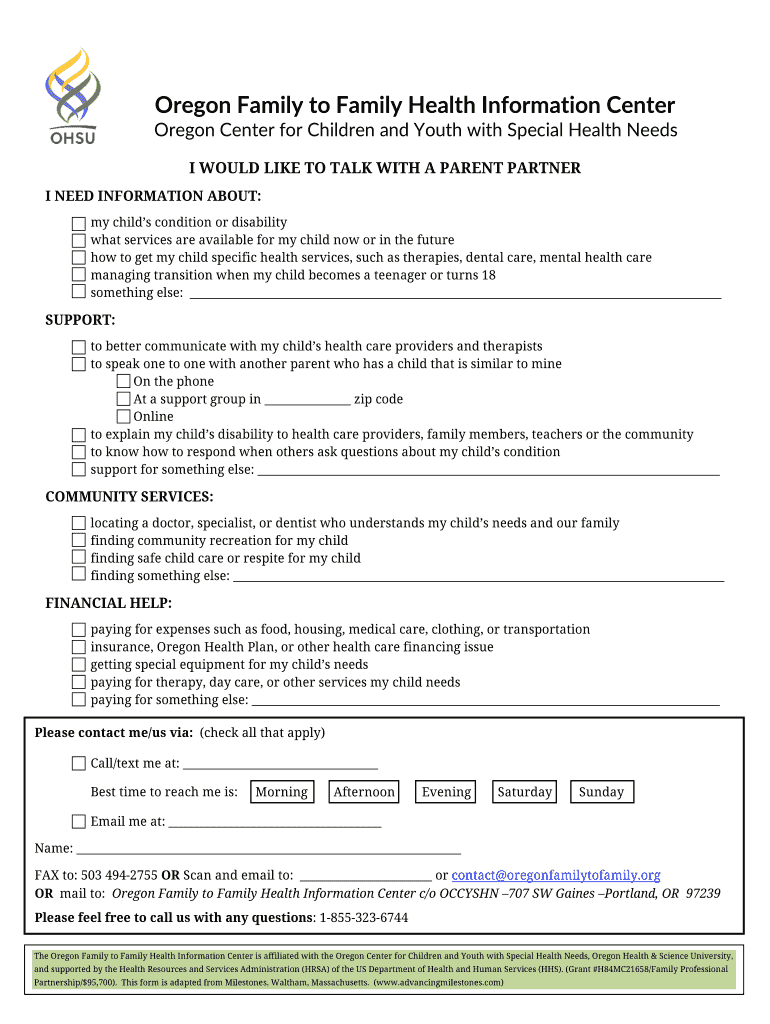







Definition and Purpose of Workshops, Seminars, and Parenting ClassesOR Family to
Workshops, seminars, and parenting classes are educational opportunities aimed at enhancing the skills and knowledge of individuals or groups. These events are typically structured to provide interactive learning experiences. Workshops are usually hands-on sessions focused on developing specific skills. Seminars tend to be more lecture-driven, offering insights and information from experts in the field. Parenting classes, on the other hand, are designed to equip parents with tools and strategies for effective child-rearing. The form "Workshops, Seminars, and Parenting ClassesOR Family to" could be related to registering for or organizing such events, possibly associated with family or educational services.
How to Use the Workshops, Seminars, and Parenting ClassesOR Family to Form
To effectively utilize the form, first identify the purpose—whether it is for registration, coordination, or feedback related to workshops and seminars. Typically, users must provide personal information and specify their areas of interest or expertise. Ensure all sections are completed accurately to facilitate efficient processing. If the form is designed for parents, it might require additional information regarding children's needs or family circumstances. This detail helps tailor parenting classes to participants' specific situations, enabling more customized and effective sessions.
Common Sections to Fill Out
- Personal Details: Includes name, contact information, and possibly demographic data.
- Event Preferences: Choices regarding topics, formats, and timing.
- Experience Level: Indicates prior experience or familiarity with certain topics.
- Additional Needs: Any specific accommodations or support required during the event.
Steps to Complete the Workshops, Seminars, and Parenting ClassesOR Family to Form
- Gather Required Information: Before starting, ensure you have all the necessary personal and educational details.
- Review Form Instructions: Read any guidelines provided within the form to ensure you understand each section's requirements.
- Fill Out Personal Information: Enter your name, contact details, and any other requested personal data.
- Select Event Preferences: Choose workshops or seminars that align with your interests or needs.
- Detail Your Experience Level: This helps facilitators tailor content to your knowledge base.
- An Examination of Additional Needs: Note any accommodations or special requirements for participation.
Why Engage in Workshops, Seminars, and Parenting Classes
Participating in workshops and seminars provides numerous benefits, from personal development to professional advancement. They offer opportunities to learn new skills, stay updated with industry trends, and engage with peers and experts. Parenting classes are particularly beneficial for new or expecting parents, offering evidence-based strategies and support networks. These educational experiences foster growth, innovation, and community building, ultimately leading to enriched lives and more effective parenting.
Benefits of Attendance
- Skill Enhancement: Acquire new abilities or refine existing ones.
- Networking Opportunities: Interact with professionals and peers for mutual growth.
- Knowledge Expansion: Gain insights from experts and thought leaders.
- Emotional Support: Parenting classes offer emotional resources and stress management techniques.
Key Elements of the Form
Forms like these are designed to capture essential details to ensure effective coordination and delivery of educational programs. Common elements include participant details, session preferences, and background information. Precision in completing these forms ensures optimal alignment between participant needs and program offerings.
Essential Components
- Participant Identification: Clearly identifies the attendee or organizer.
- Session Selections: Ensures participants are matched with appropriate events.
- Special Accommodations: Identifies necessary arrangements for accessibility or comfort.
- Feedback Mechanisms: Typically included for post-event evaluations.
Eligibility Criteria for Participation
Eligibility for workshops, seminars, and parenting classes often depends on various factors such as age, professional background, or specific interests. Some sessions might be open to the general public, while others are designed for targeted groups like parents with children having special health needs.


Typical Eligibility Requirements
- Age Restrictions: Certain programs might require participants to be of a specific age group.
- Prior Experience: Some advanced seminars may require previous knowledge or experience.
- Category-Specific: Parenting classes often have criteria based on the child's age or condition-specific needs.
Examples of Using Workshops, Seminars, and Parenting Classes
Consider a parent of a child with special needs in Oregon. They might attend workshops or seminars organized by entities like the Oregon Family to Family Health Information Center. These sessions could cover a range of topics from healthcare management to educational strategies, providing valuable interactions and learning opportunities.
Practical Scenarios
- Corporate Training: Employees attend workshops to learn new software tools.
- Healthcare Seminars: Professionals gather to discuss the latest medical advancements.
- Parenting Classes: New parents learn effective child-rearing practices to ensure healthy child development.
Legally Compliant Use and Data Protection
When handling forms related to workshops and seminars, organizations must adhere to data protection laws. The information collected should be stored securely, and participants' privacy respected in compliance with U.S. legal standards.
Considerations for Compliance
- Data Security Protocols: Use encryption and secure storage for all collected information.
- Consent Forms: Collect explicit consent for data usage and event participation.
- Privacy Notices: Clearly outline how participants' data will be used and stored.




