Frequently Asked QuestionsMaryland Courts 2026

Get Form
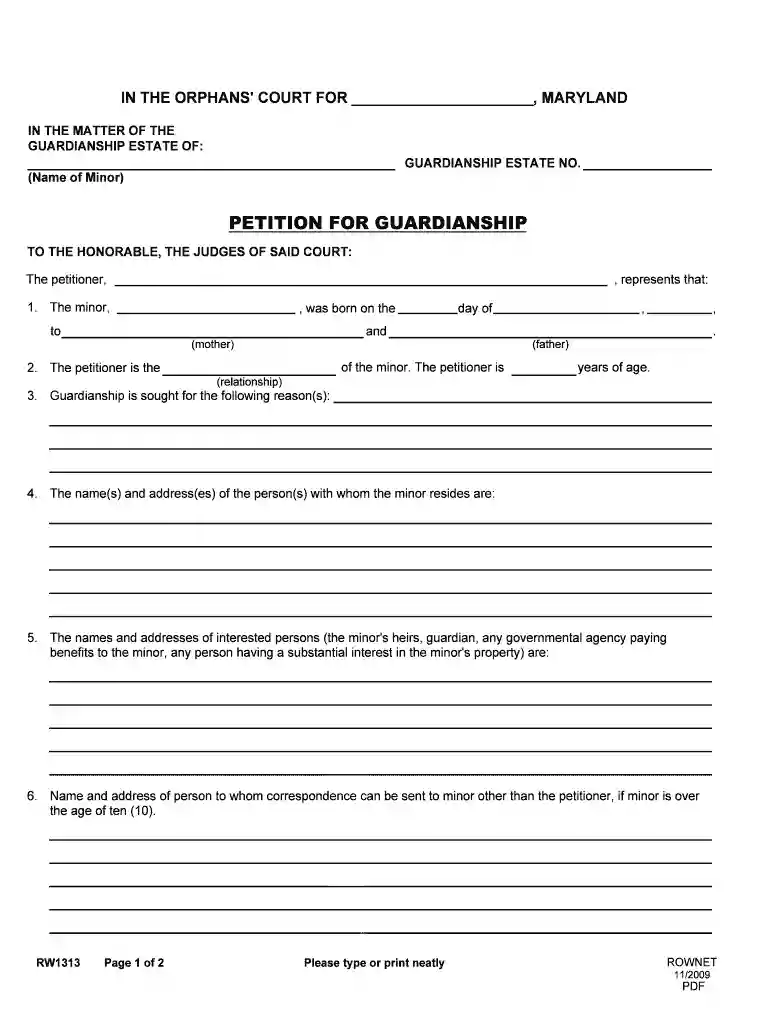
Frequently Asked QuestionsMaryland Courts Preview on Page 1

Here's how it works

01. Edit your form online
Type text, add images, blackout confidential details, add comments, highlights and more.

02. Sign it in a few clicks
Draw your signature, type it, upload its image, or use your mobile device as a signature pad.

03. Share your form with others
Send it via email, link, or fax. You can also download it, export it or print it out.

Understanding the Frequently Asked QuestionsMaryland Courts

The Frequently Asked QuestionsMaryland Courts document serves as an essential resource for individuals seeking clarity on matters related to Maryland's judicial system. It is tailored to answer common inquiries regarding court procedures, available resources, legal rights, and obligations within the state's jurisdiction. By providing this centralized information, the document assists users in navigating the complexities of the legal process, ensuring they can make informed decisions when involved in court-related matters.

Key Elements of the FAQ Document

The Frequently Asked QuestionsMaryland Courts encompasses a variety of critical components designed to assist users effectively:

  • General Information: Offers a broad overview of the Maryland court system, including structure, function, and types of cases handled.
  • Procedural Guidance: Details on filing documents, appearing in court, and understanding legal terminology.
  • Resource Access: Information about legal aid, support services, and how to find an attorney.
  • Rights and Responsibilities: Clarity on the rights of plaintiffs, defendants, and other court participants.

Each section is crafted to deliver actionable insights into the Maryland court process, ensuring users can confidently interact with the system.

How to Obtain the FAQ Document

Acquiring the Frequently Asked QuestionsMaryland Courts document is straightforward, providing accessibility to all interested parties:

  1. Online Access: The document is available on the Maryland Courts website, allowing users to download or view it directly on their devices.
  2. In-person Requests: Individuals may visit their local courthouse to receive a physical copy from the court clerk.
  3. Legal Aid Centers: These centers often have print versions available, especially for those without internet access.

The distribution through multiple channels ensures that the FAQs are accessible to everyone, regardless of their location or available resources.

Steps to Utilize the FAQ Document Effectively

To maximize the utility of the Frequently Asked QuestionsMaryland Courts document, follow these steps:

  1. Identify Your Query: Begin by determining the specific aspect of the court process you need assistance with.
  2. Navigation: Use the document's table of contents or search feature (if using a digital version) to quickly locate relevant sections.
  3. Read Thoroughly: Review the selected section carefully to understand the guidance provided.
  4. Seek Clarification: If necessary, note any further questions and consider contacting court staff or a legal aid advisor for more detailed assistance.

This structured approach ensures that users can readily find and comprehend the information they need.

Legal Applications and Importance

The Frequently Asked QuestionsMaryland Courts document plays a vital legal role by:

  • Educating the Public: Demystifying court processes and requirements, thereby empowering individuals to engage with the legal system proficiently.
  • Facilitating Access to Justice: Providing clear guidance that helps reduce misunderstandings and errors when interacting with the courts.
  • Enhancing Transparency: Offering insights into the judiciary's workings, fostering trust and confidence in the legal system.

By serving these functions, the document supports Maryland's broader legal framework objectives.

State-Specific Rules in Maryland

Maryland's court processes and rules, as outlined in the FAQ document, are tailored to fit the state's specific legal landscape:

  • Unique Procedures: Some procedures in the Maryland court system differ from those in other states. The FAQ details Maryland-specific rules and expectations.
  • Localized Resources: The document includes information on Maryland-specific legal resources, such as state-wide legal aid services and advocacy groups.

Understanding these state-specific nuances ensures compliance with local legal standards and practices.

Commonly Used Terms in the Document

The FAQ document frequently employs specific legal terminology to articulate court processes. Key terms may include:

  • Plaintiff/Defendant: Parties involved in a court case, either bringing or defending against a legal action.
  • Subpoena: A legal order requiring someone to attend court or produce evidence.
  • Affidavit: A written statement confirmed by oath or affirmation for use as evidence.

Familiarity with these terms is crucial for accurately interpreting court documents and proceedings.

Variants and Alternatives

While the Frequently Asked QuestionsMaryland Courts document is comprehensive, other resources may supplement the information it provides:

  • Other State or Local Court FAQs: These can offer additional insights tailored to specific locales within Maryland.
  • Legal Guides: Publications from Maryland's legal aid societies can provide deeper dives into certain topics briefly addressed in the FAQs.

Exploring these alternatives can enhance understanding and provide a more robust legal perspective.

Eligibility and Usage Scenarios

The FAQ document is designed to be universally applicable within Maryland, but certain user groups might find it particularly beneficial:

  • First-time Court Users: Individuals with little to no previous experience navigating the court system.
  • Self-Represented Litigants: Those who choose to represent themselves without an attorney.
  • Legal Professionals: Lawyers and paralegals seeking to confirm procedural details or guide clients effectively.

Recognizing who commonly uses the document ensures it's leveraged for maximum impact.

See more Frequently Asked QuestionsMaryland Courts versions

We've got more versions of the Frequently Asked QuestionsMaryland Courts form. Select the right Frequently Asked QuestionsMaryland Courts version from the list and start editing it straight away!
Versions Form popularity Fillable & printable
2018 4.8 Satisfied (51 Votes)
2009 4.2 Satisfied (32 Votes)
be ready to get more

Complete this form in 5 minutes or less

Get form

Got questions?

We have answers to the most popular questions from our customers. If you can't find an answer to your question, please contact us.
Contact us
Records can remain on Case Search indefinitely and are not removed except for a court-ordered reason such as expungement.
Maryland Rule 19-503 requires Maryland attorneys to report on any pro bono activities they engaged in during the prior fiscal year (July 1 June 30). The Administrative Office of the Courts is required to email all attorneys no later than July 10 of the year following the fiscal year for which reporting is required.
19-305. The Secretary may not issue a license to an applicant whose trade or fictitious name or trademark is so similar to that used by another licensee that the public may be confused or misled by the similarity.
Under Maryland Courts and Judicial Proceedings 10-402, its usually against the law to intercept, record, or share any oral or phone communication. This is true unless all parties involved give their consent. This rule applies to both in-person conversations and phone calls.
PROOF OF SERVICE. The clerk shall not accept for filing any pleading or other paper requiring service, other than an original pleading, unless it is accompanied by an admission or waiver of service or a signed certificate showing the date and manner of making service.

Security and compliance

At DocHub, your data security is our priority. We follow HIPAA, SOC2, GDPR, and other standards, so you can work on your documents with confidence.

Learn more
ccpa2
pci-dss
gdpr-compliance
hipaa
soc-compliance
be ready to get more

Complete this form in 5 minutes or less

Get form

People also ask

The American Bar Association tries to get all lawyers to do at least 50 hours of pro bond work a year, so about 1 weeks worth. Larger lawfirms might expect their lawyers to do 100 hours a year or even more.
You may be excused, if you are under doctors care for: An illness that would prevent you from sitting most of the day. During jury trials, youre given at least one recess during the morning, a recess for lunch, and one or two recesses in the afternoon. An illness wherein jury duty would cause an emotional stress.
Each taxpayer is allowed to exclude up to $39,500 of taxable pension income. Please note that traditional IRAs, Roth IRAs, simplified employee plans (SEPs), Keogh plans, ineligible deferred compensation plans, some non-qualified annuities, and foreign retirement income do not qualify for this exclusion.

Related links