







Definition & Meaning
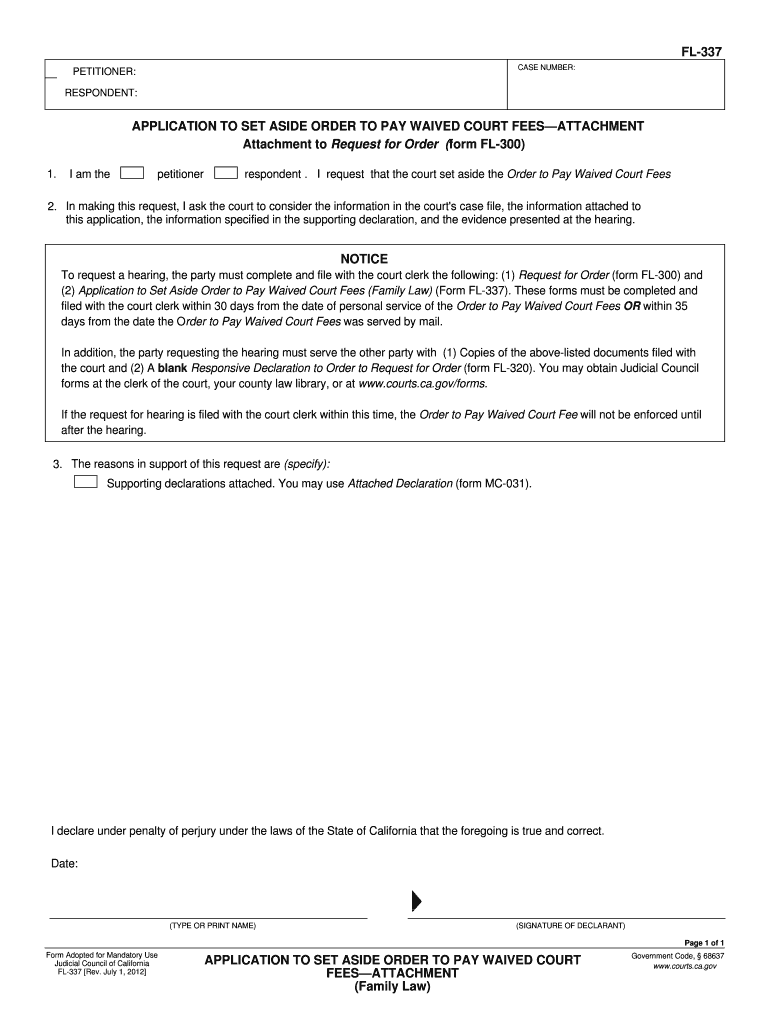
The FL-337 form, known as the "Application to Set Aside Order to Pay Waived Court Fees," is a legal document used in California courts. This form is pivotal for individuals seeking to request that a court reconsider an order requiring payment of previously waived court fees. Such fees might have been originally waived for financial hardship, but a court might later decide that some fees should be reimbursed. Submitting this form is a formal process for challenging or modifying such a decision.
How to Obtain the FL-337 Form
Accessing the FL-337 form is relatively straightforward and can be done through multiple channels:
- Online Resources: Most users download the FL-337 from the official California courts website, which provides forms in PDF format for public use. A reliable document management platform like DocHub also simplifies access and manipulation of such forms.
- Court Locations: Those uncomfortable with digital processes can visit their local courthouse. Courthouses typically have self-help centers offering free forms and guides.
- Legal Aid Services: Legal assistance services often provide forms to clients in tandem with legal advice regarding their use.
Steps to Complete the FL-337 Form
Completing the FL-337 includes several specific steps to ensure the application is thorough and correctly submitted:
- Identify Your Case Details: Fill out your case number, court location, and the judge handling your case. These details are crucial for ensuring your request is directed to the correct legal files.
- Provide Personal Information: Enter your full name, address, and contact information. Accurate data ensures the court can communicate any updates about your application.
- Explain Reasons for Request: Articulate the reasons why you believe the fee payment order should be reconsidered. Include any changes in circumstances or incorrect initial assessments.
- Attach Supporting Documents: Add any necessary evidence, such as financial records, to bolster your case. This could include pay stubs, tax returns, or other financial documentation demonstrating your current financial situation.
- Sign and Submit the Form: Add your signature and date before submitting the form. Ensure you include any required copies to other involved parties, maintaining a record of all submissions.
Required Documents
In addition to the completed FL-337 form, several supporting documents are crucial to substantiate your request:
- Financial Statements: Current income and expense statements can demonstrate economic hardship.
- Tax Returns: Recent tax documents often provide a broader picture of financial standing.
- Court Orders: Copies of the original fee waiver and any subsequent court orders related to those fees.
- Sworn Affidavits: Statements from employers or service providers verifying your financial status may further support your application.
Why You Might Use the FL-337 Form
Applicants typically use the FL-337 form for several compelling reasons:
- Change in Financial Circumstances: If your financial status has deteriorated since the initial fee waiver, this form offers a chance to highlight those changes.
- Mistakes in the Original Order: Perceived errors in the court's assessment of your financial capabilities justify using this form for reassessment.
- Unforeseen Financial Obligations: Sudden expenses, such as medical emergencies, can render compliance with the order impossible.
Legal Use of the FL-337 Form
Within California, the FL-337 form is primarily utilized to challenge an order to repay waived court fees, with legal ramifications:
- Judicial Review: The form initiates a formal review, compelling the court to reassess the fairness of the original order considering current or additional evidence.
- Potential Outcomes: A successful application might result in a modification or revocation of the payment order, alleviating financial strain and resetting compliance expectations.
- Obligations: While awaiting a decision, applicants must adhere to existing orders unless explicitly told otherwise by the court.
Form Submission Methods
Applicants can submit the FL-337 form through various methods:
- In-Person Submission: Present the completed form and attachments to the courthouse where your case is being heard. This traditional method ensures direct handover.
- Mail Submission: Send the form via certified mail to ensure it reaches the courthouse, retaining postal receipts as proof of submission.
- Electronic Filing: Many courthouses offer e-filing options, streamlining the process and reducing administrative burden.
Important Terms Related to FL-337
A clear understanding of several key terms enhances form navigation and completion:
- Fee Waiver: Official permission granted by the court to exempt an individual from paying certain court fees based on financial hardship.
- Order to Pay Waived Fees: A subsequent court mandate reversing the waiver decision, requiring payment of fees previously waived.
- Financial Hardship: A situation where an individual's financial resources are insufficient to meet both personal living expenses and additional court-ordered payments.




