




01. Edit your form online
Type text, add images, blackout confidential details, add comments, highlights and more.

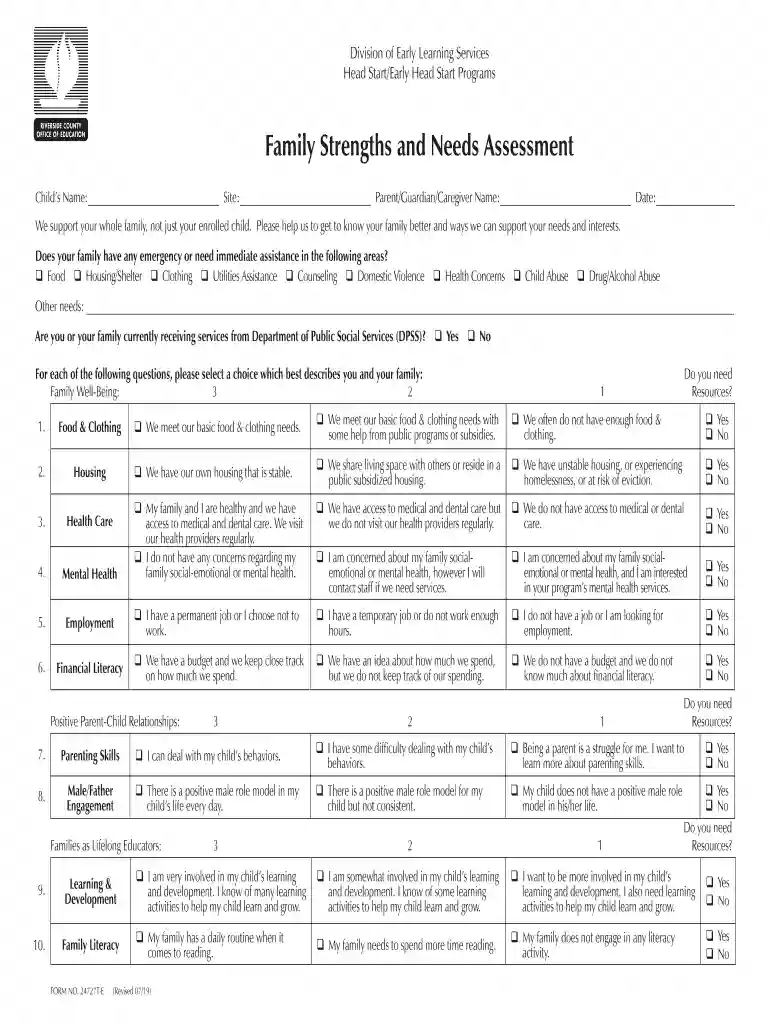
Type text, add images, blackout confidential details, add comments, highlights and more.

Draw your signature, type it, upload its image, or use your mobile device as a signature pad.

Send it via email, link, or fax. You can also download it, export it or print it out.
Transitioning to kindergarten refers to the process by which young children move from a preschool or home environment to a formal school setting. This transition is significant in a child's developmental journey as it marks the beginning of structured learning and socialization in a school environment. It involves preparing children emotionally, socially, and academically to adapt to new routines, interactions with peers and teachers, and the expectations of their new educational setting. This process aims to ensure that children have a positive start to their educational journey, setting a foundation for future academic and social success.
A successful transition to kindergarten involves several key elements:
Preparation: Preparing children for what to expect can include visiting the school, meeting teachers, and discussing what a typical school day entails. This helps alleviate any fears or anxieties.
Routine Establishment: Establishing a consistent routine at home that mimics the school schedule can help ease the transition. This includes regular wake-up times, meal times, and bedtime.
Social Skills Development: Encouraging interaction with peers through playdates or group activities can enhance a child's ability to socialize and adapt to the classroom environment.
Communication with Educators: Parents and educators must communicate effectively to address any concerns or special needs the child may have, ensuring a supportive learning environment.
Successfully transitioning to kindergarten can be achieved through a series of steps:
Gather Information: Visit the school’s website or attend orientation sessions to gather information about the curriculum, schedule, and expectations.
Home Preparation: Create a conducive learning environment at home with books and educational toys to stimulate interest in learning.
Emotional Readiness: Discuss feelings about school with your child to gauge their emotional readiness. Address any apprehensions through stories or role-playing activities.
School Visits: Schedule visits to the school to familiarize your child with the new environment, reducing anxiety about the unknown.
Engage with Teachers: Attend parent-teacher meetings or communicate directly with teachers to discuss your child's strengths, weaknesses, and any concerns.
This process is primarily utilized by:
Parents and Guardians: They play a critical role in preparing their children for kindergarten by fostering a supportive home environment.
Preschool Educators: Educators facilitate the transition by equipping children with foundational skills necessary for kindergarten.
School Administrators: They organize orientation sessions and provide resources to assist families in making a smooth transition.


Transitioning to kindergarten is essential for several reasons:
Academic Foundation: It lays down the academic groundwork that supports future learning and cognitive development.
Social Skills: The transition fosters social interaction, helping children build relationships with peers and understand social norms.
Emotional Growth: It provides an opportunity for emotional development as children learn to navigate new environments and experiences.
Independence: Encourages independence and confidence as children take on responsibilities in a structured setting.
Understanding key terms can provide clarity in the transition process:
Orientation: A session provided by schools to introduce children and parents to the school environment.
Kindergarten Readiness: A measure of a child's preparedness for the kindergarten curriculum in terms of skills and emotional development.
Curriculum: The academic framework that outlines the learning objectives and subjects covered in kindergarten.
Real-world scenarios can illustrate the application of transitioning principles:
Example 1: A family schedules playdates with future classmates to promote social bonds before school starts.
Example 2: A parent utilizes storybooks about starting school to discuss what their child can expect, helping to ease first-day jitters.
Example 3: A kindergarten teacher organizes a "meet and greet" session for incoming students and their families to familiarize them with the classroom setting and expectations.
We've got more versions of the Transitioning to Kindergarten: The Why, What, and How of this form. Select the right Transitioning to Kindergarten: The Why, What, and How of this version from the list and start editing it straight away!
At DocHub, your data security is our priority. We follow HIPAA, SOC2, GDPR, and other standards, so you can work on your documents with confidence.
Transitioning to Kindergarten: The Why, What, and How of this Important Milestone for Connecticut Students. PreK to Kindergarten Transition Workgroup Members.
Expect stress. Limit other transitions when possible. Plan and put into effect a kindergarten routine for your child: Select and lay out school clothes each


