






Definition & Meaning
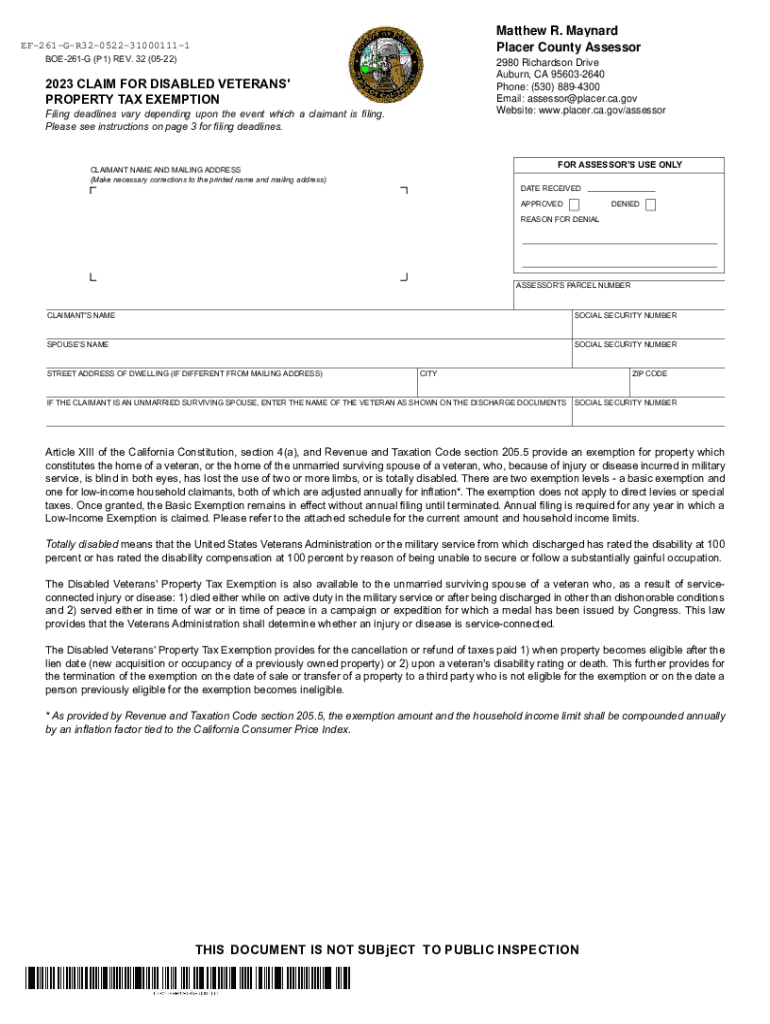
The EF-261-G-R32-00111-1 form, also known as the Claim Form for Disabled Veterans' Property Tax Exemption in Placer County, California, is designed to assist qualified veterans and their surviving spouses in reducing their property tax obligations. This form specifically caters to individuals who have sustained disabilities due to military service. It outlines the eligibility criteria necessary to obtain exemptions, the level of exemption available to applicants, and the supporting documentation required for the exemption claim. Its purpose is to provide financial relief by reducing the property tax burdens faced by those serving our country.
Eligibility Criteria
The primary qualification for using the EF-261-G-R32-00111-1 form is having a service-connected disability as a veteran or being a surviving spouse of a deceased disabled veteran. Additional conditions include residency in Placer County, California, and proof of property ownership. Applicants must also furnish evidence that they either currently receive disability benefits from the Department of Veterans Affairs or match specific income thresholds for low-income exemptions. Ensuring eligibility aligns with strict guidelines is crucial for completing the claim correctly and efficiently.
- Veteran Status: Must be a veteran with a verified service-connected disability.
- Residency: The property for which the exemption is claimed must be in Placer County, California.
- Income Requirements: For low-income exemptions, applicants must meet additional income verification standards.


Steps to Complete the EF-261-G-R32-00111-1
-
Gather Necessary Documents: Ensure all required documentation is collected, including proof of disability, veteran discharge papers, property ownership documents, and income verification if applicable.
-
Fill Out Personal Information: Enter your name, contact information, and veteran status details accurately. Ensure all fields are completed to avoid delays.
-
Provide Property Details: Include information about the property for which you are applying for the exemption. Accurately state the appraised value and other relevant property specifics.
-
Income Verification: If claiming a low-income exemption, attach necessary income tax returns or other financial documents as proof of income.
-
Submission: Submit the completed form along with all required attachments to the specified county office. Double-check that all sections are filled out before submission.
Important Terms Related to EF-261-G-R32-00111-1
Understanding the terminology found on the EF-261-G-R32-00111-1 is essential for accurate completion and compliance. Here are some critical terms:
- Exemption Levels: Specifies the percentage of property tax reduction based on service-related disability level.
- Service-Connected Disability: Impairments or conditions directly attributable to military service.
- Low-Income Exemption: An additional exemption for veterans meeting certain income limitations.
- Surviving Spouse: The spouse of a deceased veteran who may also qualify for exemption benefits.
How to Obtain the EF-261-G-R32-00111-1
The EF-261-G-R32-00111-1 form can be sourced through several methods:
- County Tax Office: Visit or contact the Placer County tax office to acquire a physical copy.
- Online Access: Access the form through official county websites where PDF versions are often available for download.
- Veterans Organizations: Groups advocating for veteran rights often provide resources, including forms and assistance for application processes.
Form Submission Methods (Online / Mail / In-Person)
When ready to submit the EF-261-G-R32-00111-1 form, several options are available:
- Online Submission: Many counties offer electronic submission options, allowing you to upload completed forms and documents digitally.
- Mail: Physical forms can be mailed directly to the Placer County tax office. Be sure to accurately address the envelope to avoid misplacement.
- In-Person: Deliver the form physically if you prefer face-to-face submissions or if your form requires further verification with a county official.
Filing Deadlines / Important Dates
Awareness and adherence to important dates ensure the timely processing of the EF-261-G-R32-00111-1 form. Filing deadlines vary, yet completing and submitting this form at the start of the tax year minimizes delays:
- Submission Start: Typically early in the year—check with the county for specific opening dates.
- Deadline: Submit by a specified date annually (often aligned with property tax assessment schedules).
- Renewal: If required, re-apply each year to maintain exemption status and adhere to any updates in criteria or documentation.