



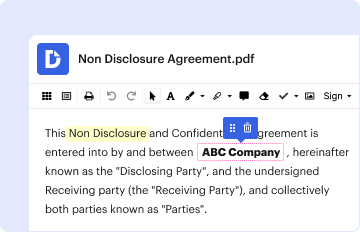
01. Edit your personal tax credit return bc online
Type text, add images, blackout confidential details, add comments, highlights and more.

Type text, add images, blackout confidential details, add comments, highlights and more.
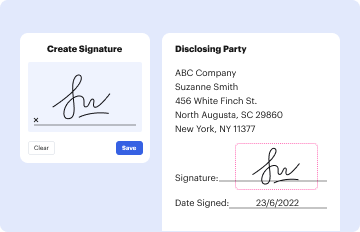
Draw your signature, type it, upload its image, or use your mobile device as a signature pad.

Send it via email, link, or fax. You can also download it, export it or print it out.
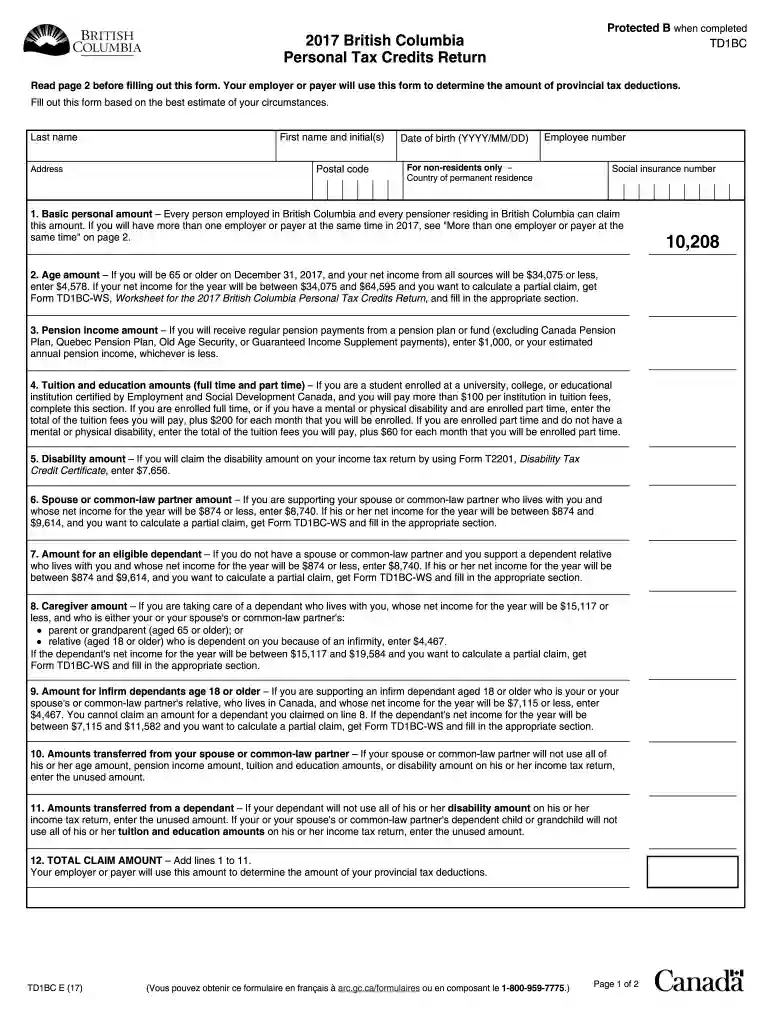
The Personal Tax Credit Return BC, also known as the TD1BC, is a crucial form utilized by employees and pensioners in British Columbia to claim eligible personal tax credits. This form outlines various credits such as the basic personal amount, age amount, tuition and education amounts, and caregiver amounts. It plays a vital role in determining the provincial tax deductions applicable to an individual, based on their unique circumstances. The TD1BC aids employers in withholding the correct amount of provincial tax from their employees' paychecks, ensuring compliance with British Columbia's tax regulations.
Utilizing the TD1BC form involves a series of straightforward steps designed to ensure accurate tax credit claims. Employers and employees must collaborate to complete the form, with attention to several key areas:
Filling Out Personal Information: Begin by entering personal details, such as full name, social insurance number, and address.
Calculating Total Credits: Employees must enter amounts for which they are eligible, like the basic personal amount, tuition, or caregiver amounts. Each section provides guidance on how to determine the claimable amounts.
Submission to Employer: Once completed, the form is submitted to the employer, who uses the information to adjust tax deductions accordingly.
Notably, employees should update this form whenever there are changes in their tax credit circumstances to maintain accurate tax withholding throughout the year.
Completing the TD1BC form can be broken down into a series of logical steps, ensuring thorough and precise reporting:
Read Instructions Carefully: Begin by reviewing all instructions provided on the form, which detail specific requirements for each section.
Section-by-Section Completion:
Review and Sign: After filling in all relevant sections, review the form for accuracy, sign it, and provide it to your employer.
Employer Submission: Employers input this data into their payroll systems to adjust withholdings.
Determining eligibility for specific credits on the TD1BC form is essential for accurate completion and maximizing tax savings:
Understanding these eligibility criteria ensures that employees accurately report amounts they're entitled to claim, avoiding under or overestimation of tax liabilities.


The TD1BC form is primarily used by:
The form serves various individuals who need to align their tax obligations with provincial guidelines by properly claiming applicable credits.

Several key terms are vital for comprehending the Personal Tax Credit Return BC:
Understanding these terms aids in the accurate and comprehensive completion of the TD1BC form.
To fill out the TD1BC accurately, supporting documents are necessary:
Organizing these documents simplifies the process of form completion and ensures precision in reported amounts.
The TD1BC form should be completed and submitted to employers upon commencement of employment or when financial circumstances change:
Employers should ensure they incorporate the TD1BC form into their records as soon as it is submitted to facilitate accurate tax reporting.
The TD1BC form is issued by:
Employers distribute the form to employees, who complete and return it, supporting a structured provincial tax withholding system.
We've got more versions of the personal tax credit return bc form. Select the right personal tax credit return bc version from the list and start editing it straight away!
At DocHub, your data security is our priority. We follow HIPAA, SOC2, GDPR, and other standards, so you can work on your documents with confidence.
When a commercial motor vehicle crash report and/or inspection report is filled out, the correct motor carrier will receive credit (good and bad) for the crash
File an income tax return if required. Complete a Boston College Foreign National Information Form for tax purposes at the Human Resources Service Center at
Schedule BC. The Alabama Department of Revenue now requires the use of Schedule BC Business Credits, when claiming business tax credits.


