




01. Edit your form online
Type text, add images, blackout confidential details, add comments, highlights and more.

Type text, add images, blackout confidential details, add comments, highlights and more.

Draw your signature, type it, upload its image, or use your mobile device as a signature pad.

Send it via email, link, or fax. You can also download it, export it or print it out.
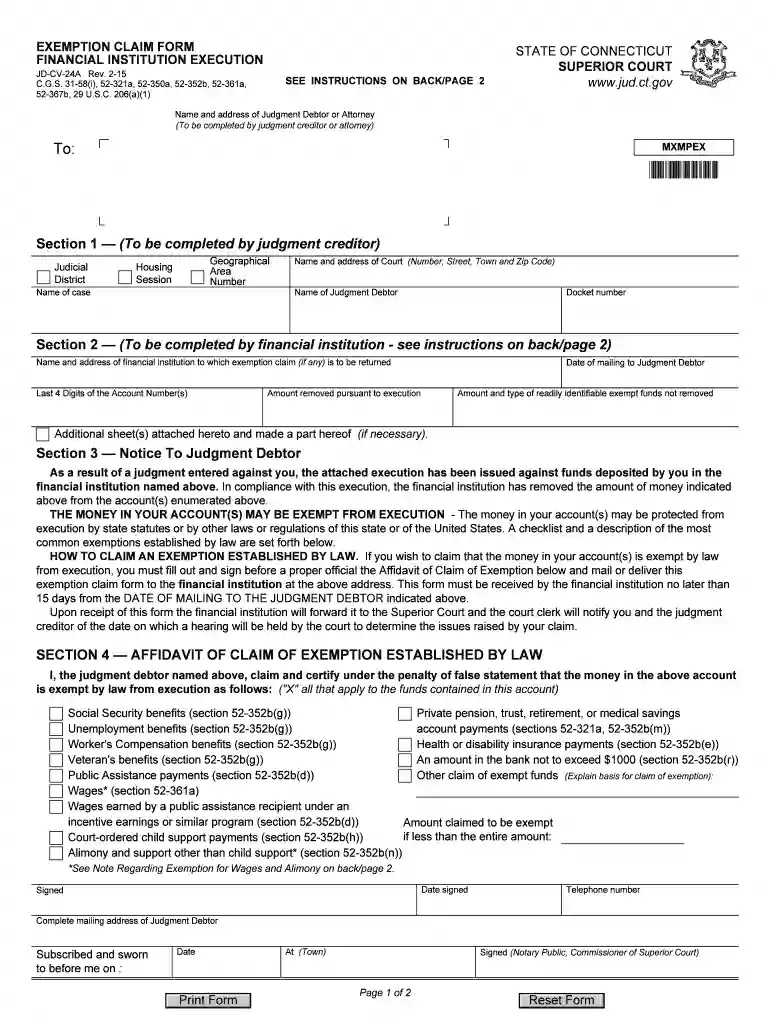
The "31-58(i), 52-321a, 52-350a, 52-352b, 52-361a" form is essentially connected to legal procedures in Connecticut. It pertains to the exemption of certain funds from execution in judgment cases. Specifically, this legal form is used by judgment debtors to claim exemptions for funds in bank accounts, protecting them from being seized under debt collection processes. These provisions ensure that individuals retain access to essential funds despite owing debts.
To effectively use the form, judgment debtors must accurately complete sections detailing their claimed exemptions. These sections often require the debtor to specify which funds should be exempt based on Connecticut legal protections. This includes following specific lines related to different exemption statutes. For instance, statute 31-58(i) may relate to wages, while 52-321a might discuss retirement accounts. Ensuring accurate and complete information is vital for the claim's success.
Understanding the terminology in the form is crucial for proper completion and submission:
This form is legally used to safeguard funds in a debtor’s financial account from execution in Connecticut. It's submitted primarily in response to a pending execution order from a court, providing the legal framework for residents to assert their rights over exempt funds.
In Connecticut, state-specific rules govern the use of this form while aligning with federal laws. Judgment debtors must adhere to these guidelines and process their exemption claims through the prescribed legal channels. This entails not only filling out the form correctly but also understanding the nuances of each exemption statute.
Consider the following scenarios illustrating the form's use:
Eligibility for using this form generally depends on the debtor's financial situation and the types of funds at risk. Connecticut residents can assert their exemption rights only if the claimed funds appropriately align with state statute protections.


Failing to comply with form submission or providing inaccurate information can lead to severe consequences:
We've got more versions of the 31-58(i), 52-321a, 52-350a, 52-352b, 52-361a, - jud ct form. Select the right 31-58(i), 52-321a, 52-350a, 52-352b, 52-361a, - jud ct version from the list and start editing it straight away!
At DocHub, your data security is our priority. We follow HIPAA, SOC2, GDPR, and other standards, so you can work on your documents with confidence.


