





Definition and Purpose of Appeal Procedures for Infractions
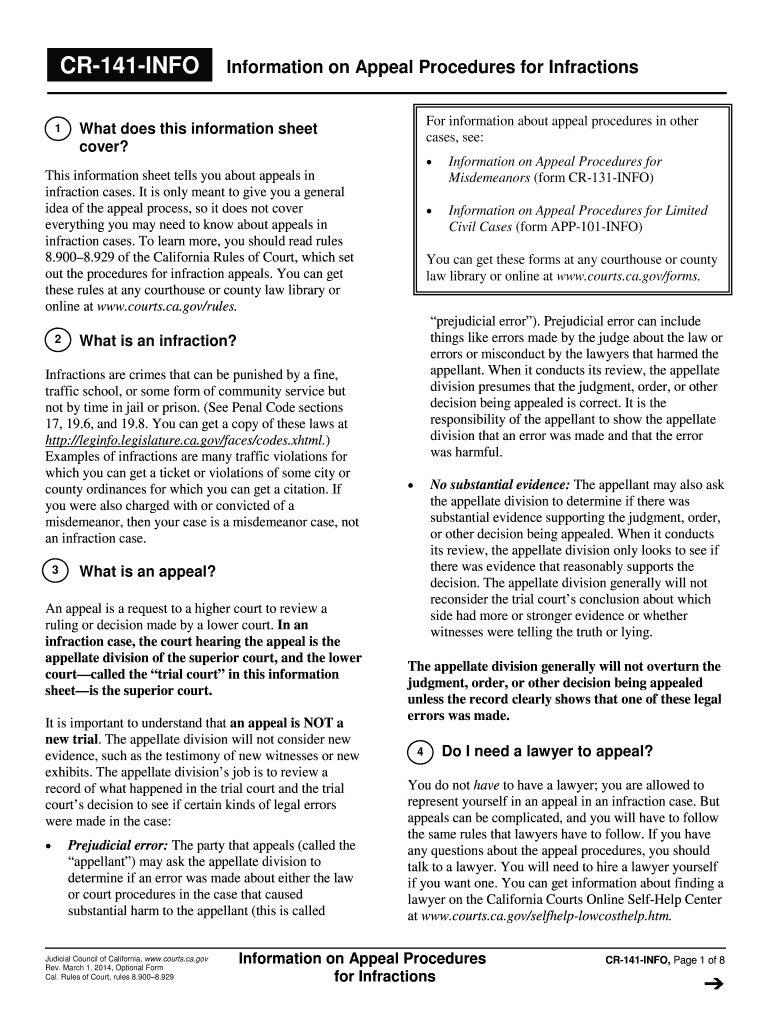
The "Information on Appeal Procedures for Infractions - courts ca" serves as a detailed guide for individuals seeking to appeal a court decision related to an infraction in California. This resource is crucial as it delineates the steps involved in challenging a lower court's decision without introducing new evidence or witnesses. The document emphasizes that an appeal is not a retrial but a legal process where a higher court reviews the application of law in the original case to determine if any errors were made.
Steps to Complete the Appeal Procedure
Undertaking an appeal requires a systematic approach. The process begins with the filing of a notice of appeal within the prescribed deadline after the lower court's judgment. This notice must be accompanied by the appropriate filing fee unless a fee waiver is granted. Following this, appellants must prepare the record on appeal, which includes a transcript of oral proceedings and any exhibits presented during the trial. Next, both the appellant and respondent must file briefs articulating their arguments. The appellant's brief outlines the justification for appealing the decision, while the respondent's brief defends the original judgment.
Filing Deadlines and Important Dates
Deadlines in the appeal process are crucial. Generally, a notice of appeal must be filed within 30 days of the judgment. Late filings can result in dismissal, closing off the opportunity for an appeal. After filing the notice, deadlines for submitting the record and briefs vary but must be strictly observed as outlined by the court's schedule. Extensions may be granted under specific circumstances, but they require timely requests and valid reasons.
Key Elements of the Appeal Form
This appeal documentation highlights several vital elements, including the appellant's details, the lower court's decision, grounds for the appeal, and specific errors alleged in the trial court’s proceedings. It is essential to clearly articulate these elements to present a coherent and focused argument for the appeal. Each section of the form must be completed meticulously to avoid procedural rejection.
Who Typically Uses the Appeal Procedures for Infractions
The appeal procedure is typically utilized by defendants who believe that the initial trial contained legal errors. This group often includes individuals who have received infractions for minor offenses such as traffic violations. Legal representatives for these individuals may also engage with the forms to ensure the appeal is correctly framed and submitted.


Required Documents for Filing an Appeal
Filing an appeal necessitates gathering various documents, including the completed notice of appeal, payment of filing fees or a fee waiver application, the complete trial court records, and any legal briefs summarizing the arguments for appeal. Ensuring all documents are accurate and complete is critical to facilitate a smooth appeal process.
Legal Use and Implications of the Appeal Process
Engaging with the appeal process through this information sheet informs users on legally challenging a prior verdict. The appeal must be based on legal missteps rather than dissatisfaction with the decision. It facilitates a critical review and potential correction of legal interpretations by lower courts, reinforcing fair judicial processes.
Software Compatibility for Managing Appeal Documents
For those using digital tools, platforms like DocHub provide support for managing and editing appeal documents. DocHub enables users to work with multiple file formats, simplifying the process of preparing appeal documents. With features for secure signing, annotation, and sharing, DocHub ensures that legal documentation adheres to technical requirements and is easily manageable across devices.
State-Specific Rules and Considerations
While the described appeal procedures are specific to California, other states may have varying regulations and deadlines. It is vital for appellants and their legal representatives to familiarize themselves with the state-specific rules governing appeals to ensure compliance and accuracy in filing.
Examples of Successful Appeals
Real-world examples provide valuable insights into the appeal process. For instance, appellants who successfully overturn infractions typically illustrate procedural errors in lower court rulings or demonstrate how their rights were impacted during trial. These case studies highlight the importance of thorough record preparation and clear articulation of legal errors in securing a favorable outcome.
Important Terms Related to Appeals
Understanding key legal terms enhances the appellant's ability to engage with the process effectively. Terms such as "appellant," "respondent," "brief," and "transcript" are integral, and familiarizing oneself with their meanings ensures clarity in communication and document preparation.
Digital vs. Paper Appeal Process
While traditional paper-based submissions remain an option, digital submissions offer numerous advantages, including ease of editing, reduced processing time, and enhanced accessibility. Digital platforms also provide tools for securing sensitive information, vital for maintaining confidentiality during legal proceedings.


