






Definition and Meaning of the Bloodborne Pathogen Exposure Plan
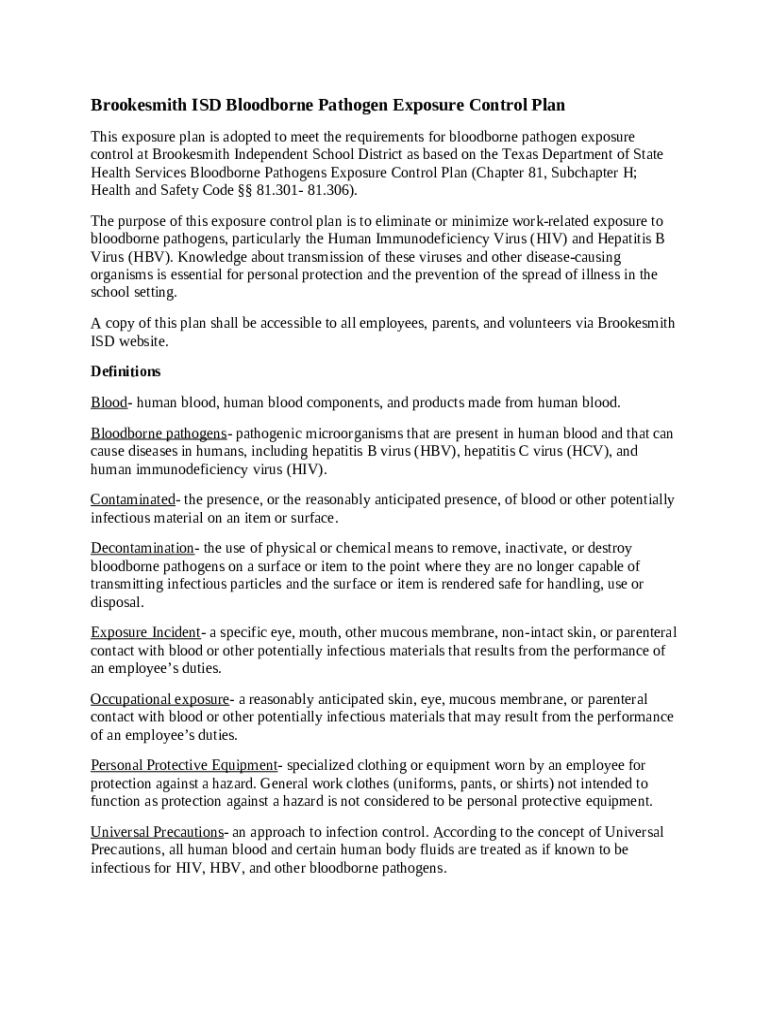
The Bloodborne Pathogen Exposure Plan is a comprehensive framework established to minimize the risk of occupational exposure to bloodborne pathogens. This plan is particularly geared towards protecting employees from pathogens such as HIV, HBV, and HCV by outlining procedures and preventive measures. It incorporates universal precautions, the use of personal protective equipment (PPE), and methods for maintaining a clean and safe work environment. Through clearly defined guidelines, this plan ensures that each step taken maximizes the safety and well-being of employees.
Key Elements of the Bloodborne Pathogen Exposure Plan
Understanding the core components of the Bloodborne Pathogen Exposure Plan is essential for effective implementation. The plan typically includes:
- Universal Precautions: Assume that all human blood and certain human body fluids are potentially infectious.
- Personal Protective Equipment (PPE): Use of gloves, gowns, masks, and eye protection as necessary to create a barrier against infection.
- Training Programs: Regular educational sessions on exposure risks, safe practices, and response procedures.
- Vaccination Policies: Offering the Hepatitis B vaccine to all employees at risk of exposure.
- Incident Response: Protocols for dealing with potential exposure, including immediate reporting and medical evaluation.
Steps to Complete the Bloodborne Pathogen Exposure Plan
To ensure thorough and compliant completion of the Bloodborne Pathogen Exposure Plan, follow these steps:
- Identify at-risk employees: Determine which roles within the organization have the potential for exposure.
- Develop and document procedures: Create detailed written procedures for safety and exposure management.
- Provide training: Enroll employees in mandatory training sessions.
- Implement protective measures: Ensure the availability and use of PPE.
- Vaccinate personnel: Administer Hepatitis B vaccinations and maintain records.
- Monitor and review: Regularly review and update the plan to adapt to any new health regulations or workplace changes.
Legal Use and Compliance Requirements
Compliance with the Bloodborne Pathogen Exposure Plan is not only a best practice but often a legal requirement. In the United States, regulatory bodies such as OSHA require employers to establish a written exposure control plan. Failure to comply may result in penalties and legal repercussions. The plan must be accessible to employees, reviewed at least annually, and updated as necessary to reflect changes in tasks, procedures, or job positions.
How to Obtain the Bloodborne Pathogen Exposure Plan
Organizations can create a Bloodborne Pathogen Exposure Plan by following guidance from OSHA or state health departments. Employers often work with safety consultants or internal human resources personnel to draft the plan. Templates and examples provided by professional health organizations can also serve as a starting point. It's crucial that the final plan reflects the specific operations and risks present in the organization.
Important Terms Related to the Bloodborne Pathogen Exposure Plan
Understanding specific terms is fundamental to implementing the Bloodborne Pathogen Exposure Plan:
- Bloodborne Pathogens: Microorganisms present in blood that can lead to disease.
- Exposure Incident: A specific event during which an individual comes into contact with potentially infectious materials.
- OSHA: Occupational Safety and Health Administration, the body responsible for enforcing health and safety rules in the workplace.
- Engineering Controls: Devices that isolate or remove hazards from the workplace, such as sharps disposal containers.
Who Typically Uses the Bloodborne Pathogen Exposure Plan
Various sectors benefit from implementing the Bloodborne Pathogen Exposure Plan. Predominantly, it is used in healthcare settings where medical professionals are routinely exposed to blood and other potentially infectious materials. However, the plan is also applicable in other environments such as:
- Educational Institutions: Safety for school nurses and other staff.
- Laboratories: Protection for researchers handling human samples.
- Public Safety Departments: Firefighters and law enforcement officers.


State-Specific Rules and Variations
While the general framework for the Bloodborne Pathogen Exposure Plan aligns with federal guidelines, individual states may have additional or more stringent requirements. For instance, Texas healthcare institutions might follow specific state health regulations that impact protective measures or documentation. Organizations must ensure their plans meet both federal OSHA standards and any applicable state-specific laws.
Examples of Using the Bloodborne Pathogen Exposure Plan
Applying the Bloodborne Pathogen Exposure Plan in real-world scenarios improves both compliance and safety. For instance:
- Hospitals: Regular audits by infection control teams to ensure adherence to barrier nursing techniques.
- Dental Clinics: Adoption of sharp safety protocols to mitigate risk during patient procedures.
- Public Health Campaigns: Community education initiatives aimed at increasing awareness about bloodborne pathogen risks and preventive measures.