
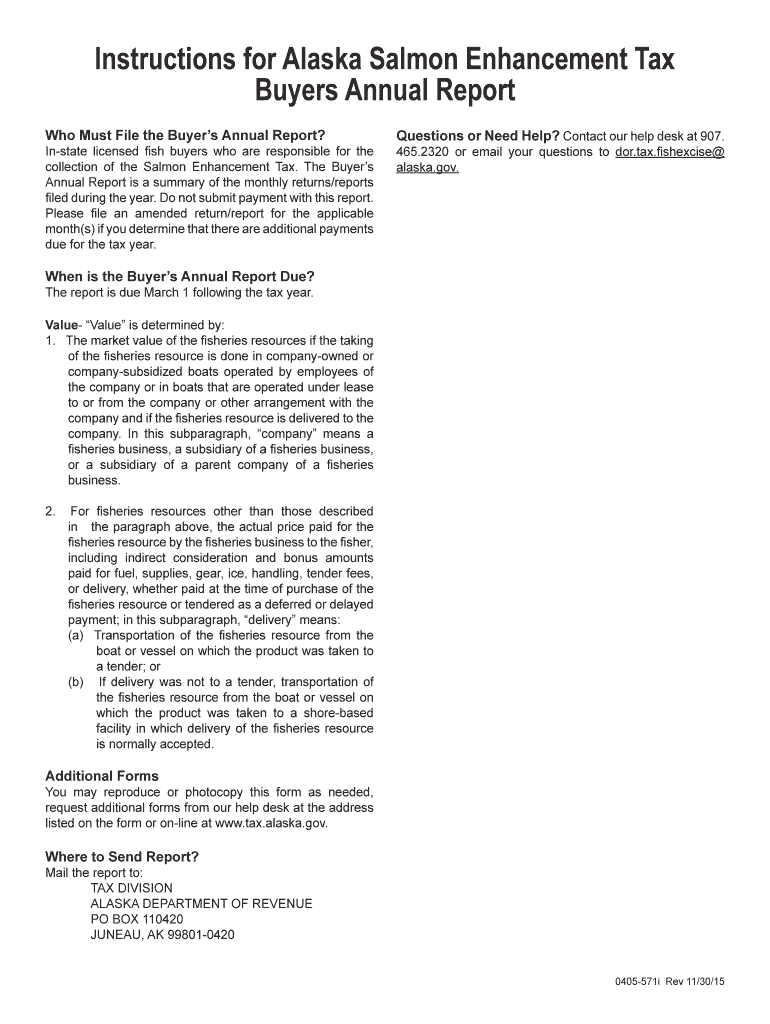







Definition and Meaning of the Salmon Enhancement Tax
The Salmon Enhancement Tax in Alaska is implemented to support the state's fisheries enhancement programs. It is a specialized levy imposed on specific fishery transactions. The purpose of this tax is to fund hatchery operations and research initiatives that aim to increase salmon stocks and improve long-term sustainability in Alaskan waters.
Key Elements of the Salmon Enhancement Tax
- Assessment Basis: The tax is typically assessed on the value of fisheries resources at the point of purchase or sale, requiring accurate valuation methods.
- Scope: Primarily applies to transactions involving salmon, possibly including other commercially important fish species based on regional regulations.
- Collection Mechanism: Usually collected from licensed fish buyers who are responsible for reporting and remitting the tax to the state authorities.
How to Use the Salmon Enhancement Tax Form
Steps to Complete the Tax Form
- Gather Financial Records: Collect all relevant financial transactions involving salmon purchases and sales for the tax year.
- Determine Taxable Amount: Calculate the value of the fisheries resources involved in these transactions to determine the taxable amount.
- Complete the Buyer’s Annual Report: Fill out necessary sections on the tax form to reflect your operations and financial transactions accurately.
- Review and Submit: Double-check for accuracy before submitting by the stipulated deadline.
Filing Deadlines and Important Dates
- Annual Submission Deadline: March 1 following the tax year. This ensures all tax liabilities are cleared promptly and any issues are addressed in a timely fashion.
Who Typically Uses the Salmon Enhancement Tax Form


Business Types and User Groups
- Licensed Fish Buyers: Primary users responsible for tax collection and reporting.
- Fish Processors and Distributors: Entities involved in the commercial transaction of salmon that need to maintain compliance with tax regulations.
- Legal and Financial Advisors: Professionals who often assist businesses in navigating the tax reporting requirements.
Legal Use of the Salmon Enhancement Tax Form
Compliance and Reporting
- State Compliance: Required by Alaskan law to support local fishery enhancement initiatives.
- Amendments and Corrections: In cases of discrepancies or additional payments, businesses are allowed to submit amended returns to ensure full compliance.
Potential Penalties for Non-Compliance
- Fines and Surcharges: May incur additional charges for failing to file on time or accurately.
- Audit Risks: Non-compliance can trigger audits, leading to closer scrutiny of business operations by regulatory authorities.
Required Documents for Tax Filing
Necessary Documentation
- Transaction Records: Comprehensive documentation of all salmon-related transactions, including sales receipts and invoices.
- Licenses and Permits: Proof of licensing as a fish buyer or processor to establish eligibility and compliance.
- Financial Statements: Detailed financial reports that correlate with transaction records to support tax declarations.
Form Submission Methods
Available Submission Options
- Online Submission: Many entities prefer this method due to its speed and convenience. It often includes electronic confirmations and timestamps for records.
- Mail Submission: Traditional method that allows hard-copy submissions directly to the tax office. Requires attention to postal timelines to ensure timely delivery.
- In-Person Submission: For those who prefer direct submission with immediate feedback from tax office representatives.
Software Compatibility for Tax Filing
Tools and Platforms
- Accounting Software: Compatible with platforms like QuickBooks, which can help in calculating and recording tax liabilities accurately.
- Tax Filing Software: Programs like TurboTax may offer modules to assist in preparing the Buyer’s Annual Report for the Salmon Enhancement Tax.
State-Specific Rules and Considerations
Alaska’s Unique Tax Regulations
- Valuation Guidelines: Specific rules on how to determine the value of fisheries resources for tax purposes.
- Documentation Trials: Requirements for maintaining a thorough documentation trail due to the region's emphasis on sustainable fishery practices.
Variations in Regulation
- Regional Differences: Certain areas in Alaska might have additional rules or exemptions, making it critical for fish buyers to stay informed about local regulations.
Detailed exploration of these sections equips businesses and individuals engaged in Alaska's fish buying industry with the knowledge needed to adhere to tax requirements effectively.


