







Definition & Meaning of - Tax Alaska
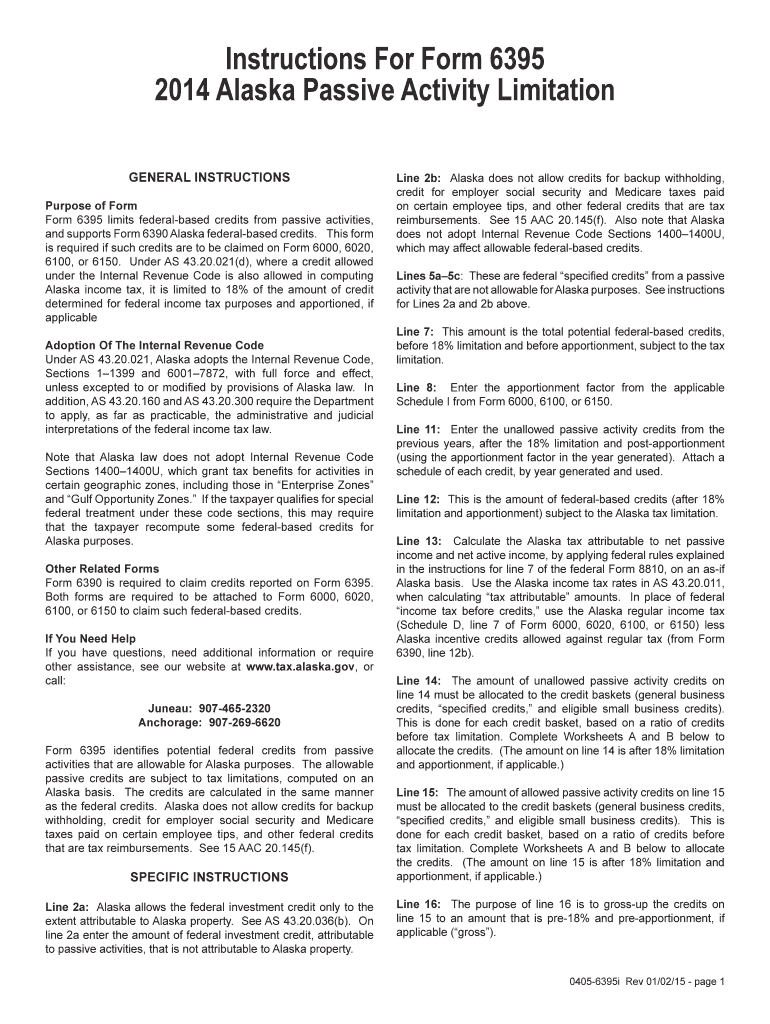
The '- tax Alaska' form refers to a specialized document used exclusively for managing specific state-based tax arrangements within Alaska. This form primarily addresses credits related to the federal passive activity credit limitation which is unique due to Alaska's adoption of the Internal Revenue Code with state-specific adjustments. Understanding this form involves recognizing the nuances of federal tax credits vis-à-vis Alaska's taxation policies. Examples include how the state's adaptations affect eligibility for certain federal tax credits and understanding the local economic conditions that influence these measures.
How to Use the - Tax Alaska Form
Using the '- tax Alaska' form requires accurate knowledge of your federal passive activities and a clear assessment of which credits are applicable in Alaska. Users must start by assessing their federal tax credits, then proceed to apply the Alaska-specific limitations. The form guides users through calculating eligible credits and ensuring they align with Alaska’s adjusted tax regulations. It's essential to systematically track passive income and activity deductions, as these will directly impact the state credits claimed.
Steps for Accurate Calculation
- Gather Federal Credit Information: Collect data from your federal tax filings, especially those that deal with passive income activities.
- Identify Applicable State Credits: Using the instructions on the form, delineate which federal credits can be claimed under Alaska laws.
- Apply Adjustments: Calculate the allowable credits by integrating Alaska-specific adjustments outlined in the form.
- Double-Check Calculations: Verify calculations for correctness and compliance to avoid penalties.
How to Obtain the - Tax Alaska Form
The '- tax Alaska' form is typically available through the Alaska Department of Revenue's official website. Individuals and businesses can download it directly, ensuring they have the latest version which includes any recent legislated changes. Alternatively, if digital access is a challenge, requests for mail delivery can be made by contacting the department's customer service. Keeping abreast of annual updates is crucial due to potential adjustments in both federal and state tax policies.
Steps to Complete the - Tax Alaska Form
Completing the form entails a thorough assessment of all applicable financial activities and requires precision. The process involves:
- Detailed Documentation: Start by gathering all relevant financial records, particularly those pertaining to passive activities.
- Form Filling: Follow the systematic guidelines provided on the form, translating your financial records into state-specific credit claims.
- Review & Sign: Before submission, conduct a comprehensive review to avoid errors or omissions. Ensure the form is signed and dated as required.
- Submission: Submit the completed form through the state’s e-filing system for the most efficient processing time.
State-Specific Rules for the - Tax Alaska
Alaska's tax regulations have distinct characteristics that influence the calculations on this form. Notably, the form stresses federal credit limits while applying unique state adjustments, primarily because Alaska does not have a state income tax but administers state-specific rules for handling credits. This entails taking into account other state-mandated deductions or exemptions that may influence the extent to which federal passive activity credits can be applied.
Factors Influencing Credits:
- State energy initiatives that provide specific tax incentives.
- Distinct treatment of federal initiatives like renewable energy projects that have Alaskan stipulations.
- Industry-specific regulations, especially for natural resources.
Important Terms Related to - Tax Alaska
Key terms used in the '- tax Alaska' form include passive activities, credits limitation, federal adaptations, state conformity, eligible deductions, and public-purpose tax credits. Every term has a specific legal context which influences how credits are calculated. Understanding these terms is essential for correctly completing the form. They assist taxpayers in navigating the differences between federal tax guidelines and the distinctive state requirements set by Alaska.
Key Elements of the - Tax Alaska Form
The essential components of the '- tax Alaska' form consist of sections on federal credit applicability, state adjustments, summations of passive activities, detailed taxpayer and business information, and final calculations of allowable credits. Each section demands specific information, meticulously aligned with both federal and state taxation policies. Familiarity with these elements supports compliant and thorough filings.
IRS Guidelines and the - Tax Alaska Form
While the '- tax Alaska' form is a state-specific document, it remains underpinned by IRS federal guidelines, especially for classifying passive activities and recognizing credit limitations. Form 6395 from the IRS is particularly relevant, as it aligns federal tax treatments with state requirements. Adhering to such IRS guidelines ensures that taxpayers accurately reflect their federal credits within the state-specific framework that Alaska sets forth.


