
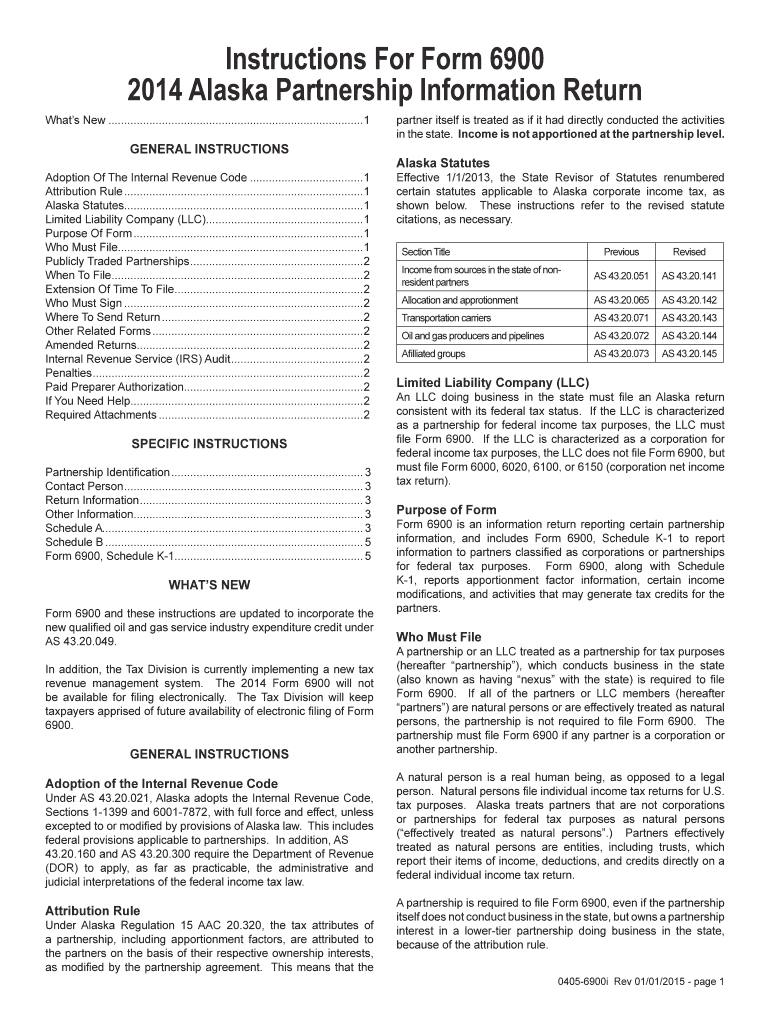







Definition and Meaning of the - Tax Alaska Form
The "- Tax Alaska" form, officially known as the Alaska Partnership Information Return, is a document used by partnerships to report their financial information to the state of Alaska. This form ensures that partnerships operating within the state comply with local tax requirements. The purposes of this form include reporting income, deductions, and credits, as well as specific state-based financial activities. It is particularly relevant for partnerships engaged in the oil and gas service industry due to specific expenditure credits available in Alaska.
Steps to Complete the - Tax Alaska
-
Gather Necessary Information: Collect all relevant financial data, including income, deductions, and credits. This includes previous records, receipts, and financial statements necessary for accurate reporting.
-
Understand the Form Structure: Familiarize yourself with all sections of the form, particularly those relevant to partnerships. Sections may include details of partners, financial activities, and applicable credits.
-
Complete Required Sections: Fill in all mandatory fields with precision. Pay special attention to areas such as the attribution rules for partnerships and the reporting of income modifications.
-
Review New Credits: Identify any applicable credits like the oil and gas service industry credit. These can significantly impact taxation.
-
Verify Information: Double-check all entered information for accuracy and completeness, as errors can lead to penalties.
-
Submit Before Deadline: Ensure you submit the form by the specified deadline to avoid penalties for non-compliance.
Importance of Using the - Tax Alaska Form
Using the "- Tax Alaska" form is crucial for partnerships that wish to maintain compliance with state tax laws. This form helps streamline the reporting process by consolidating necessary financial data into a single document. It also offers opportunities for eligible partnerships to apply for industry-specific credits, potentially reducing their tax liability. Moreover, it ensures that all partnerships in Alaska adhere to uniform reporting standards, thereby promoting fairness and clarity in taxation.
Who Typically Uses the - Tax Alaska Form
The "- Tax Alaska" form is primarily used by partnerships operating within Alaska. This includes businesses engaged in various sectors but is notably significant for those in the oil and gas industry due to specific expenditure credits. It is also utilized by limited liability companies treated as partnerships for tax purposes. The form caters to businesses that generate any form of income requiring state-level reporting and compliance.


Key Elements of the - Tax Alaska Form
- Partner Information: This includes details on each partner involved in the partnership, their roles, and financial contributions.
- Income Reporting: All income generated by the partnership, whether from operations or investments within the state, must be documented.
- Deductions and Credits: Itemized deductions and applicable credits specific to Alaska's tax codes, including those for the oil and gas industry, need to be recorded.
- Apportionment Data: Information concerning how the partnership’s income is distributed among partners, and how state-specific income is calculated, is a crucial part of the form.
Filing Deadlines and Important Dates
The filing deadline for the - Tax Alaska form aligns with federal tax deadlines unless specified otherwise by state statues. Partnerships should check current year requirements as deadlines may shift. Non-compliance with submission dates can lead to penalties. It is advisable to monitor state announcements for any date changes diligently.
Required Documents for - Tax Alaska Form Submission
- Financial Statements: Annual reports outlining income, expenses, and other financial transactions.
- Receipts and Invoices: Documentation supporting claimed deductions and credits.
- Partner Agreements: Any agreements or modifications that influence income distribution among partners.
Penalties for Non-Compliance
Failure to file the - Tax Alaska form on time or providing inaccurate information can result in significant penalties. These may include fines, interest charges on unpaid taxes, and in severe cases, legal sanctions under state tax regulations. Ensuring compliance can prevent costly financial and administrative burdens.
Digital vs. Paper Version of the - Tax Alaska Form
The form can be submitted either digitally or via paper. Digital submission is typically more efficient and secure, offering a faster processing time and reducing the risk of errors. For those preferring traditional methods, paper versions are still acceptable but must be sent well ahead of the deadline to account for postal delays. Partnerships should choose the method best suited to their operational capabilities.




