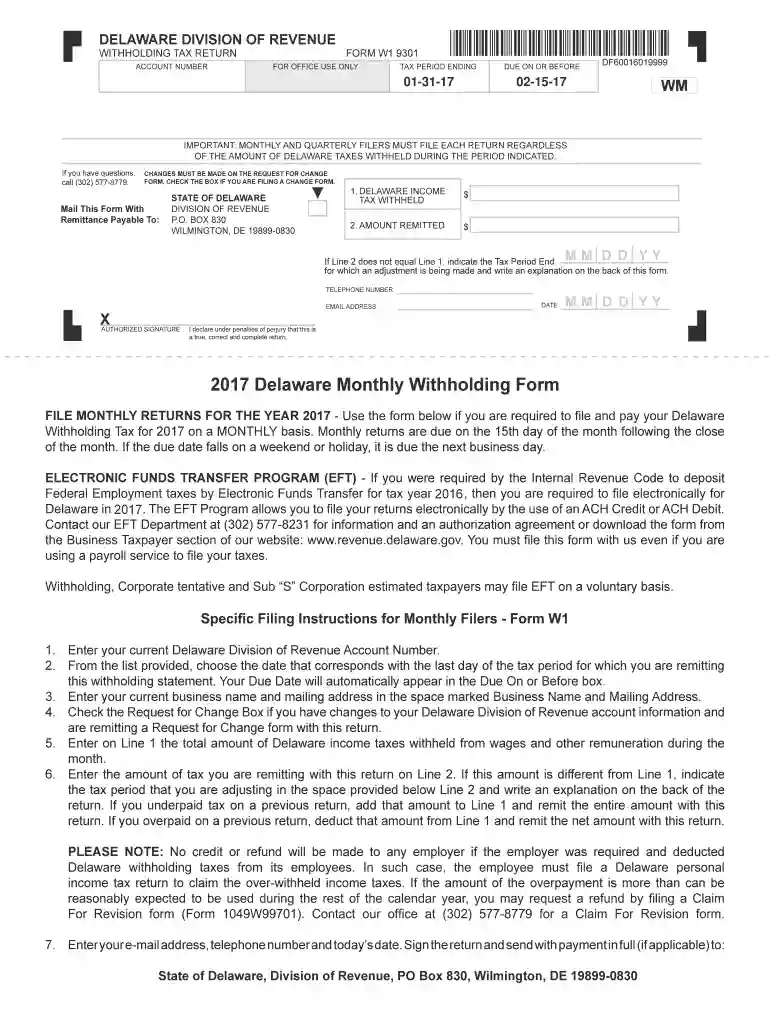
14 WH blank monthly 2026

Get Form
14 WH blank monthly Preview on Page 1

Here's how it works

01. Edit your form online
Type text, add images, blackout confidential details, add comments, highlights and more.

02. Sign it in a few clicks
Draw your signature, type it, upload its image, or use your mobile device as a signature pad.

03. Share your form with others
Send it via email, link, or fax. You can also download it, export it or print it out.

Definition & Meaning

The "14 WH blank monthly" is a structured form primarily used for withholding tax purposes. Often associated with entities like businesses or employers, it allows them to report the taxes withheld from employee wages on a monthly basis. Understanding the purpose of this form is essential, as it ensures compliance with tax regulations and facilitates accurate record-keeping for both business owners and tax authorities.

Tax Withholding Overview

  • Withholding Tax Purpose: Employers withhold a portion of employee salaries for tax purposes, remitting these funds to tax authorities.
  • Monthly Reporting: If required, entities must submit this form on a monthly basis to ensure timely compliance and efficient tax processing.

How to Use the 14 WH Blank Monthly

Utilizing the "14 WH blank monthly" form involves a series of specific steps to ensure that all relevant data is accurately captured. Proper usage helps avoid penalties and ensures compliance with tax laws.

Filling Out the Form

  1. Gather Employee Information: Collect necessary details such as names, Social Security numbers, and withheld tax amounts for each employee.
  2. Enter Payroll Details: Record payroll periods, gross wages, and any other relevant figures.
  3. Verify Data: Double-check all entries for accuracy to prevent errors during submission.

Submitting the Form

  • Online: Many states offer digital submission platforms, allowing for efficient and secure filing.
  • Mail: Alternatively, forms can be printed and sent via postal service, though this may involve longer processing times.

Steps to Complete the 14 WH Blank Monthly

Step-By-Step Process

  1. Preparation: Compile all necessary payroll documents and financial records.
  2. Form Completion: Carefully enter all requested information in each section of the form.
  3. Review: Thoroughly check for accuracy before proceeding with submission.
  • Avoiding Mistakes: Pay close attention to detail in numerical entries and ensure proper alignment with corresponding employee data.

Common Errors and Solutions

  • Data Mismatches: Ensure that information on the form matches payroll records.
  • Omitting Required Fields: Double-check that all mandatory fields are completed prior to submission.

Key Elements of the 14 WH Blank Monthly

Critical Sections

  • Employer Information: Includes the business name, address, and identification numbers.
  • Employee Listings: List of employees with relevant tax withholding data.
  • Financial Totals: Aggregate withholding amounts, effectively summarizing the monthly tax responsibility.

Importance of Accurate Data

Accurate data entry is crucial as discrepancies can lead to compliance issues or penalties from the taxing authority. Maintaining clear records not only aids in tax filing but also supports financial audits and other regulatory requirements.

Examples of Using the 14 WH Blank Monthly

Practical Applications

  • Small Businesses: Typically use the form to manage monthly tax reporting for a small workforce.
  • Large Corporations: Use the form to detail extensive payroll and tax information, often integrating with digital payroll systems for ease.

Case Studies

  • Compliance Success: Businesses accurately submitting forms often benefit from a streamlined tax experience, avoiding costly penalties.
  • Missed Filing: Examining scenarios where entities faced penalties for non-compliance, emphasizing the importance of timely submissions.

Legal Use of the 14 WH Blank Monthly

Compliance and Legal Requirement

Understanding the legal framework surrounding the "14 WH blank monthly" form is vital for maintaining compliance. The form serves as an official document to satisfy tax withholding requirements, adhering to both state and federal guidelines.

Regulatory Obligations

  • State Regulations: Specific states may have additional requirements or variations of the form, necessitating awareness of local laws.
  • Federal Consistency: While primarily a state-focused document, it maintains consistency with federal tax reporting standards.

Filing Deadlines / Important Dates

Monthly Deadlines

Each reporting period culminates in a deadline by which the form must be submitted. Failure to meet these deadlines can result in penalties, emphasizing the need for prompt and precise filing.

  • Typical Deadline: Often the last day of the month following the reporting period.
  • Considerations for Late Filing: Understand potential consequences such as fines or interest on unpaid taxes.

Required Documents

Supporting Documentation

Collecting and organizing required documents beforehand simplifies the filing process. These typically include:

  • Payroll Records: Detailing employee earnings and withheld taxes.
  • Previous Tax Filings: For reference and consistency with ongoing submissions.

Record Keeping Best Practices

Efficient record-keeping ensures not only compliance with legal requirements but also supports internal financial auditing and analysis processes.

Through a comprehensive understanding of the "14 WH blank monthly" form and its varied applications, businesses can navigate the complex landscape of tax withholding with confidence and accuracy.

See more 14 WH blank monthly versions

We've got more versions of the 14 WH blank monthly form. Select the right 14 WH blank monthly version from the list and start editing it straight away!
Versions Form popularity Fillable & printable
2020 4.9 Satisfied (29 Votes)
2018 4.3 Satisfied (78 Votes)
2017 4 Satisfied (75 Votes)
2016 4 Satisfied (32 Votes)
be ready to get more

Complete this form in 5 minutes or less

Get form

Got questions?

We have answers to the most popular questions from our customers. If you can't find an answer to your question, please contact us.
Contact us
Set up a new calendar On your computer, open Google Calendar. On the left, next to Other calendars, click Add other calendars. Add a name and description for your calendar. Click Create calendar. If you want to share your calendar, click on it in the left bar, then select Share with specific people.
On the Insert tab, click Calendars, and then click More Calendars. Click the calendar design that you want. In the task pane, click the month and year that you want. Important: You must make any changes now.
On the File menu, click New. In the Publication Types list, click Calendars. Under Calendars, click the type of calendar that you want to create (for example, Full Page or Wallet Size), and then click the design that you want. In the Customize task pane, click the options that you want, such as color or font scheme.
Go to calendar view. You should now see your blank calendar side-by-side with your main calendar. Click anywhere in the blank calendar to make it the active calendar. Click Print.
Click anywhere in the blank calendar to make it the active calendar. Click File Print. In the Print pane, under Settings, select your preferred calendar style. Note: If the print preview displays your main calendar with all of your appointments and events, click Print Options.

Security and compliance

At DocHub, your data security is our priority. We follow HIPAA, SOC2, GDPR, and other standards, so you can work on your documents with confidence.

Learn more
ccpa2
pci-dss
gdpr-compliance
hipaa
soc-compliance

People also ask

Its a calendar that provides the user with means to fill in any specified date. Blank calendars are often used for project planning and scheduling purposes and possess many advantages over ordinary ones.
Click anywhere in the blank calendar to make it the active calendar. Click Print. In the Print pane, under Settings, select your blank calendar and print it.

Related links