
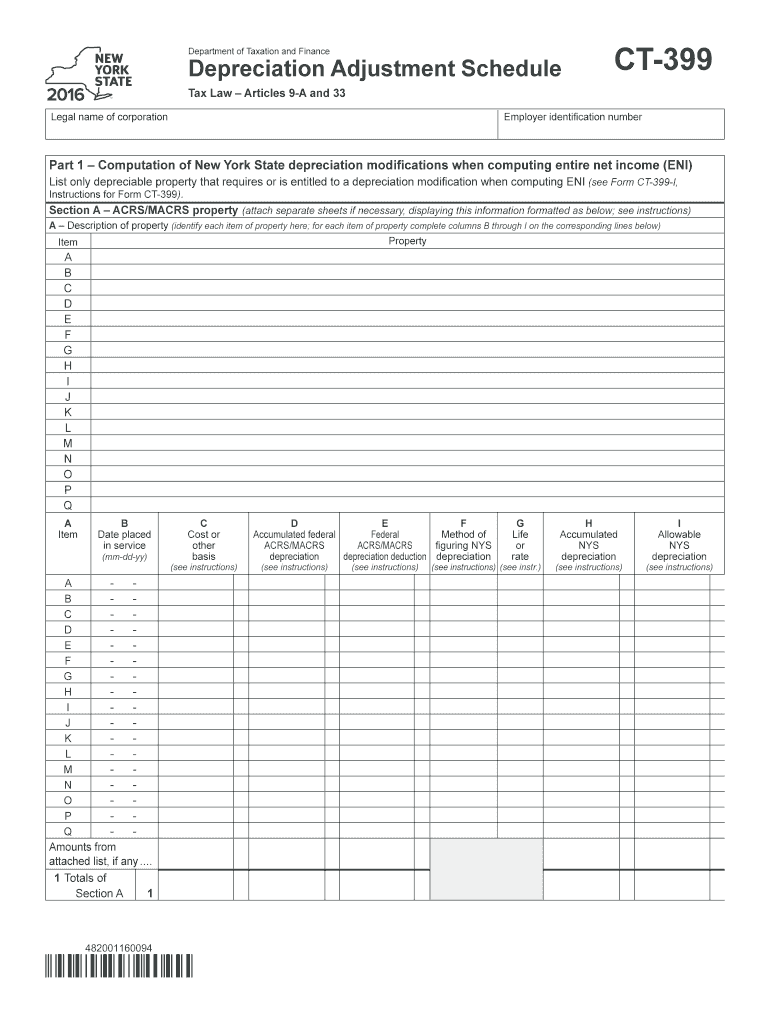







Definition and Meaning
Tax LawArticles 9-A and 33 pertain to specific sections of New York tax code, which govern taxation for certain business types. Article 9-A primarily addresses the corporate franchise tax, which affects corporations operating within New York State. Article 33, on the other hand, deals with the taxation of insurance companies. Together, they provide a framework for how these entities are taxed on their gross income, and detail deductions and exemptions that may apply.
Key Components
- Article 9-A: Applies to corporations and determines tax liabilities based on business income, capital, and investment income.
- Article 33: Targets insurance companies, outlining specific tax obligations unique to their operations.
How to Use Tax Law Articles 9-A and 33
Understanding and applying Tax LawArticles 9-A and 33 can help businesses accurately calculate their tax liabilities and ensure compliance with state regulations.
Practical Application
- Evaluating Tax Liabilities: Corporations calculate net income under Article 9-A, while insurance companies use Article 33 guidelines.
- Claiming Deductions: Businesses can learn which deductions and credits are available to them under these articles.
- Filing Returns: Both articles inform companies of the formats and schedules for submission to remain compliant.
Steps to Complete Tax Law Articles 9-A and 33
Completing the obligations under Tax LawArticles 9-A and 33 involves several steps, applicable primarily to business accountants and tax professionals.
- Review Tax Obligations: Analyze which article applies based on business type.
- Gather Financial Data: Collect data on income, expenses, and eligible deductions.
- Calculate Tax Liability: Use the provisions of the applicable article to determine tax due.
- Prepare Documentation: Assemble necessary forms and supporting documents for submission.
- File Returns: Submit completed tax returns following the specified format and deadlines.
Who Typically Uses Tax Law Articles 9-A and 33
The regulations outlined in Tax LawArticles 9-A and 33 are most relevant to specific business entities operating within New York State.
Targeted Users
- Corporations: Any corporation operating in New York must comply with Article 9-A to calculate their tax based on corporate income and capital.
- Insurance Companies: Companies offering insurance services need to adhere to Article 33 guidelines to determine their state tax obligations.
Important Terms Related to Tax Law Articles 9-A and 33
Understanding terminology specific to Tax LawArticles 9-A and 33 is crucial for accurate application and compliance.
Glossary of Terms
- Corporate Franchise Tax: A tax levied on corporations derived from net income, capital, and other factors.
- Net Income: Total revenue minus allowable deductions.
- Tax Credit: A direct reduction in tax liability, provided under specific circumstances.
- Exemption: A portion of income that is exempt from taxation.
Legal Use of Tax Law Articles 9-A and 33
The legal framework established by these articles guides the operational compliance of businesses within New York State.
Compliance Measures
- Adherence to State Statutes: Aligning business practices with state-mandated financial declarations.
- Accurate Reporting: Ensuring that all financial reports reflect true earnings and deductions, avoiding penalties.
- Audit Preparedness: Maintaining records that evidence compliance with articles' guidelines.
State-Specific Rules for Tax Law Articles 9-A and 33
New York State's rules for Tax LawArticles 9-A and 33 demand familiarity with state-specific requirements that might differ from federal guidelines.
Unique Considerations
- Domicile Requirements: Businesses must understand stipulations for being considered a domestic entity within the state.
- Domestic vs. Foreign Corporations: Differing obligations depending on whether the corporation is based within or outside New York State.
- Record Keeping: Required retention periods for financial documents as per state law.
IRS Guidelines and Tax Law Articles 9-A and 33
Although primarily state-focused, Tax LawArticles 9-A and 33 also require consideration of federal guidelines provided by the IRS for certain aspects.
Interaction with Federal Taxation
- Alignment with Federal Returns: Ensuring state filings complement federal tax returns, to preempt any discrepancies.
- Dual Compliance: Adhering to both IRS and New York State Department of Taxation and Finance regulations to avoid legal issues.
Filing Deadlines and Important Dates
Meeting deadlines is a critical aspect of compliance with Tax LawArticles 9-A and 33.
Key Dates
- Annual Filing: Determining the specific deadline for filing state returns, usually mirroring or following federal deadlines.
- Extensions: Procedures for requesting deadline extensions, should the need arise.
Required Documents for Compliance
Accurate and thorough documentation underpins compliance with Tax LawArticles 9-A and 33.
Essential Documentation
- Income Statements: Detailed breakdown of income sources and amounts.
- Expense Reports: Comprehensive expense tracking, showcasing deductions.
- Balance Sheets: Summarizing assets, liabilities, and equity to support tax calculations.


