
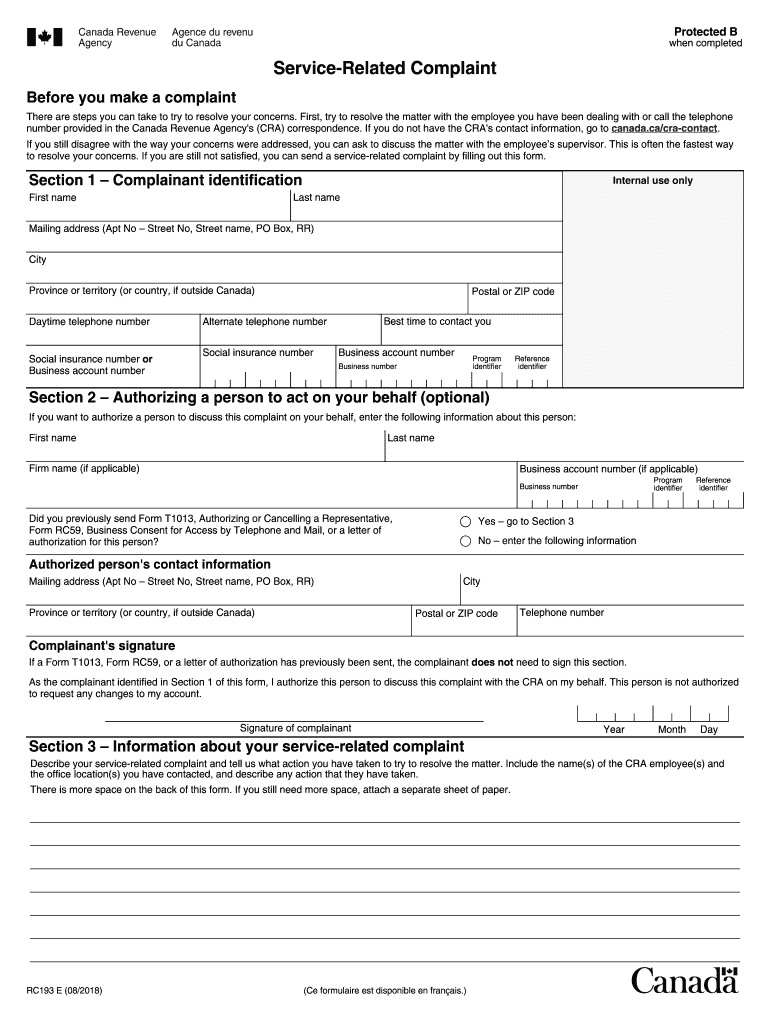







Definition & Purpose of the Form
The form "How to Make a Complaint About Your Telephone ServiceCRTC" serves as a formal mechanism by which individuals can file grievances related to their telephone service. It provides a structured process to communicate issues to the appropriate regulatory body, the Canadian Radio-television and Telecommunications Commission (CRTC). This form is essential for ensuring consumer rights are protected and for holding service providers accountable for their service quality.
- Nature of Complaints: Typically includes quality of service issues, billing disputes, lack of responsiveness, or unethical business practices by the service provider.
- Objective: Facilitates a formal review and response process by the CRTC aimed at resolving consumer complaints effectively.
Steps to Complete the Complaint Form
Completing the "How to Make a Complaint About Your Telephone ServiceCRTC" form requires careful attention to detail to ensure all relevant information is conveyed accurately.
- Gather Necessary Information:
- Identify the details of the telephone service provider, including contact information.
- Document specific incidents and issues, including dates and service actions taken.
- Fill Personal Identification Details:
- Provide your complete name, contact information, and any account numbers associated with the telephone service.
- Detail the Complaint:
- Clearly explain the nature of the issue, including any prior attempts made to resolve it with the service provider.
- Submit Supporting Documentation:
- Attach any relevant documents, such as bills, correspondence with the service provider, or previous resolutions attempted.
- Review and Submit:
- Ensure all sections are complete and verify information for accuracy before submission.
Submission Methods for the Complaint Form
The form offers several methods for submission to accommodate various user preferences and accessibility needs.
Online Submission
Submitting the complaint form online is the most direct and efficient method. This approach allows for the fast transmission of information and often includes automated acknowledgments of receipt.
- Process:
- Complete the online form on the CRTC's official website.
- Upload supporting documents as attachments.
- Receive confirmation and tracking details via email.
Mail Submission
For those preferring traditional methods, the form can be sent via postal mail.
- Prepare a Full Packet:
- Include multiple copies of the form and all supporting documentation.
- Use a reliable mailing service to ensure delivery confirmation.
In-Person Submission
Though less common, some individuals may prefer to deliver the complaint form in person to ensure proper handling.
- Visit Local Offices:
- Check availability of CRTC local offices or partner organizations that facilitate drop-off of complaint forms.
- Obtain a receipt or acknowledgment for the submission.
Key Elements of the Complaint Form
Personal and Service Provider Information
Includes all required identification fields at the beginning of the form. Precise provision of data here expedites the review process.
- Personal Information: Full name, telephone number, email, and address.
- Provider Details: Company name, service number, and customer account reference.
Nature of the Complaint
The core section requires a detailed account of the complaint. This should be comprehensive and precise to help CRTC staff understand the issue.
- Incident Details: Date, time, and location of incidents.
- Service Impact: Description of how the issue affected service quality or billing.
Resolution Sought
Clearly articulate the desired outcome, whether it be a service adjustment, refund, or formal acknowledgment of the issue.
Why File a Complaint with the CRTC?
Understanding the benefits of filing a complaint can provide motivation to complete this process.
- Consumer Advocacy: Acts as an official record that can lead to consumer protection actions.
- Regulatory Oversight: Leverages the CRTC's authority to enforce compliance and facilitate resolution.
- Service Improvement: Feedback can lead to improved policies or practices by the telephone provider.
Legal Considerations
Filing this complaint involves understanding certain legal rights and responsibilities.
- Confidentiality: Submitted information is handled under stringent privacy laws to protect individual data.
- Legal Recourse: While filing does not guarantee resolution, it can be a prerequisite for further legal actions if necessary.
Impact of Non-Compliance
Failure to engage in this process or to follow through with proper complaint resolution steps might limit the individual's ability to pursue future recourse or compensation.
Examples of Successful Complaint Outcomes
Billing Error Resolutions
Several consumers have successfully used this form to dispute incorrect charges. Through CRTC mediation, refunds and corrections were issued by service providers.
Quality of Service Improvements
Complaints concerning service disruptions have, in historical cases, led to infrastructural revisions and enhancements in service areas.
This comprehensive content should provide a thorough understanding of the "How to Make a Complaint About Your Telephone ServiceCRTC" form, with detailed guidance on its use and implications.




