



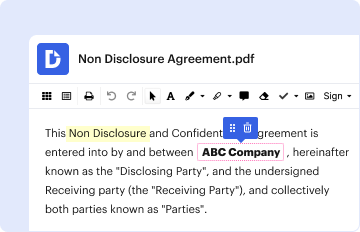
01. Edit your form online
Type text, add images, blackout confidential details, add comments, highlights and more.

Type text, add images, blackout confidential details, add comments, highlights and more.
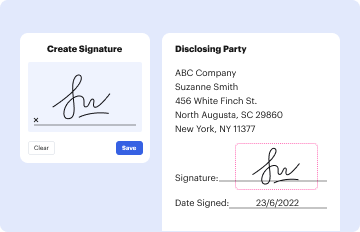
Draw your signature, type it, upload its image, or use your mobile device as a signature pad.

Send it via email, link, or fax. You can also download it, export it or print it out.
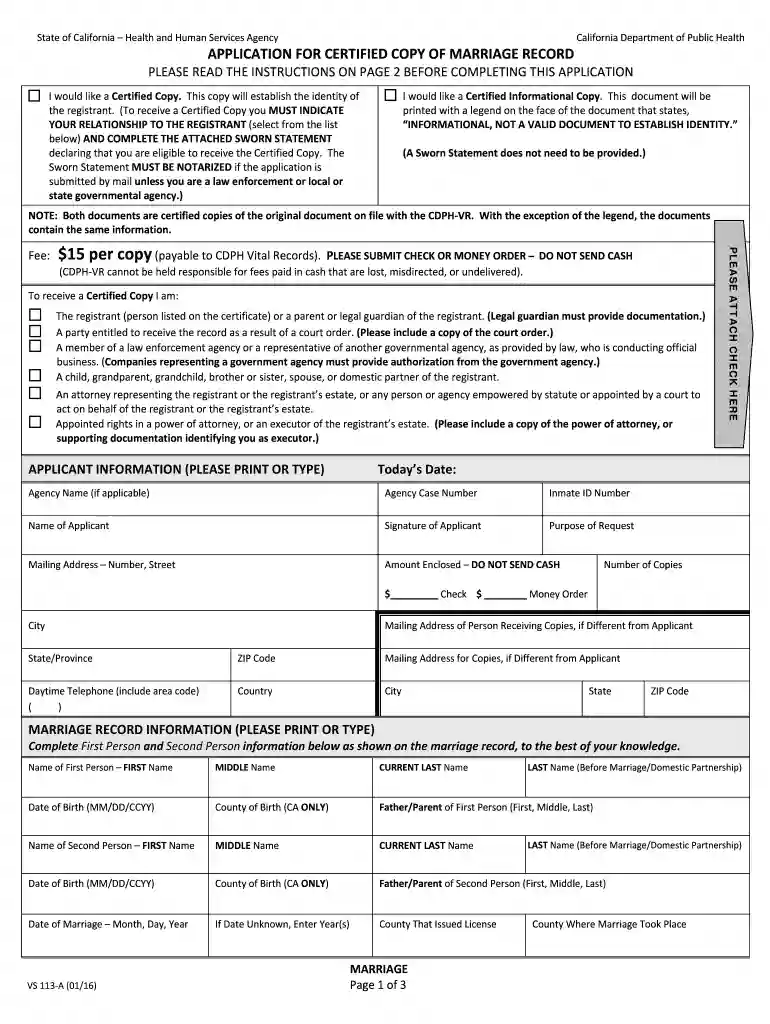
The "CHSI How to Obtain Certified Copies of Marriage Records 2016" provides a structured guide on how to request certified copies of marriage records from specific governmental bodies, primarily focusing on the California Department of Public Health (CDPH) Vital Records. This document outlines the official process to ensure that individuals can legally obtain necessary documentation for purposes such as legal verification, genealogical research, or personal record-keeping.


Different states may have nuanced requirements regarding marriage records. While California centralizes requests through the CDPH, other states might direct individuals to county recorders' offices or similar local entities. Variations occur in processing times, service fees, and the format of document submission, urging applicants to consult state-specific guidelines.
Marriage record request forms and certified copies are typically issued by the state's vital records office or equivalent local government entity, like a county clerk's office. In California, this function is primarily under the jurisdiction of the CDPH Vital Records division.
While both digital and paper versions of the application process exist, some states prioritize one over the other in terms of processing speed and cost effectiveness. Digital submissions, facilitated by platforms offering file compatibility like DocHub, are encouraged for their immediacy and convenience compared to traditional mail methods.
This guide aims to provide comprehensive coverage for obtaining certified copies of marriage records, optimizing the reader's understanding of the practical steps, legal implications, and variations across different states.
We've got more versions of the CHSI How to Obtain Certified Copies of Marriage Records 2016 form. Select the right CHSI How to Obtain Certified Copies of Marriage Records 2016 version from the list and start editing it straight away!
At DocHub, your data security is our priority. We follow HIPAA, SOC2, GDPR, and other standards, so you can work on your documents with confidence.
You will need to contact the County Recorders Office in the county where the marriage license was issued. CDPH Vital Records is continually indexing marriage
by AM DGinto 2019 Cited by 18 Variation in whether states presume both partners in a same-sex relationship to be the legal parents of their child and, if not, whether a second-parent.
It is strongly recommended that the machine is certified compatible with ESXi. OsteoDetect should be installed on top of the vSphere Hypervisor, ESXi 6.0


