
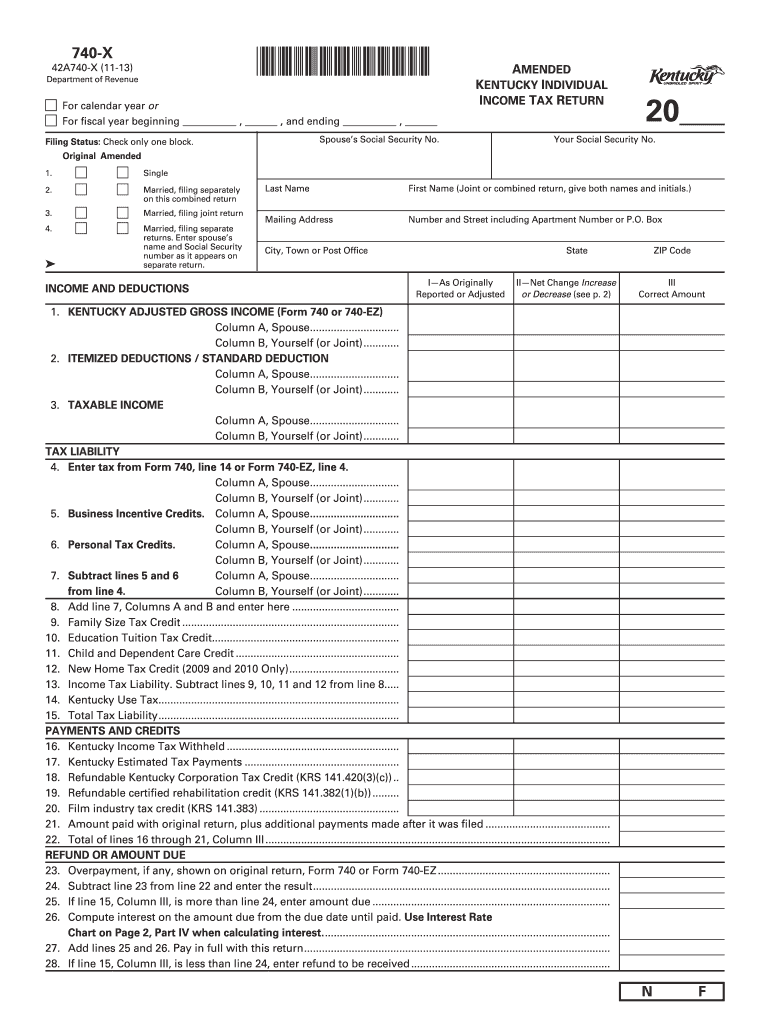







Definition & Purpose of Form 740-X 2013
Form 740-X for the year 2013 is a specific tax document used by individuals in Kentucky to file amended individual income tax returns. This form serves as a corrective mechanism, allowing taxpayers to make adjustments to a previously submitted Kentucky Individual Income Tax Return (Form 740). Amendments could include corrections in personal information, modifications in reported income or deductions, adjustments to tax liabilities, or changes influenced by updated understandings of applicable tax laws. Understanding the utility and function of Form 740-X 2013 is crucial for individuals seeking to ensure compliance and accuracy in their state tax filings.
How to Use Form 740-X 2013
Using Form 740-X 2013 involves several key steps. Initially, taxpayers need to accurately complete sections that address personal information, such as name, address, and Social Security number. Beyond these basics, users must:
- Copy the Data: Transfer original amounts from the initial tax return into the designated columns on the form.
- Detail Adjustments: Clearly indicate the corrections or changes in the 'Correct Amount' columns, including explanations and justifications for each change.
- Recalculate Liability: Re-evaluate tax liabilities, credits, and payments based on the corrected data.
- Supporting Documentation: Attach all necessary forms and documents that support the changes made, such as corrected W-2s or updated 1099s.
A meticulous approach ensures that all adjustments are accurately reflected and substantiated on Form 740-X 2013.
Steps to Complete Form 740-X 2013
Completing Form 740-X 2013 accurately is essential for making successful amendments to previously filed returns. Here’s a structured process:
- Acquire the Form: Obtain Form 740-X for 2013 through the Kentucky Department of Revenue's website or a physical tax office.
- Identify Errors: Carefully review your original return to identify errors or omissions.
- Review Instructions: Carefully read the form instructions to understand the sections that apply to your situation.
- Calculate Changes: Accurately compute any necessary changes to income, deductions, or credits.
- Provide Justifications: Enter the reason for each adjustment in the "Explanation of Changes" section on the form.
- Double-check Calculations: Verify all recalculations, ensuring precision in tax liability computations.
- Submit Form with Attachments: File the completed form with supporting documentation through mail or electronically, as permitted by Kentucky law.
Accuracy in completing these steps ensures that your amended form is processed without delays or complications.
Important Terms Related to Form 740-X 2013
Understanding the terminology associated with Form 740-X 2013 is crucial:
- Amended Return: A tax return filed to correct errors or make changes to a previously submitted return.
- Tax Liability: The total amount of tax owed by the taxpayer.
- Refund: Money returned to the taxpayer if the corrected calculations show an overpayment.
- Deductions: Allowable expenses that reduce taxable income.
- Credits: Specific amounts subtracted from the tax due, reducing overall tax liability.
- Supporting Documents: Additional forms, receipts, or statements that validate the changes made on an amended return.
These terms are fundamental for interpreting and completing Form 740-X 2013.
Who Typically Uses Form 740-X 2013
Form 740-X 2013 is primarily used by individuals who have filed a Kentucky Individual Income Tax Return and subsequently need to make amendments. Typical users include:
- Residents with Adjusted Income: Individuals whose reported income has changed due to inaccuracies or newly discovered income.
- Taxpayers Claiming Deductions: Those needing to correct or add deductions not previously claimed.
- Individuals Facing IRS Audits: Taxpayers responding to audits that necessitate adjustments to state tax returns.
- Tax Filers with Revised Documents: Those receiving corrected forms post-filing, necessitating changes in state tax records.
Understanding the typical users can guide whether Form 740-X 2013 is applicable to your circumstances.
Key Elements of Form 740-X 2013
Key components integral to Form 740-X 2013 include:
- Personal Information: Sections requiring taxpayer identification details.
- Original and Corrected Amounts: Columns specifying initial and amended amounts for income, deductions, and other tax factors.
- Explanation of Changes: A narrative section detailing the reasons for amendments made to the original return.
- Attachment Area: Designation for additional necessary documents supporting the changes.
- Signature Block: Space for taxpayer and, if applicable, preparer signatures, certifying the accuracy of the amendments.
Each element is critical for the complete and precise submission of Form 740-X 2013.
State-Specific Rules for Form 740-X 2013
Kentucky state-specific considerations for Form 740-X 2013 include:
- Time Limits: Amended returns must typically be filed within four years from the date the original return was filed or due, whichever is later.
- Refund Claims: Amendments requesting refunds must comply with Kentucky refund claim timelines and regulations.
- Filing Requirements: State regulations dictate whether original filing requirements, like electronic submission or third-party preparer involvement, apply to amendments.
Adherence to these state-specific rules is essential to ensure compliance when filing Form 740-X 2013.
Required Documents for Submitting Form 740-X 2013
When submitting Form 740-X 2013, the following documents are required:
- Original Return Copy: A photocopy of the original Form 740 filed.
- Supporting Documentation: Additional forms or receipts verifying claims made (e.g., W-2, 1099).
- Revised Calculations: Worksheets demonstrating recalculated figures for accuracy verification.
- Amendment Justifications: Explanations, often in letter form, rationalizing reasons for amendments.
Ensuring all required documentation accompanies the amended return is critical for smooth processing and acknowledgment by the Kentucky Department of Revenue.




