




01. Edit your rut 75 tax form illinois online
Type text, add images, blackout confidential details, add comments, highlights and more.

Type text, add images, blackout confidential details, add comments, highlights and more.

Draw your signature, type it, upload its image, or use your mobile device as a signature pad.

Send rut 75 tax form via email, link, or fax. You can also download it, export it or print it out.
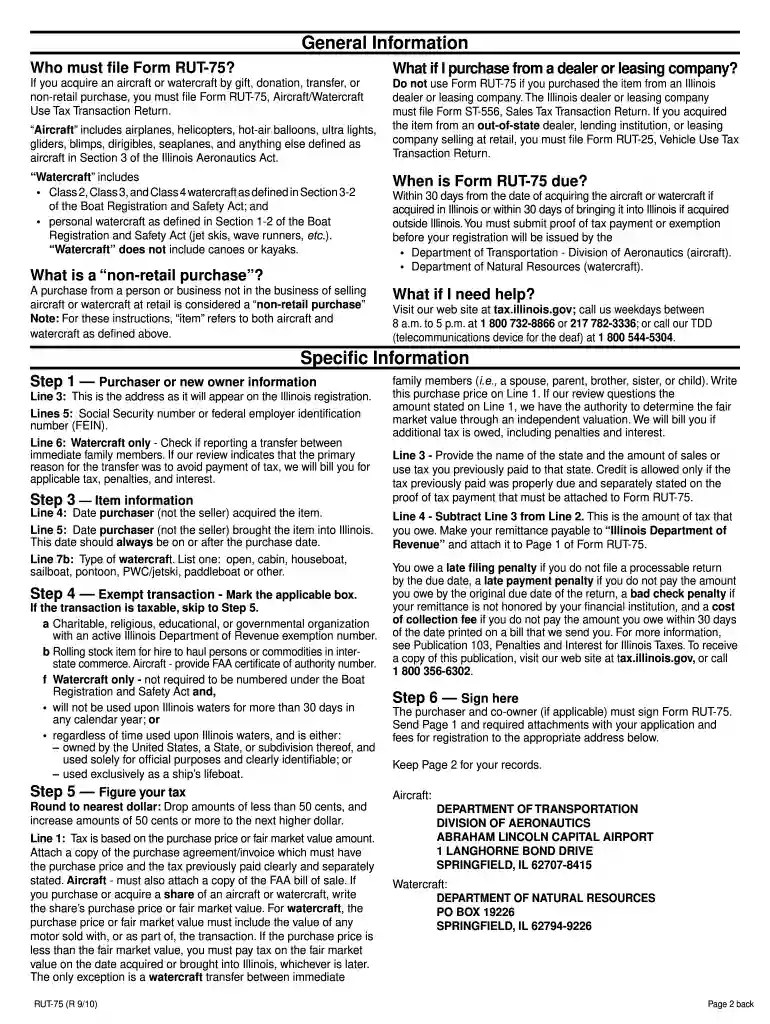
Form RUT-75 is a specific document used in Illinois for individuals acquiring aircraft or watercraft through non-retail channels, such as gifts, donations, or private sales. This form collects vital information needed for tax purposes and ensures compliance with state regulations on non-retail purchases. The main objective of the form is to calculate the appropriate use tax applicable to the acquisition. Its completion is necessary to validate that due taxes have been assessed when acquiring high-value personal conveyances outside of traditional retail scenarios.
Completing Form RUT-75 involves several methodical steps to ensure accuracy and compliance with Illinois state laws.
Gather Personal Information:
Detail the Acquisition:
Calculate Use Tax:
Input Purchase Details:
Sign and Submit:
Form RUT-75 is predominantly used by individuals and organizations acquiring aircraft or watercraft outside of retail channels within the state of Illinois. This includes:
Compliance with Form RUT-75 is mandated by Illinois state tax laws.
Legal Obligations:
Taxpayer Responsibilities:
Understanding specific terminology associated with Form RUT-75 is crucial for accurate completion and compliance:
Illinois imposes specific rules regarding the filing of Form RUT-75:
Meeting the deadlines associated with Form RUT-75 is essential to maintaining compliance:
Non-compliance with the submission of Form RUT-75 or underreporting the necessary details can result in:
Financial Penalties:
Interest Charges:
Legal Repercussions:
Using Form RUT-75 accurately and adhering to all procedures protects individuals and businesses from financial risk and ensures compliance with Illinois state tax requirements.
We've got more versions of the rut 75 tax form illinois form. Select the right rut 75 tax form illinois version from the list and start editing it straight away!
At DocHub, your data security is our priority. We follow HIPAA, SOC2, GDPR, and other standards, so you can work on your documents with confidence.
The following are instructions for entering data into this section. Crash Date: Enter the date of the traffic crash in month, day, and year order in the
If you acquire an aircraft or watercraft by gift, donation, transfer, or non-retail purchase, you must file Form RUT-75,. Aircraft/Watercraft Use Tax
Jan 17, 2011 Illinois residents must file RUT-75 to report the acquisition of an aircraft or watercraft, whether by gift, donation, transfer, or nonretail


