
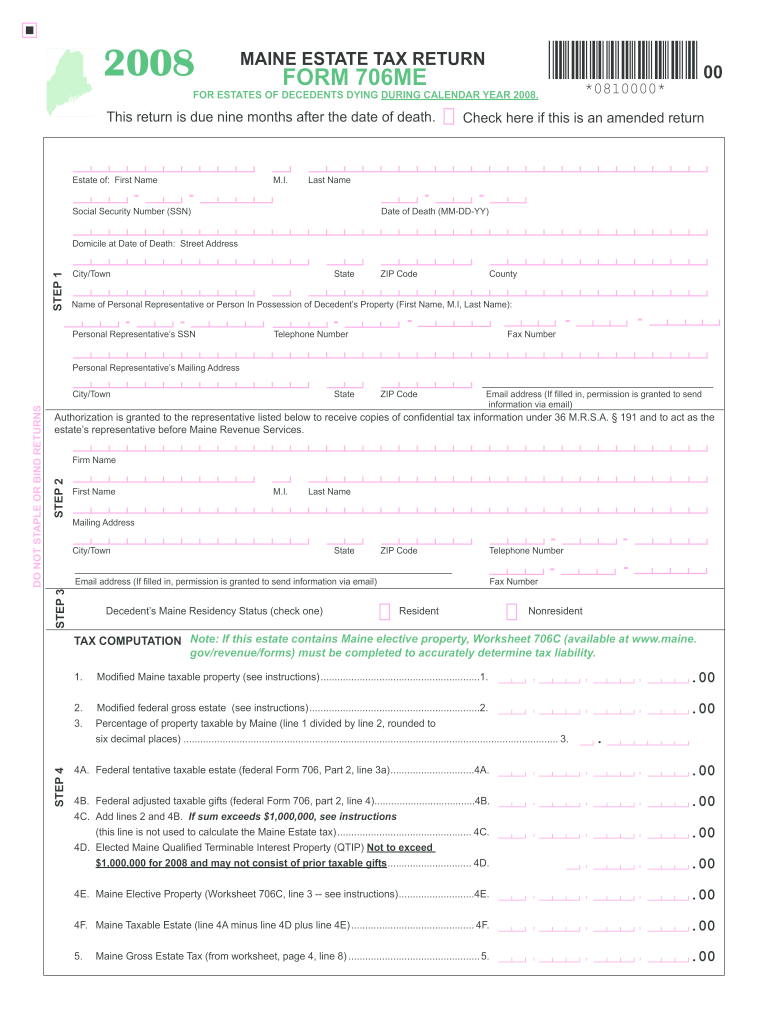







Definition & Purpose of FORM 706ME
FORM 706ME, officially known as the Maine Estate Tax Return, is crucial for estate management in Maine. This form is used to report and calculate estate taxes for decedents who passed away in a specific calendar year. It includes sections for personal information, tax computation, and residency status, which determine the estate's tax obligations. Understanding the form's structure is vital for accurate tax reporting and compliance with Maine state laws.
Key Elements of FORM 706ME
- Personal Information: Required details about the decedent, including name, date of death, and Social Security number.
- Residency Status: Confirmation of whether the decedent was a resident of Maine, affecting tax liabilities.
- Tax Computation: Instructions on calculating the taxable estate value, deductions, and credits.
How to Use FORM 706ME Effectively
To effectively use FORM 706ME, it is essential to accurately assess the taxable estate and ensure all sections are correctly filled. The form requires detailed documentation of assets and liabilities as of the date of the decedent's death. Proper calculation of deductions and credits is necessary to determine the final estate tax due.
Steps to Complete FORM 706ME
- Collect Required Documents: Gather all relevant financial documents, including appraisals of significant assets.
- Fill Personal Information: Accurately enter the decedent’s details and executor information.
- Determine Residency: Confirm the residency status of the decedent to apply the correct tax rules.
- Compute Taxable Estate: Calculate the estate’s gross value, apply deductions, and determine the net taxable estate.
- Review and Submit: Double-check all filled sections for accuracy before submission to avoid penalties.
How to Obtain FORM 706ME
Acquiring FORM 706ME can be done through various means to ensure you have the official documentation necessary for estate tax filing in Maine.
Form Submission Methods
- Online: Visit the Maine Revenue Services website to download or fill out the form electronically.
- Mail: Request a physical copy through mail from the Maine Revenue Services.
- In-Person: Collect the form at designated state offices for those who prefer paper submissions.
Legal Use and Compliance
Using FORM 706ME carries legal implications, as it ensures compliance with Maine's estate tax laws. It provides a record of estate value assessment and tax liabilities, crucial for legal and financial audits.
Penalties for Non-Compliance
Failure to submit FORM 706ME within the specified timeline results in penalties, including interest on unpaid estate taxes and possible legal actions. Ensuring timely and accurate submissions is paramount to avoid these repercussions.
Important Dates and Filing Deadlines
The estate tax return form must be filed within nine months of the decedent's death, following Maine state tax regulations. This deadline is critical for meeting state compliance and avoiding late penalties.
Filing Deadline Guidelines
- Extensions: In certain circumstances, extensions for filing may be requested, requiring formal approval from the state.
- Pre-Deadline Preparations: Ensure all required documents are prepared well before the deadline to facilitate smooth processing.
Who Typically Uses FORM 706ME
FORM 706ME is utilized by executors or personal representatives of estates whose decedents were domiciled in Maine. It is essential for estates that exceed the federal or state exemption thresholds, necessitating careful evaluation and reporting of the estate's value.
Business Entity Types
- LLCs and Partnerships: Must determine estate involvement in businesses to compute taxes accurately.
- Corporations: Additional considerations for stock evaluations and business assets as part of the estate.
State-Specific Rules and Variations
Each state may have different estate tax requirements; however, FORM 706ME is tailored to Maine's regulations. Understanding these specifics is crucial for compliance and accurate tax reporting.
Maine-Specific Considerations
- Exemptions and Thresholds: Unique to Maine, requiring specific thresholds for estate evaluations.
- Applicable Deductions: Differences in allowable deductions compared to federal rules, such as local trust regulations.
Digital vs. Paper Versions of FORM 706ME
The form is available in both digital and paper formats, allowing flexibility for individuals with varying preferences for document handling.
Software Compatibility
FORM 706ME can be integrated with digital tax preparation software such as TurboTax and QuickBooks, facilitating streamlined preparation and submission processes.
By understanding and utilizing FORM 706ME correctly, executors and personal representatives can ensure that estate taxes are properly calculated and filed, in compliance with Maine state laws.




