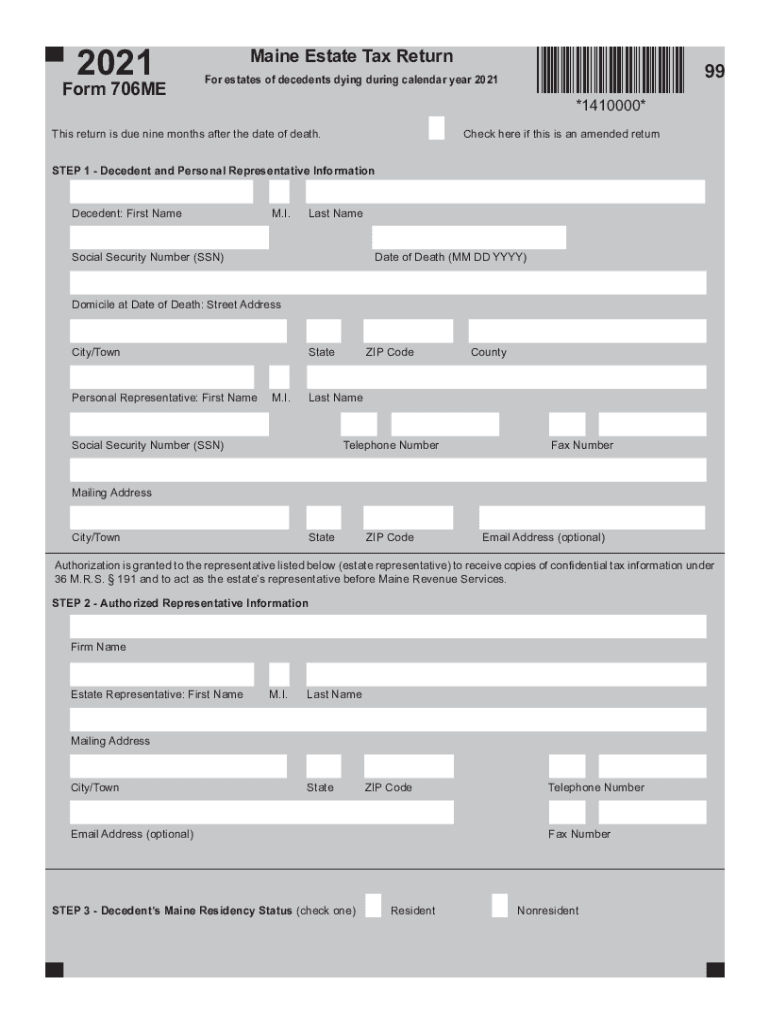







Definition and Purpose of Form 706ME
The Maine Estate Tax Return, known as Form 706ME, is utilized for filing estate taxes in the state of Maine. Specifically, this form is required for estates of decedents who passed away in 2021 and onwards if they meet certain federal estate tax return thresholds. It aims to calculate the Maine taxable estate and determine any state taxes owed or potentially refundable to the estate. Understanding the role and requirements of Form 706ME is crucial in estate planning and ensures compliance with Maine tax laws.
Specific Requirements for Use
Form 706ME must be filed if the gross estate plus adjusted taxable gifts and specific exemptions exceed a certain amount, triggering mandatory state tax filing. This threshold is aligned with federal estate tax guidelines, demonstrating the importance of understanding how federal and state thresholds interact. Estates not meeting this threshold may still file for documentation purposes.
Important Considerations
This form demands detailed disclosure of the decedent's assets, liabilities, and pertinent financial information. Complete and accurate reporting on the form helps in the precise calculation of what is owed to the state and any potential credits or deductions applicable to the estate.
How to Obtain Form 706ME
Obtaining Form 706ME can be straightforward through several methods. It is accessible directly from the Maine Revenue Services website, where it can be downloaded as a PDF for convenience. Additionally, those who prefer physical copies can request the form by contacting Maine Revenue Services directly. Tax professionals often have copies and can provide guidance on how best to fill out and file the form.
Online Access and Download
- Available on the official Maine Revenue Services website.
- Downloadable as a PDF, allowing for easy printing or electronic completion.
- Ensure the latest version is used to reflect any changes in tax law or form updates.
Requesting Physical Copies
- Contact Maine Revenue Services for a mailed copy.
- Some libraries and local government offices may also stock paper forms for public use.
Steps to Complete Form 706ME
Completing Form 706ME involves several key steps that necessitate careful attention to detail. It begins with gathering all relevant financial documents associated with the decedent and includes possible team collaboration when more detailed financial and legal information is needed.
Step-by-Step Instructions
- Gather Required Financial Documents: Obtain all documents related to the decedent's gross estate, deductions, and any previous gifts made.
- Calculate Gross Estate: List all properties, cash accounts, investment assets, and any other entities of financial value under the decedent's ownership at the time of death.
- Determine Deductions: Account for debts, mortgages, estate administration expenses, and any eligible deductions that can lower the taxable value of the estate.
- Complete All Required Sections: Fill out each section of Form 706ME carefully, cross-referencing documents to ensure accurate information is reported.
- Review for Accuracy: Double-check entries and calculations to ensure no errors, reducing the risk of processing delays or audits.
- Submit the Form: File the completed form as per the specified method, either digitally or through mail, ensuring it meets the deadline requirements.
Tips for Efficient Completion
- Use accounting software or professional tax preparation services for precision.
- Familiarize yourself with common pitfalls in estate tax filings to prevent mistakes.
Related Important Terms
Understanding key terms related to Form 706ME improves accuracy in reporting and compliance. These terms often interact with broader tax and estate laws, making them essential for correct form completion.
Key Terminological Insights
- Gross Estate: Encompasses total assets before deduction of liabilities, including the market value of all assets owned by the decedent.
- Adjusted Taxable Gifts: Refers to gifts given during the decedent's lifetime that may affect the estate's gross value calculations.
- Maine Taxable Estate: Derived after deductions, representing the net value the state uses to assess estate taxes owed.
Legal Use and Compliance for Form 706ME
The legal framework surrounding Form 706ME imposes specific obligations and rights. Adhering to these ensures no legal repercussions arise from improper filing or tax calculation.
Legal Obligations
- Timely Submission: Adherence to state-set deadlines is critical in avoiding penalties.
- Accurate Disclosure: Full transparency in financial reporting prevents issues with the Maine Revenue Services.
Compliance Checks and Enforcement
Taxpayers must be prepared for potential audits by the Maine Revenue Services ensuring compliance with the state and federal tax requirements. Emphasizing accuracy and thoroughness guards against misreporting repercussions.
State-Specific Rules for Maine
Maine-specific rules should be closely understood to prevent errors that result from differences between federal and state estate tax laws. This state-specific focus can impact the approach to all financial estimations and regulatory compliance aspects.
State Regulation Nuances
- Deviations from federal exemptions and deductions.
- Unique Maine credits that may apply to reduce overall tax liability.
- Interaction with state property laws and how they intersect with estate handling.
Guidance for Navigating State Differences
Working with a financial advisor familiar with Maine's tax landscape leads to better awareness and alignment with state guidelines, potentially minimizing tax exposure.
Filing Deadlines and Important Dates
Adhering to filing deadlines ensures that all estate tax responsibilities are met without accruing penalties. Knowing these dates helps to maintain on-time submissions.
Critical Deadline Information
- Typical deadlines for Form 706ME align with federal estate tax submission requirements, typically nine months post the decedent's date of death.
- Filing extensions may be requested, giving additional time if more documentation is required or delays in estate settling occur.
Extension Considerations
Understand the implications of filing for extensions, including potential interest charges on late payments, to maintain financial predictability and avoid unnecessary penalties.
Digital vs. Paper Submission Methods
The choice between digital and paper submission of Form 706ME affects processing times and convenience. Knowing the benefits of each method aids in selecting the most appropriate option for a given situation.
Advantages of Each Method
- Digital Submission: Speeds up the process, offers instant acknowledgment, and is environmentally friendly.
- Paper Filing: Potentially easier for those less familiar with technology; however, it requires tracking to ensure it reaches the state office timely.
Recommendations Based on Scenario
- Digital is often recommended for quicker response and confirmation, while maintaining organized digital records can support future reference needs.
- Paper submissions might be necessary if certain attachments or additional documentation need a more formal presentation.
Penalties for Non-Compliance
Failing to comply with Maine's estate tax filing obligations brings financial repercussions. Understanding these penalties helps emphasize the importance of compliance.
Types of Penalties
- Late Filing Charges: Imposed per month or part thereof past the deadline, usually a percentage of the taxes due.
- Interest on Unpaid Taxes: Accrues if taxes remain unpaid past the deadline.
- Accuracy-Related Penalties: Result from substantial understatements and can be costly.
Avoidance Strategies
- Implement systematic checks prior to submission.
- Engage professional assistance when navigating complex estates, ensuring complete adherence to both state and federal requirements.
Knowing these critical aspects surrounding Form 706ME supports successful estate management and compliance with state regulations, crucial for estate planners and personal representatives responsible for managing decedent estates in Maine.