



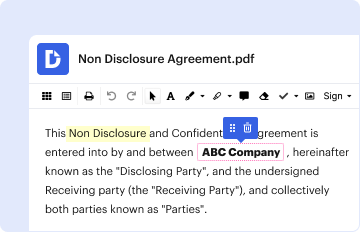
01. Edit your form online
Type text, add images, blackout confidential details, add comments, highlights and more.


Type text, add images, blackout confidential details, add comments, highlights and more.
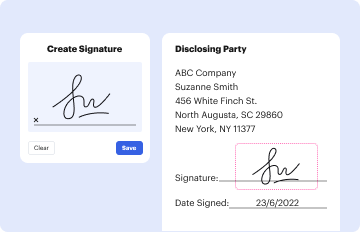
Draw your signature, type it, upload its image, or use your mobile device as a signature pad.

Send it via email, link, or fax. You can also download it, export it or print it out.
The term "prorated fee amount" refers to a calculated fee that is adjusted in proportion to a specific period or service usage. This adjustment is based on a predetermined rate applied to the portion of the period or service that has been utilized. For instance, if you start a subscription midway through a billing cycle, you might only pay for the days remaining in that cycle. Prorating ensures that fees are fair and reflective of actual use rather than being a blanket charge for the entire period. This approach is commonly used in various contexts such as rent, utility services, and membership fees.
To effectively utilize the prorated fee amount, it is essential to understand the basis on which the proration is calculated. Generally, you begin by identifying the full rate or fee for the entire service period. Then, determine the fraction of the period you are eligible to use or have used the service. Multiply the total fee by this fraction to get the prorated fee amount. For example, if a monthly membership costs $100 but you join 10 days into a 30-day month, you might pay approximately $66.67, assuming the fee is equally distributed across the month. This method ensures transparency and fairness in billing.
This step-by-step method aids in preventing discrepancies and promotes equitable billing practices.
Prorating fees is essential for several reasons:
These benefits highlight the importance of adopting a prorated fee approach in various billing scenarios.
Prorated fee amounts are utilized by both service providers and consumers across different industries.
Businesses and individuals benefit from clear, predictable charges that align with actual usage, fostering better financial planning and management.


Several critical elements play a role in calculating a prorated fee amount:
Each element ensures that calculations are performed accurately and consistently, allowing for precise billing strategies that reflect true service consumption.
Prorating fees follows legal standards to ensure compliant billing practices. These practices align with consumer protection laws mandating transparently and fairly calculated fees. Misrepresentation or incorrect calculation of fees can lead to legal disputes. Consequently, businesses must:
Complying with these legal imperatives helps businesses avoid potential litigation and reinforces customer trust.
Consider these scenarios to understand how prorated fees apply in real-world contexts:
Each example showcases practical applications of prorated fees, emphasizing their importance in everyday transactions.
We've got more versions of the Prorated Fee amount: form. Select the right Prorated Fee amount: version from the list and start editing it straight away!
At DocHub, your data security is our priority. We follow HIPAA, SOC2, GDPR, and other standards, so you can work on your documents with confidence.
Limited Warranty, you may be charged a prorated amount for wear or other charges. If so, you should present your paid invoice detailing the nature of the
Part-time students pay a prorated fee based on the number of credit hours for which they are enrolled. Approximately $12 million is collected from this fee
Mar 5, 2019 The regulations provide a specific formula for prorating charges if an institution assesses charges for more than a payment period at a time.


