Pension direct payment 2026

Get Form
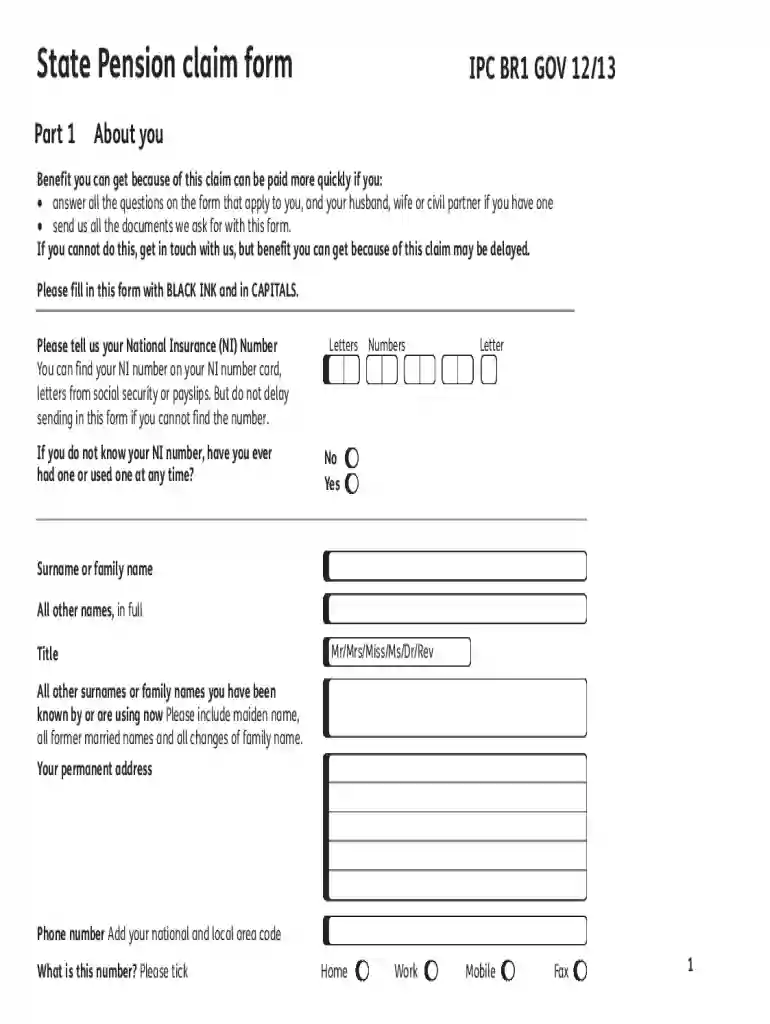
state pension form ipc br1 gov Preview on Page 1

Here's how it works

01. Edit your state pension form ipc br1 gov online
Type text, add images, blackout confidential details, add comments, highlights and more.

02. Sign it in a few clicks
Draw your signature, type it, upload its image, or use your mobile device as a signature pad.

03. Share your form with others
Send ipcbr1 via email, link, or fax. You can also download it, export it or print it out.

Definition and Meaning

The pension direct payment is a financial service that allows pension payments to be deposited directly into a bank account, ensuring a secure and efficient transfer of funds. This service is particularly beneficial for retirees living abroad or within the United States who wish to receive their pension without the delays of postal services or the handling of physical checks. Direct payment minimizes the risk of payment delays or losses, offering convenience and peace of mind. By automating the transfer, recipients can expect timely deposits, which can be crucial for budget management and financial planning.

How to Use the Pension Direct Payment

To start using the pension direct payment, individuals must provide their bank account details to the relevant pension authority, ensuring that information such as the account number, bank name, and routing number is accurate. This setup often requires completing a form either online or via a physical document provided by the pension agency. Once the necessary details are submitted and verified, pension payments will be directly deposited according to the defined schedule, whether that be monthly or quarterly. Users must keep their banking information up-to-date to avoid disruptions in their payment.

Steps to Complete the Pension Direct Payment Form

  1. Gather Necessary Information: Collect your bank account details and personal information, such as Social Security number and contact details.
  2. Complete the Form: Fill out the pension direct payment form accurately, ensuring all fields are completed.
  3. Submit Documentation: Provide any required documents, such as proof of identity or a voided check, depending on the form's requirements.
  4. Review Submission: Double-check the form for accuracy to avoid errors that could delay processing.
  5. Submit the Form: Depending on the form's instructions, either submit it online through the pension agency's secure portal or mail it to the specified address.
  6. Confirm Activation: Once processed, confirm with your bank or pension agency that your direct payment setup is complete.

Required Documents

When setting up a pension direct payment, certain documents are typically necessary to verify identity and bank information. These may include a government-issued ID, proof of address, and a voided check from the bank account where payments will be deposited. Providing accurate documentation is crucial, as any discrepancies can lead to delays or errors in payment processing. It's also advisable to have copies of these documents for personal records and to facilitate any future updates or changes to payment information.

Eligibility Criteria

Eligibility for pension direct payment generally includes being a recipient of a pension either from a private, corporate, or government source. The recipient must have a valid bank account where payments can be deposited. In some instances, geographical restrictions may apply, particularly for international accounts. Confirming eligibility with the pension provider is an essential step before initiating the process, as criteria can vary based on the origin of the pension.


decoration image ratings of Dochub

Important Terms Related to Pension Direct Payment

  • Direct Deposit: The electronic transfer of funds directly into a bank account.
  • Routing Number: A nine-digit number used to identify a financial institution in a transaction.
  • Beneficiary: The individual or entity entitled to receive pension payments.
  • Automated Clearing House (ACH): A network for electronic transactions, including direct deposits.
  • Bank Verification: A process to confirm the account details provided are correct and active.

Examples of Using the Pension Direct Payment

Consider the case of a retired teacher who receives a monthly pension from their state government. By opting for pension direct payment, the teacher ensures their pension is deposited into their checking account on the same day each month without needing to visit a bank. A similar example could involve a U.S. citizen living overseas who uses this service to avoid international mailing delays and potential fees associated with foreign transaction conversions.

Software Compatibility

Modern financial and tax software like TurboTax or QuickBooks often allows integration with pension direct payments by supporting direct import of banking transactions. This compatibility simplifies tracking pension deposits for tax and financial planning purposes. Users can easily categorize and reconcile these transactions, ensuring accurate financial records. Additionally, pension statements can often be imported or manually entered into these software packages to streamline the process further.

See more pension direct payment versions

We've got more versions of the pension direct payment form. Select the right pension direct payment version from the list and start editing it straight away!
Versions Form popularity Fillable & printable
2013 4.9 Satisfied (486 Votes)
2012 4.4 Satisfied (288 Votes)
2009 4.3 Satisfied (143 Votes)
be ready to get more

Complete this form in 5 minutes or less

Get form

Got questions?

We have answers to the most popular questions from our customers. If you can't find an answer to your question, please contact us.
Contact us
Some pensions end at death, meaning that no beneficiary or family member gets to claim the pension. But other pensions provide for payments to a surviving spouse or dependent childrenfor a few years for some, and longer for others.
When youre paid Last 2 digits of your National Insurance numberDay your State Pension gets paid 00 to 19 Monday 20 to 39 Tuesday 40 to 59 Wednesday 60 to 79 Thursday1 more row
The largest contribution comes from CalPERS investments, with additional funding from employer and employee contributions. Some workers currently contribute up to 16.5% of their paychecks to help fund their own pensions. The CalPERS Pension Buck illustrates the sources of income that fund public employee pensions.
Taking your pension: your options take some or all of your pension pot as a cash lump sum, no matter what size it is. buy an annuity - you can take a cash lump sum too. take money directly from the pension fund, and leave the rest invested (income drawdown) - there wont be any restrictions for how much you can take.
When a participant in a retirement plan dies, benefits the participant would have been entitled to are usually paid to the participants designated beneficiary in a form provided by the terms of the plan (lump-sum distribution or an annuity).

Security and compliance

At DocHub, your data security is our priority. We follow HIPAA, SOC2, GDPR, and other standards, so you can work on your documents with confidence.

Learn more
ccpa2
pci-dss
gdpr-compliance
hipaa
soc-compliance

People also ask

You can: take a pension annuity and receiving a monthly check; or, if your employer allows, take a lump-sum distribution, which you will need to invest and manage: lump sums can be rolled into an IRA, where you are taxed only on money you decide to take out.
Pension plans are funded by contributions from employers and occasionally from employees. Public employee pension plans tend to be more generous than ones from private employers. Private pension plans are subject to federal regulation and eligible for coverage by the Pension Benefit Guaranty Corporation.
Monthly pension payments are a fixed dollar amount, begin at retirement, and last until a retirees death. Some plans offer a survivors benefit for a living spouse. A lump sum distribution is a one-time cash disbursement at retirement. The retiree is solely responsible for managing the funds throughout retirement.

ipc br1