






Definition & Meaning
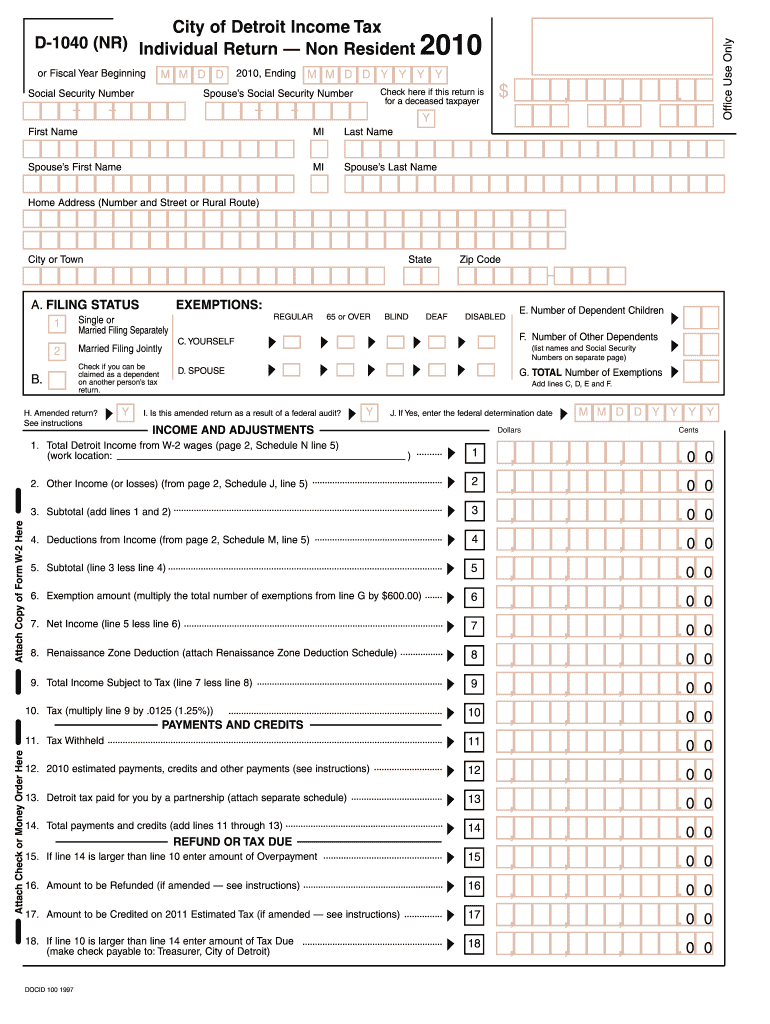
The "d 1040NR 2015 Form" is a tax document used by nonresident aliens to report their U.S.-sourced income. Primarily, it assists individuals who reside outside the United States but have income within the country that requires federal income tax reporting. This form is an essential part of maintaining compliance with IRS guidelines for international taxpayers, specifically targeting income generated in the United States from work, investment, or other types of income sources.
How to Use the d 1040NR 2015 Form
To correctly complete the d 1040NR 2015 form, follow these steps:
- Gather Personal Information: This includes your name, address, and taxpayer identification number.
- Determine Filing Status: Select the appropriate status that represents your situation, such as single or head of household.
- Report U.S.-Sourced Income: Include all types of income earned within the U.S., whether through employment, investment, or other avenues.
- Apply Exemptions and Deductions: Indicate any eligible exemptions and deductions to reduce taxable income.
- Calculate Tax Liability: Use the information provided on income and deductions to find your total tax liability.
- Submit with Required Documentation: Attach any necessary forms or schedules that support your entries and calculations.
Steps to Complete the d 1040NR 2015 Form
- Start with the Identification Section: Enter basic personal information, including your taxpayer ID.
- Filing Status Selection: Choose your correct status, as this impacts your tax rates and deductions.
- Report All U.S. Income: This section demands detailed reporting of any U.S.-earned wages, dividends, or rental income.
- Consider Deductions and Credits: Apply available deductions or credits such as education expenses relevant to your filing status.
- Attachment of Supporting Documents: Include necessary forms like W-2s or 1099s with your submission.
- Review and Submit: Ensure accuracy before signing and sending your completed form to the IRS.
Who Typically Uses the d 1040NR 2015 Form
Non-residents, such as:
- Foreign students on temporary visas earning income or scholarships
- International researchers receiving grants or stipends
- Employees of foreign organizations working in the U.S. temporarily
- Non-resident investors in U.S. properties or stock markets


Key Elements of the d 1040NR 2015 Form
- Personal Identification: Including taxpayer ID and filing status
- Income Reporting: Sections to list wages and other earnings
- Tax Calculation: Spaces for deductions, exemptions, and tax owed
- Withholding and Payments: Boxes for previously withheld tax or estimated payments
- Signatures: Legally validating the accuracy and truthfulness of the information provided
Filing Deadlines / Important Dates
Filing dates are crucial to avoid penalties:
- Annual Deadline: Typically April 15th unless it falls on a weekend or holiday, then the next business day applies.
- Extension Requests: Form 4868 can be used to apply for an automatic six-month extension. The request must be submitted by the standard due date.
Required Documents
- Form W-2: For reporting wages from employment.
- Form 1099: For interest, dividends, or other income.
- Visa Documentation: To justify non-resident status if applicable.
- Receipts and Records: For deductions or credits claimed, like educational expenses.
IRS Guidelines
The IRS establishes rules on the completion and submission of 1040NR forms:
- Eligibility Criteria: Conditions under which a taxpayer must file include specific income thresholds and types of income received.
- Filing Requirements: Must be consistent with IRS guidelines specifying how to report income and claim deductions.
- Penalties: Failing to file, inaccuracies, or omission of essential information can lead to fines and interest on unpaid taxes.
Form Submission Methods (Online / Mail / In-Person)
- Online Submission: Available through IRS e-file services or approved tax software.
- Mail: Directly mailed to the IRS service center.
- In-Person: At local IRS offices, primarily for those needing assistance or lacking internet access for filing.