




01. Edit your form 943 online
Type text, add images, blackout confidential details, add comments, highlights and more.

Type text, add images, blackout confidential details, add comments, highlights and more.

Draw your signature, type it, upload its image, or use your mobile device as a signature pad.

Send form 943 instructions via email, link, or fax. You can also download it, export it or print it out.
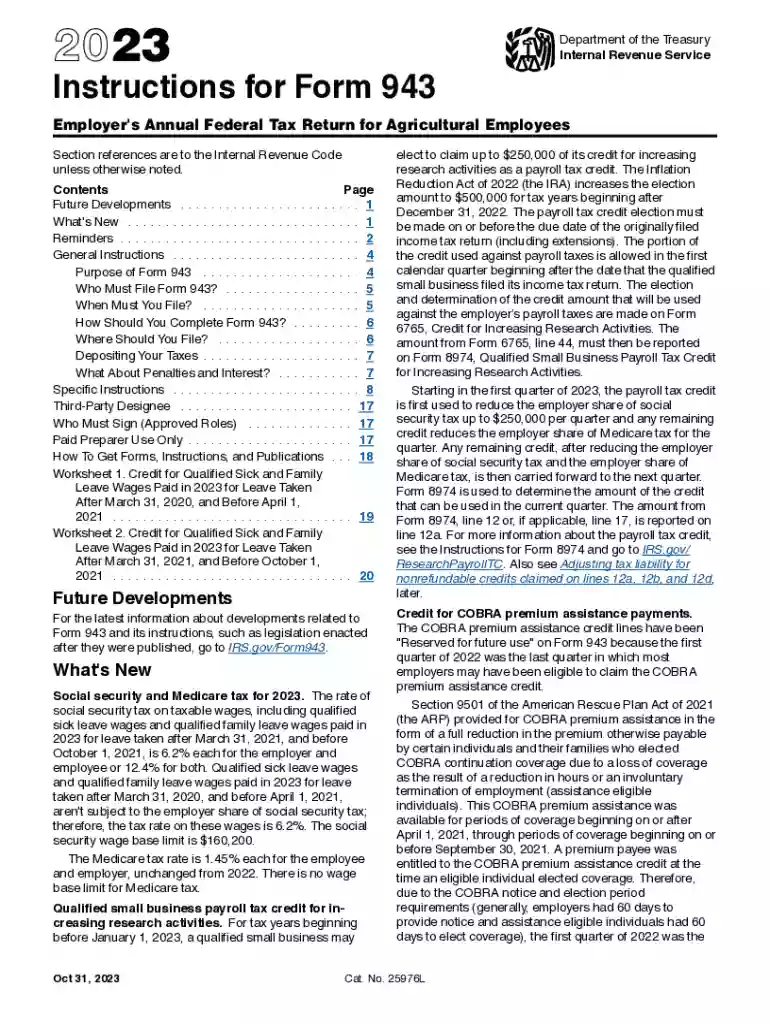
IRS Form 943, also known as the Employer's Annual Federal Tax Return for Agricultural Employees, is a specialized tax form used by employers engaged in agricultural activities. This form is crucial for reporting wages paid to farmworkers and the taxes withheld from those wages. The form also helps employers calculate any credits they may be eligible for, such as those related to qualified sick and family leave wages. The primary goal of Form 943 is to ensure that governmental tax obligations are met concerning agricultural employees' wages.
Form 943 is specifically designated for employers who hire agricultural employees. To qualify, your business must pay wages to farmworkers who are involved in farming activities such as planting, cultivating, and harvesting crops. These employers may also include those operating farms, ranches, nurseries, and greenhouses. Determining eligibility is crucial as it aligns with specific tax obligations.


Form 943 can be accessed through the IRS website, where it's available in a fillable PDF format. This allows for ease of entry and electronic submission, although printed versions can be mailed. Ensuring you obtain the correct version of the form is vital for its proper submission and processing.
Completing Form 943 involves several stages, from inputting wage details to calculating employer taxes and credits. Being meticulous through each step helps prevent errors that could result in penalties.
Understanding the terminology associated with Form 943 is essential to accurate completion and compliance. Terms like "employment tax," "agricultural employee," and "tax credits" play a pivotal role in the form's context.
The IRS mandates that Form 943 is submitted annually, with a standard deadline of January 31st following the calendar year in which wages were paid. It's crucial to adhere to this deadline to avoid late fees and penalties.
Failure to accurately complete and file Form 943 by the stipulated deadline can lead to penalties. It's important for employers to be aware of these risks and take measures to ensure compliance.
Form 943 offers flexibility in terms of submission methods, catering to both digital and traditional approaches. Employers can choose the method that best fits their operational setup and needs.
By understanding and utilizing each of these aspects of IRS Form 943, employers in the agricultural sector can ensure compliance, benefit from applicable credits, and maintain good standing with federal tax obligations.
We've got more versions of the form 943 form. Select the right form 943 version from the list and start editing it straight away!
| Versions | Form popularity | Fillable & printable |
|---|---|---|
| 2025 | 4.8 Satisfied (54 Votes) | |
| 2024 | 4.7 Satisfied (57 Votes) | |
| 2023 | 4.3 Satisfied (51 Votes) | |
| 2022 | 4.2 Satisfied (35 Votes) | |
| 2021 | 4.8 Satisfied (85 Votes) | |
| 2020 | 4.4 Satisfied (294 Votes) | |
| 2019 | 4.3 Satisfied (107 Votes) | |
| 2018 | 4.4 Satisfied (248 Votes) | |
| 2017 | 4.4 Satisfied (318 Votes) | |
| 2016 | 4.3 Satisfied (159 Votes) | |
| 2015 | 4 Satisfied (41 Votes) | |
| 2014 | 4.1 Satisfied (56 Votes) | |
| 2013 | 4.4 Satisfied (64 Votes) | |
| 2012 | 4.1 Satisfied (57 Votes) | |
| 2011 | 4.4 Satisfied (38 Votes) |
At DocHub, your data security is our priority. We follow HIPAA, SOC2, GDPR, and other standards, so you can work on your documents with confidence.
Mar 30, 2026 File this form if you paid wages to one or more farmworkers and the wages were subject to federal income, Social Security, and Medicare taxes.
Use Form 943 to report income tax withheld and employer and employee social security and Medicare taxes on wages paid to farmworkers.


