







Definition & Meaning
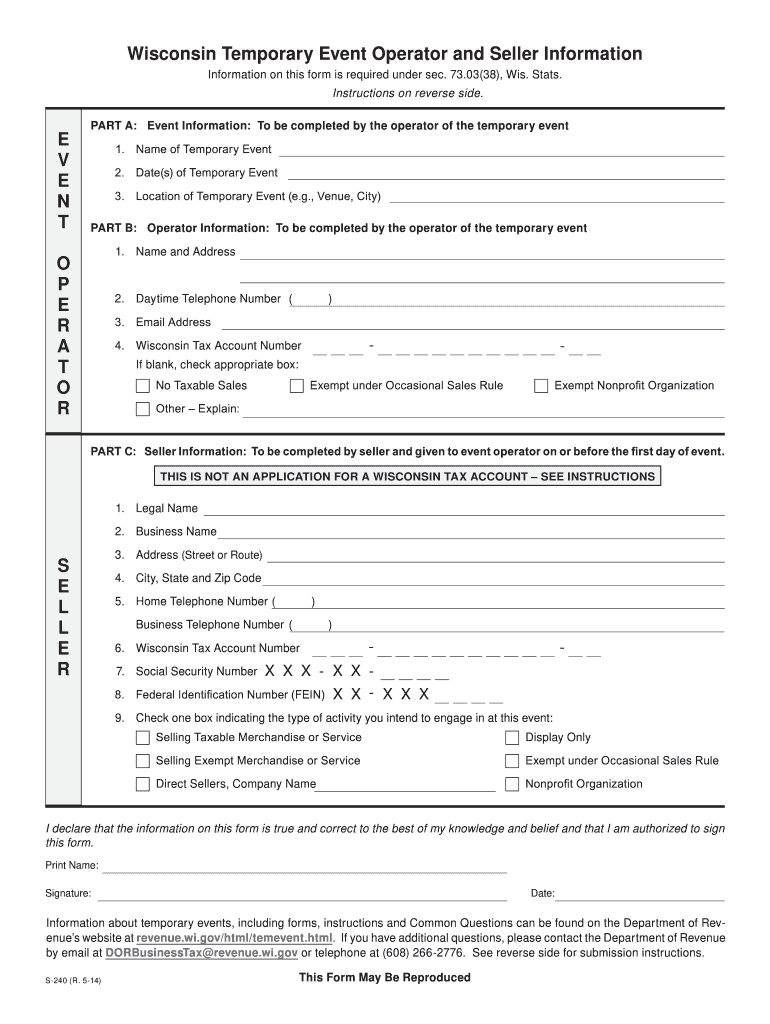
The Wisconsin Department of Revenue Form 240 from 2014 is a document primarily used for sales and use tax purposes. It serves to report taxes collected from the sale of tangible personal property and certain services in Wisconsin. Form 240 is particularly critical for businesses conducting sales in the state, ensuring compliance with local tax regulations. It captures essential data regarding sales transactions, tax calculations, and exempt sales, providing a structured means for businesses to remit their sales tax obligations to the Wisconsin Department of Revenue.
How to Use the Wisconsin Department of Revenue Form
To properly utilize the Wisconsin Department of Revenue Form 240, begin by gathering all sales data for the reporting period. This includes total sales, taxable sales, and any exempt sales.
- Enter Total Sales: Start by calculating and inputting your total sales for the relevant period.
- Calculate Taxable Amounts: Deduct exemptions to determine the taxable sales amount.
- Determine Tax Due: Apply the appropriate tax rate to your taxable sales to compute the tax due.
- Report Exempt Sales: Provide details of any sales exempt from tax, including exemption documentation.
- Complete the Payable Section: Finally, calculate the total amount due, including any penalties or interest, if applicable.
How to Obtain the Wisconsin Department of Revenue Form
The Wisconsin Department of Revenue Form 240 for 2014 can be obtained online from the Wisconsin Department of Revenue's official website. Follow these steps to acquire the form:
- Visit the Official Website: Go to the Wisconsin Department of Revenue's site.
- Navigate to Forms Section: Access the ‘Forms’ section where historical forms are archived.
- Download the Form: Search for the 2014 version specifically and download it.
Alternatively, you may request a physical copy by contacting the Wisconsin Department of Revenue directly.
Steps to Complete the Wisconsin Department of Revenue Form
Completing the form correctly is essential for compliance. Here’s a step-by-step guide:
- Identification Information: Fill out your business name, address, and tax account number.
- Enter Sales Figures: Provide your gross sales and calculate the taxable amount.
- Calculate Tax: Use the applicable rate to find the tax due.
- Detail Exemptions: List exempt sales and attach supporting documentation.
- Finalize Totals: Ensure all sections are totaled and review for accuracy before submission.
Who Typically Uses the Wisconsin Department of Revenue Form
This form is commonly used by business owners in Wisconsin, particularly those engaged in retail sales. It is crucial for:
- Small to mid-sized businesses
- Retail outlets
- Service providers with taxable transactions
- Online businesses with a sales nexus in Wisconsin


Key Elements of the Wisconsin Department of Revenue Form
Key elements of the form include:
- Identification Details: Business name, address, and tax identification number.
- Sales Data: Sections for total, taxable, and exempt sales.
- Tax Due: Calculation areas for tax payable based on sales figures and applicable rates.
- Exemption Details: Areas to describe and justify any claimed exemptions.
Important Terms Related to the Wisconsin Department of Revenue Form
Understanding specific terminology is vital for accurate completion:
- Gross Sales: The total revenue from goods/services before deductions.
- Exempt Sales: Transactions not subject to sales tax.
- Tax Rate: The percentage applied to taxable sales to determine the tax owed.
Filing Deadlines / Important Dates
It is essential to adhere to specified filing deadlines to avoid penalties:
- Quarterly Filing: Most taxpayers file quarterly, with returns due the last day of the month following the quarter's end.
- Annual Filing: Businesses with lower sales volumes might be eligible for annual filing.
- Extensions: Request an extension prior to the deadline if necessary to avoid penalties.
Penalties for Non-Compliance
Failing to comply with filing requirements can lead to significant penalties:
- Late Filing Penalties: Charged as a percentage of the tax due.
- Interest on Unpaid Tax: Accrues daily on unpaid taxes after the due date.
- Audit Risks: Non-compliance may trigger an audit, incurring further complications.
Understanding these elements aids in the precise and timely submission of tax obligations using the Wisconsin Department of Revenue Form 240 for 2014.




