







Definition & Meaning
The "Inheritance Tax Checklist - Iowa Department of Revenue - Iowa" aids individuals and businesses in navigating the inheritance tax filing process specific to Iowa. It is designed to ensure that all details required for calculating, reporting, and paying inheritance taxes are systematically accounted for. This checklist supports preparers in identifying the necessary documents, understanding the inheritance tax requirements, and verifying compliance with Iowa's estate tax laws.
Key Elements
- Personal Information: Details about the deceased, such as their full name, last known address, and date of death.
- Estate Value: A comprehensive listing of the decedent's assets, including real estate, personal property, cash, and securities.
- Deductions and Exemptions: Information regarding allowable deductions, such as funeral expenses and charitable contributions, and applicable exemptions relevant to Iowa law.
- Tax Computation: Steps to calculate the tax liability based on the total estate value minus exemptions and deductions.
How to Use the Inheritance Tax Checklist
Filing inheritance taxes can be intricate, but this checklist provides a structured approach to simplify the process. Follow these straightforward guidelines:
- Gather Necessary Documents: Assemble all relevant data about the decedent's assets, debts, and beneficiaries.
- Review Checklist Requirements: Ensure all sections of the checklist are understood, focusing on asset valuation and deduction eligibility.
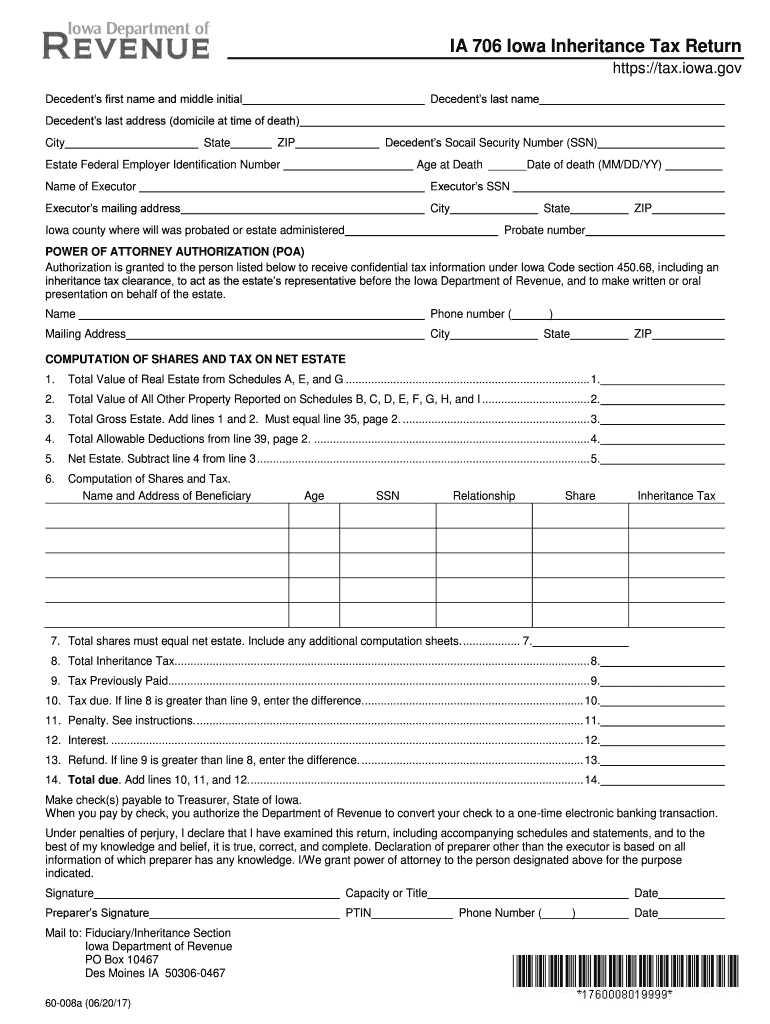
- Fill Out the Iowa Inheritance Tax Return (IA 706): Use the checklist as a guide to accurately complete the IA 706 form, ensuring compliance with state-specific inheritance tax laws.
Practical Example
Consider an estate containing real estate valued at $500,000 and investment accounts totaling $200,000. By using the checklist, the preparer can systematically organize the valuation and apply relevant exemptions to determine the taxable portion of the estate.
Steps to Complete the Checklist
Completing the checklist requires a meticulous approach to ensure accuracy and compliance. Here are the detailed steps:
- Collect Estate Information: Include the decedent's details and initial estate appraisal.
- Document Valuations: Precisely value all assets for their fair market value as of the date of the decedent's death.
- Deduct Liabilities: List and deduct valid debts, administration expenses, and applicable exemptions.
- Calculate Tax Payable: Use the checklist to ensure all calculations comply with Iowa regulations.
- Finalize the Checklist: Verify completeness and accuracy before submitting the IA 706 form to the Iowa Department of Revenue.
Common Mistakes to Avoid
- Failing to apply the correct exemptions
- Overlooking valuable assets that must be included
- Miscalculating estate values
Important Terms Related to the Checklist
Understanding the terms associated with inheritance taxes is crucial for accurate completion of the checklist:
- Decedent: The deceased person whose estate is being evaluated.
- Beneficiary: Individuals or entities entitled to inherit the estate.
- Fair Market Value: The price at which the property would sell under normal conditions.
- Exemption: Portions of the estate that are legally exempt from taxation.
State-Specific Rules
Iowa has unique inheritance tax laws requiring familiarity with state-specific regulations and exceptions:
- Resident vs. Non-resident Estates: Different rules may apply based on whether the decedent was an Iowa resident.
- Exempt Beneficiaries: Certain close relatives may be exempt from paying inheritance tax.
- Rate Variations: Tax rates can vary depending on the relationship of the heir to the decedent.
Filing Deadlines / Important Dates
Adherence to deadlines is critical to avoid penalties:
- Filing Deadline: The Iowa Inheritance Tax Return must be filed within nine months from the date of the decedent's death.
- Payment Date: Taxes owed should accompany the return when filed to avoid interest charges.
Required Documents
The checklist necessitates gathering various documents to streamline the inheritance tax filing:
- Death Certificate: Official record of the decedent's death.
- Asset Appraisals: Documentation of all estate assets and their valuations.
- Expense Records: Proof of administration expenses and other deductible items.
Penalties for Non-Compliance
Non-compliance with Iowa's inheritance tax regulations can result in penalties:
- Late Filing Penalty: Fines may apply for failing to file on time.
- Underpayment Penalty: Interest and penalties for underestimating or underpaying taxes due.
- Audit Risk: Incorrect or incomplete submissions might trigger an audit by the Iowa Department of Revenue.
Ensuring the accurate and comprehensive completion of the checklist minimizes these risks and helps facilitate a smooth inheritance tax filing process.




