Definition & Meaning
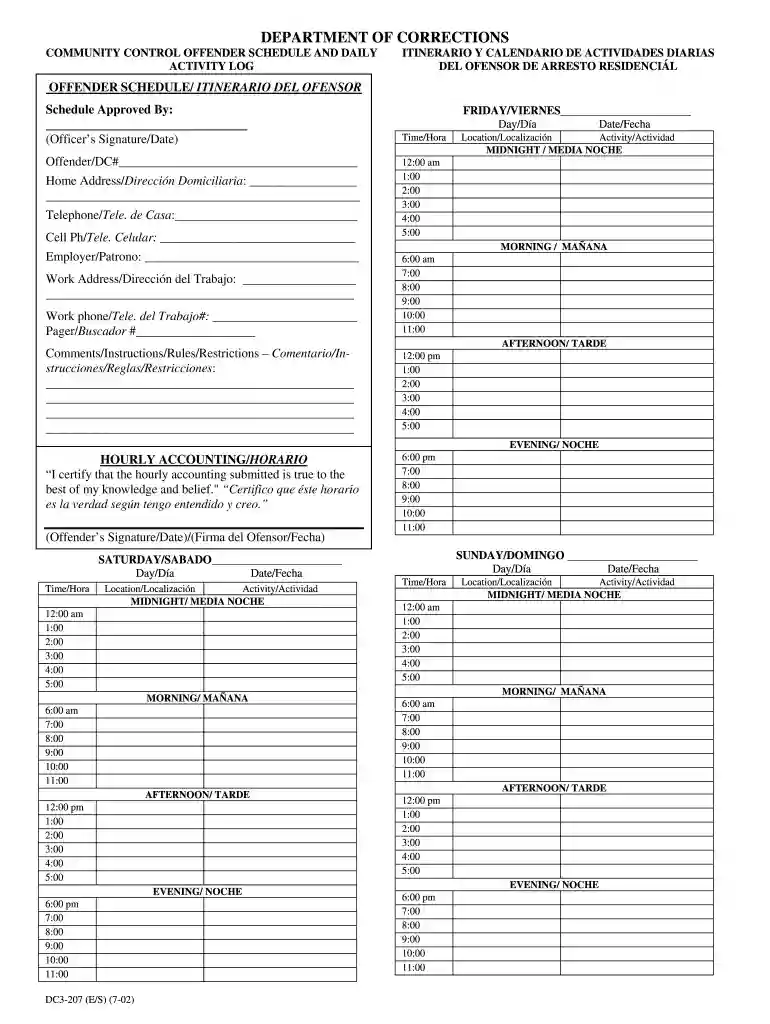
The "Reporte de supervision - Florida Department of Corrections - dc state fl" is an official document used within the Florida Department of Corrections. It serves to monitor the daily activities and schedules of community control offenders. The form ensures that offenders adhere to structured guidelines, promoting accountability and transparency in their rehabilitation process.
Purpose and Use
- Monitoring Compliance: The form helps correctional officers verify that offenders comply with their assigned schedules.
- Activity Tracking: It tracks daily activities, including work, education, or treatment programs.
- Data Collection: Provides a record of personal information and daily movements for review and analysis.
How to Use the Reporte de Supervision
Community control officers and offenders alike must understand how to properly fill out and utilize this report to maintain compliance with legal requirements.
Step-by-Step Usage
- Initial Setup: Offenders are given a blank log by their supervising officer.
- Document Daily Activities: Offenders fill in their schedules daily, including work hours, location, and other mandatory activities.
- Submission: Completed logs are submitted to the supervising officer at regular intervals, typically weekly.
Key Sections
- Personal Information: Include full name, offender ID, and supervising officer’s details.
- Daily Schedule: Break down activities into hourly slots.
- Work Details: Provide employer information and work hours.
- Comments/Restrictions: Note any special instructions from the supervising officer.
Steps to Complete the Form
Completing the "Reporte de supervision" requires careful attention to detail to ensure accuracy and compliance.
Detailed Instructions
- Gather Required Information: Collect personal details, offender ID, and any specific instructions from the correctional officer.
- Fill in Sections Diligently:
- Personal Information: Include all necessary identification details.
- Daily Log: Break down each day's activities.
- Work and Educational Activities: Provide complete information on work hours and educational classes.
Practical Examples
- Example 1: An offender working from 9 AM to 5 PM must record the employer’s name and location, along with time spent commuting.
- Example 2: For educational activities, specify course names and the institution's address.
Key Elements of the Form
Understanding the vital components of the "Reporte de supervision" enhances the accuracy and effectiveness of the document.
Important Fields
- Offender Identifier: Unique ID for state records.
- Offender Signature: Required for authenticity and accountability.
- Supervisor Sign-Off: Final validation by the supervising officer.
Detailed Descriptions
- Personal Information Section: Includes fields for contact information and emergency contacts.
- Activity Log: Structured for hourly entries to capture detailed daily coverage.
- Comments Section: Use for additional notables or instructions needing the officer's attention.
Legal Use of the Reporte de Supervision
Adhering to the prescribed format and usage of this report is critical for legal compliance.
Compliance and Legal Framework
- Mandatory Documentation: As part of legal supervision terms, this form is legally binding and must be maintained accurately.
- Impact of Non-Compliance: Failing to submit the report or inaccuracies can result in probation violations.
Relevant Examples
- Case Study: An offender’s failure to log a work visit led to allegations of non-compliance, highlighting the importance of correct and complete entries.
State-Specific Rules for Florida
The laws and regulations governing the Florida Department of Corrections dictate specific needs for this report.
Florida-Specific Provisions
- Submission Frequency: Mandatory weekly submissions to the assigned supervising officer.
- Format Requirements: Specific layout standards must be met for the report to be considered valid.
Variations and Exceptions
- Special Situations: Certain offenders may have unique reporting requirements based on the terms of their supervision.
Primary Users
- Offenders: Documenting own activities to demonstrate compliance.
- Correctional Officers: Reviewing submissions to monitor adherence to schedules.
Support Stakeholders
- Legal Representatives: Can use the document to track compliance and represent clients effectively.
- Corrections Administration: Utilizes data for reporting and policy monitoring.
Important Terms Related to the Form
Being familiar with relevant terminologies facilitates better understanding and use of the form.
Glossary of Key Terms
- Community Control: A type of intensive supervised custody in the community, typically known as house arrest.
- Offender ID: A unique identifier assigned to each individual under supervision.
Usage Context
- Activity Log: Refers to daily activity entries.
- Sign-Off: Final approval section ensuring the supervising officer has reviewed and validated the record.