




01. Edit your form online
Type text, add images, blackout confidential details, add comments, highlights and more.

Type text, add images, blackout confidential details, add comments, highlights and more.

Draw your signature, type it, upload its image, or use your mobile device as a signature pad.

Send it via email, link, or fax. You can also download it, export it or print it out.
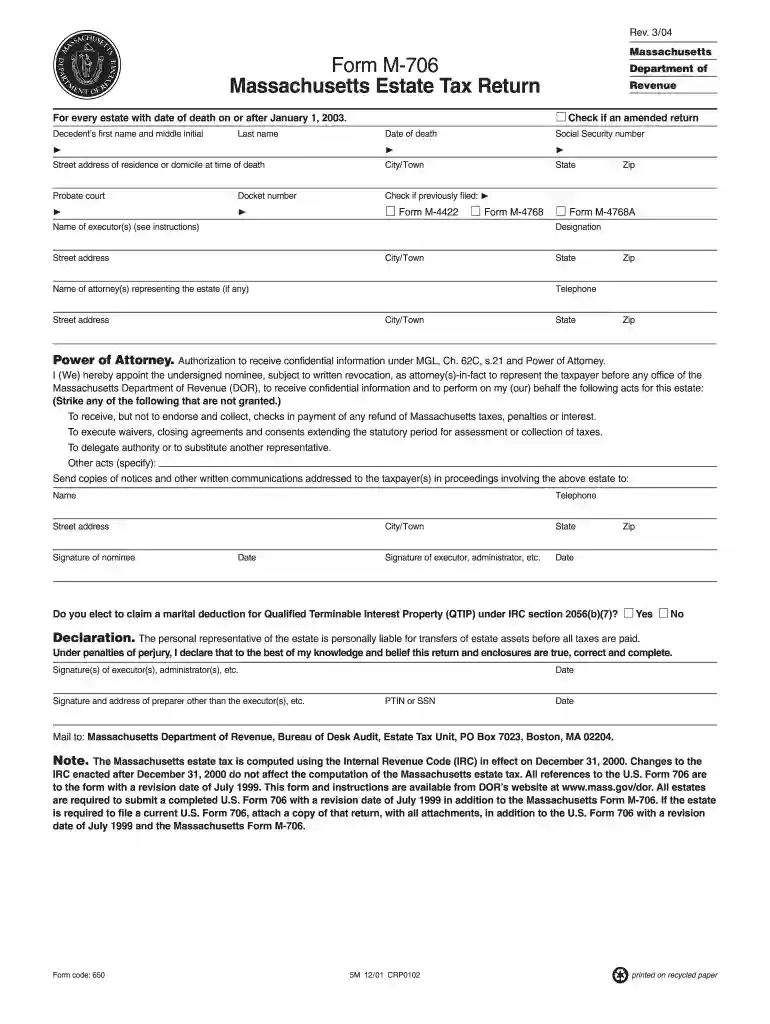
The Massachusetts M-706 Amended Return 2004 Form is used for reporting changes to the estate tax return initially filed for decedents who passed away on or after January 1, 2003. This form allows estate representatives to correct any errors or omissions in the original tax return that affect the taxable estate value or tax liability. It necessitates a detailed disclosure of all modifications compared to the original submission, including updated estate valuations, allowable deductions, and applicable credits.
Review Original Filing: Start by reviewing the original M-706 form submitted. Identify any discrepancies regarding asset valuations, deductions, or claimed credits.
Gather New Information: Obtain supporting documents for any changes, such as appraisals or legal documents, to substantiate amendments.
Complete the Amended Form: Fill in details of each amendment, ensuring that the revised estate value and tax liability are correctly calculated. The form should be filled out with attention to accuracy, reflecting changes in each relevant section.
Attach Documentation: Include any necessary supporting documentation that justifies the amendments. This may encompass additional appraisals, corrected valuation dates, and adjusted financial statements.
Signature and Submission: Ensure the personal representative's signature is present for validation. Submit the amended form following state guidelines for processing.


The form is a legal document that requires precise completion to comply with Massachusetts state laws governing estate taxes. Accuracy affects tax obligations, and improper filing can result in penalties, interest, or legal scrutiny. Legal statutes and IRS guidelines should be observed to maintain compliance.
Massachusetts-specific legislation dictates the filing process, acceptable deductions, and credits. Estate representatives should ensure familiarity with any nuances in state law compared to federal laws to avoid incorrect submissions or additional scrutiny from tax authorities.
Failure to file the amended return accurately or within the prescribed timeframe may result in penalties. These can include fines, late payment interest, and possible legal action against the estate or personal representative. It is crucial to address all discrepancies promptly to avoid such punitive measures.
We've got more versions of the massachusetts m 706 amended return 2004 form form. Select the right massachusetts m 706 amended return 2004 form version from the list and start editing it straight away!
At DocHub, your data security is our priority. We follow HIPAA, SOC2, GDPR, and other standards, so you can work on your documents with confidence.


