




01. Edit your form online
Type text, add images, blackout confidential details, add comments, highlights and more.

Type text, add images, blackout confidential details, add comments, highlights and more.

Draw your signature, type it, upload its image, or use your mobile device as a signature pad.

Send it via email, link, or fax. You can also download it, export it or print it out.
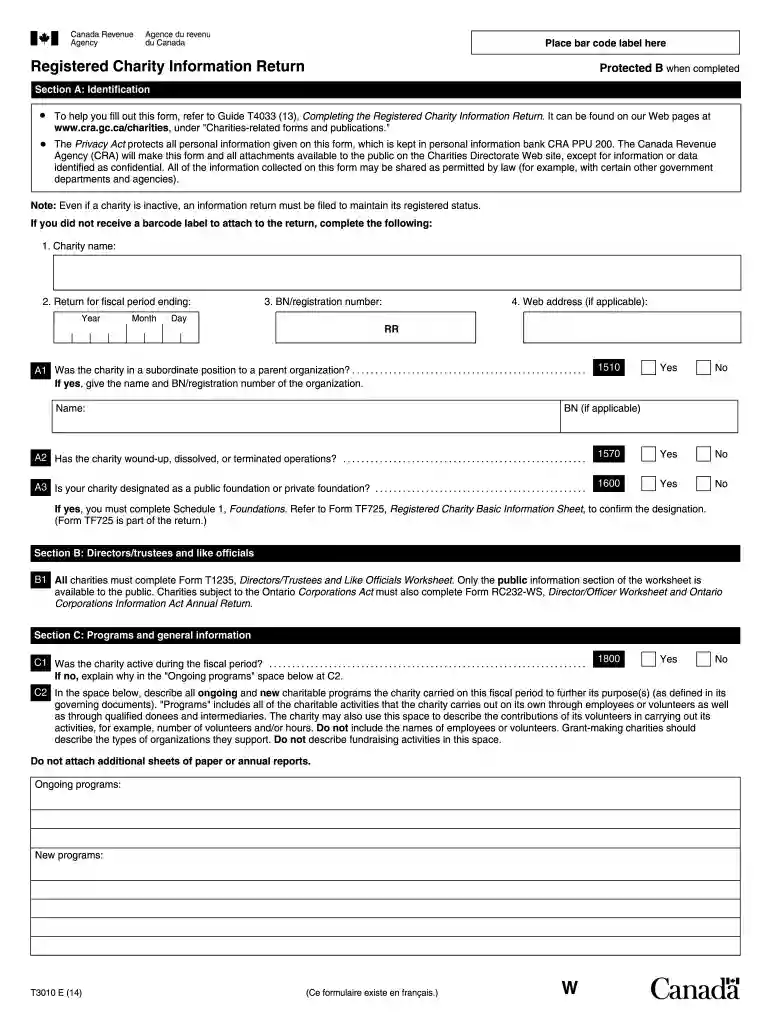
The T3 Form is an essential document for Canadian registered charities to file their annual financial information with the Canada Revenue Agency (CRA). It serves as the Registered Charity Information Return, enabling the CRA to keep track of the financial activities of charitable organizations. This form is required by all registered charities in Canada, even those that are inactive, to maintain their registered status. It captures vital data such as the charity's identification, financial situation, and details about its operations, including fundraising and employee compensation.
Charities should use the T3 Form to report their annual financial dealings. This involves inputting financial details from the previous year into designated sections of the form. The form helps the CRA assess whether a charity is complying with legal requirements. Users must ensure the accuracy of every section, which includes reporting revenues, expenses, assets, and liabilities. Adequate documentation is crucial, as incomplete or inaccurate submissions could lead to compliance issues.
Gather Required Documents: Collect all necessary financial statements and records for precise data entry.
Charity Identification: Fill in the charity's name, BN/registration number, and fiscal year-end.
Financial Details: Enter revenues, expenditures, and any government funding received.
Activities and Programming: Describe the charity’s ongoing programs, beneficiary groups, and fundraising activities.
Political Activities: If applicable, declare any political activities the charity partook in within the fiscal year.
Compensation: Document the compensation paid to full-time employees, detailing roles and salary brackets.
Review and Submit: After complete verification, submit the form to the CRA either online or via mail.
The legal foundation for the T3 Form is tied to ensuring compliance with the Income Tax Act. Failure to file or incorrect filings could result in suspension or loss of a charity's status. Charities must adhere to the form’s stipulated guidelines to avoid penalties or revocation. This legal requirement is meant to ensure transparency and maintain public trust in the charitable sector.
Charities are required to submit the T3 Form no later than six months after the end of their fiscal year. It's crucial to adhere to this deadline to avoid penalties or potential revocation of charitable status. Planning ahead for the collection and organization of required documents can aid in meeting these deadlines. Marking calendar reminders can help ensure timely submissions.
Before completing the T3 Form, gather financial statements, donation receipts, bank statements, and records of all activities related to the charity. Having verified data on all transactions will substantiate the entries made in the form. Additional documentation like government funding letters or grants might also be required. Maintaining organized annual records can streamline the filing process.
Failing to file the T3 Form, or providing false information can lead to significant consequences. These may include financial penalties, suspension of receipting privileges, or revocation of the charity's registered status. Penalties emphasize the necessity for accuracy and timeliness. It is advisable to seek expert guidance if there are uncertainties while preparing the form to prevent non-compliance issues.
Charities have various options for submitting their completed T3 Form. It can be filed online through the CRA’s electronic services, which is often the most efficient method. Alternatively, the completed form can be mailed directly to the CRA. While in-person submissions are less common, they might be feasible at certain CRA offices. Each method has specific guidelines and deadlines that must be observed.
The T3 Form is used by registered charities within Canada. This encompasses a wide range of organizations, from educational and health-related charities to environmental and religious institutions. It is a necessary annual filing requirement to maintain their charitable registration and demonstrate accountability to donors and regulatory bodies. The data collected serves both transparency goals and informs public policy regarding the charitable sector.


The Canada Revenue Agency (CRA) is responsible for issuing the T3 Form. The CRA regulates and monitors registered charities in Canada to ensure compliance with the Income Tax Act. By issuing and processing the form, the CRA ensures charities operate within legal boundaries and manage public funds appropriately. Its oversight helps maintain the integrity and public confidence in the charitable system.
We've got more versions of the t3010 2014 form form. Select the right t3010 2014 form version from the list and start editing it straight away!
At DocHub, your data security is our priority. We follow HIPAA, SOC2, GDPR, and other standards, so you can work on your documents with confidence.


