







Definition and Meaning
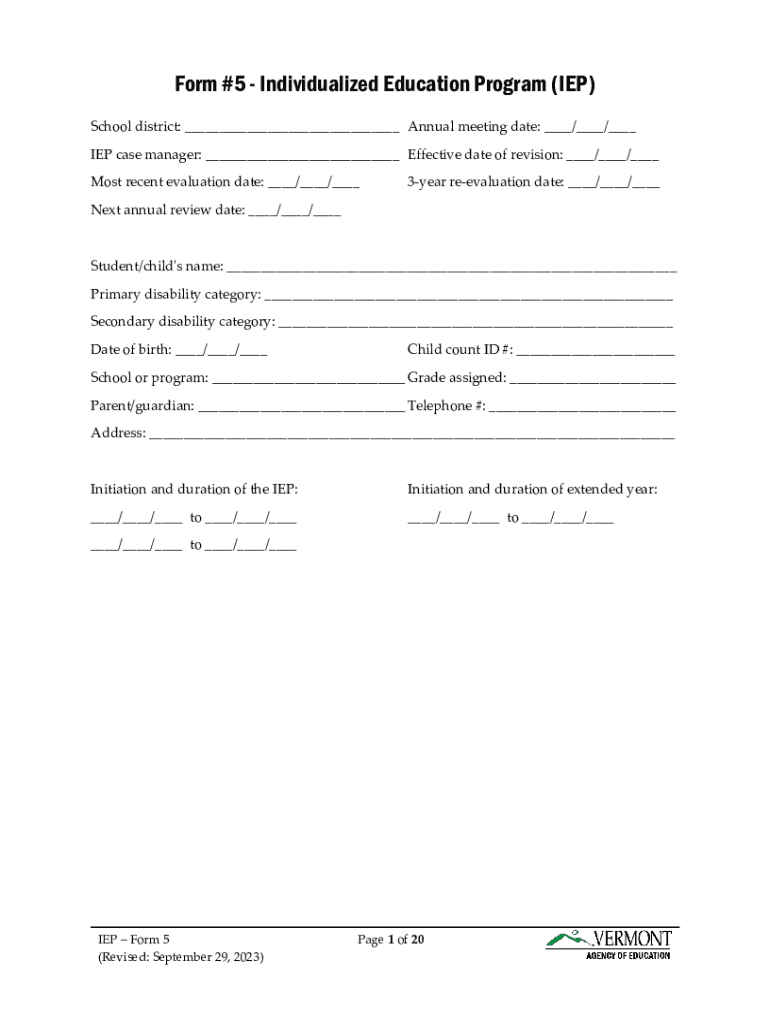
Form #5, known as Early Childhood Special Education (ECSE) Ages, is integral in creating an Individualized Education Program (IEP) for children with special needs, typically from birth to age five. This form serves to document the specific educational and developmental requirements of children with disabilities, ensuring they receive appropriate support tailored to their unique needs. It encompasses a range of components, such as student information, IEP team consultation, and measurable educational goals. By using this form, educators, caregivers, and service providers can systematically monitor and facilitate a child's progress in educational settings.
Steps to Complete the Form
Completing Form #5 requires careful attention to detail and comprehensive information about the child’s educational needs.
-
Gather Student Information: Start by filling in the basic details such as the child's name, date of birth, and identification number.
-
Identify IEP Team Members: List all members of the IEP team involved in developing the program. This includes educators, parents, and relevant specialists.
-
Present Levels of Performance: Document the child's current academic and functional performance, highlighting strengths and areas that require additional support.
-
Set Measurable Goals: Develop specific, achievable goals for the child, addressing both academic and developmental milestones.
-
Outline Services and Accommodations: Clearly specify the special education services and accommodations needed to support the child’s learning.
-
Review and Sign: Ensure all sections are reviewed and signed by authorized IEP team members to validate the information.
Key Elements of the Form
Form #5 is structured to include several key sections essential for an effective IEP:
- Student Information and Background: Basic details and prior educational history.
- IEP Team Members: A record of individuals responsible for the child’s education plan.
- Performance Levels: Assessment of the child’s current abilities.
- Educational Goals: Targets set for academic progress and skill development.
- Special Education Services: Details of the required services and educational support.
- Accommodations: Adjustments and tools to aid learning and accessibility.
Legal Use of the Form
The use of Form #5 is governed by federal and state regulations that ensure children with disabilities receive equitable educational opportunities. This form complies with the Individuals with Disabilities Education Act (IDEA), which mandates tailored educational plans for children with special needs. Unauthorized changes or misuse of the form could result in non-compliance with legal standards, potentially leading to an educational institution's penalties or sanctions.
Who Should Use the Form
Form #5 is primarily used by educators, special education coordinators, and allied professionals involved in early childhood education. It is also vital for parents and guardians who wish to be actively involved in their child’s educational planning. The collaboration between these parties is crucial for a comprehensive and supportive IEP.
State-Specific Rules and Variations
Different states may have additional requirements or variations of Form #5 to adhere to local educational mandates. It's important to check state-specific guidelines when completing this form to ensure compliance and accuracy. Such variations may include additional documentation or specific procedural steps.
Examples of Using the Form
Consider a three-year-old child diagnosed with autism who has difficulty with communication and social interaction. Using Form #5, the IEP team can set measurable goals, such as improving social skills through peer interaction activities or enhancing communication with speech therapy. The form will detail these goals, outline the necessary supports, and ensure regular assessments to track progress.
Digital vs. Paper Versions
Form #5 may be available in both digital and paper formats, depending on the school district or state guidelines. The digital version allows for easier collaboration and updates among IEP team members. Both versions require secure handling due to the sensitive nature of the information they contain. The choice largely depends on the resources available and the preferences of the educational institution managing the form.




