




01. Edit your oregon metal detecting permit online
Type text, add images, blackout confidential details, add comments, highlights and more.

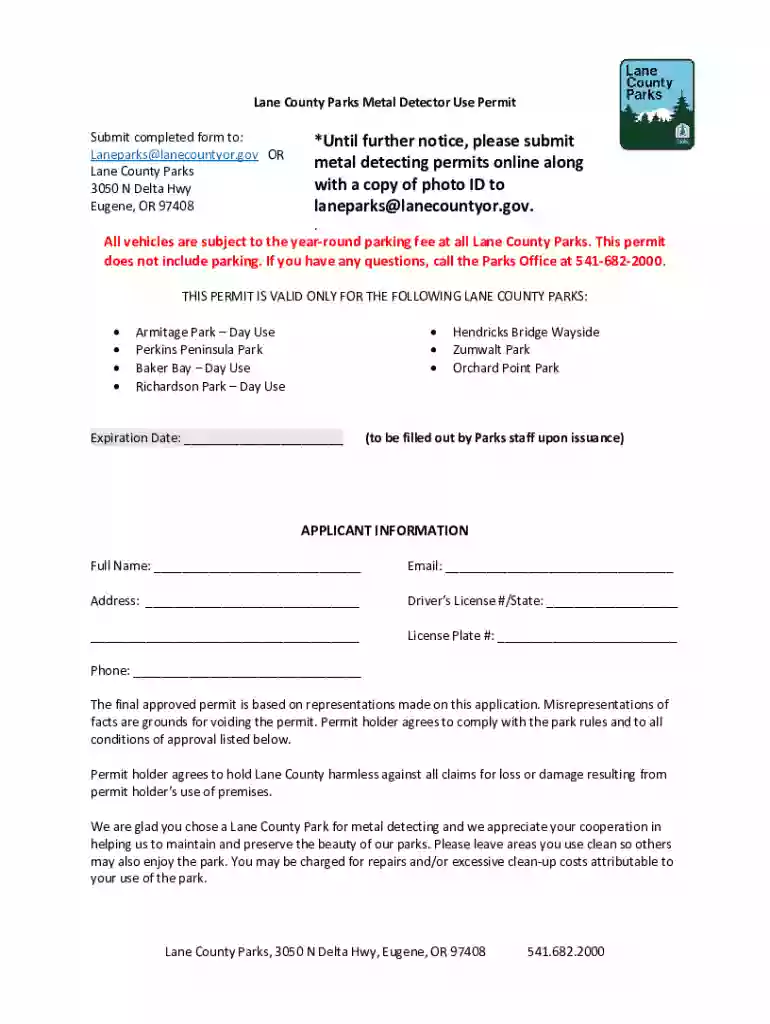
Type text, add images, blackout confidential details, add comments, highlights and more.

Draw your signature, type it, upload its image, or use your mobile device as a signature pad.

Send it via email, link, or fax. You can also download it, export it or print it out.
The Oregon metal detecting permit is a crucial document for enthusiasts engaging in metal detecting activities within designated areas, particularly state parks. It is designed to ensure that such activities are conducted legally and responsibly while preserving historical and ecological integrity.
To secure an Oregon metal detecting permit, prospective users need to adhere to a straightforward application process, typically initiated through the respective state or local park authorities. Most applications require basic information and an understanding of the guidelines that govern metal detecting in public spaces.
Obtaining a permit provides legal rights to metal detect in specified areas, but it also requires adherence to specific terms and limitations.
Familiarity with relevant terminology is important for permit holders to ensure compliance with all regulations.
Regulations may vary slightly across different regions within Oregon, reflecting local conservation efforts and historical considerations.
Fundamental aspects of the permit that every user needs to understand include coverage, permissions granted, and responsibilities.
A broad spectrum of individuals from casual hobbyists to professional treasure hunters obtains the Oregon metal detecting permit.


Understanding the timeline and requirements for obtaining a permit can help applicants plan their adventures effectively.
Non-compliance with permit regulations can result in penalties, emphasizing the need for adherence.
We've got more versions of the oregon metal detecting permit form. Select the right oregon metal detecting permit version from the list and start editing it straight away!
At DocHub, your data security is our priority. We follow HIPAA, SOC2, GDPR, and other standards, so you can work on your documents with confidence.
permit holders are not exempt from the restriction contact Campus Safety at 503.943.7161. walk-through metal detector. Oregon 97203-5798 503.943.8000
The North Coast Regional Waster Board covers an area bounded the Oregon state line to the north, Pacific Ocean to the West, the San Francisco Bay Region to theRead more
Metal detecting without a permit is allowed in specific areas of Oregon State Parks and the ocean shores. call 1-800-551-6949, 8 a.m. to 5 p.m., Monday-Friday.


