







Definition and Purpose of the Nanny Tax
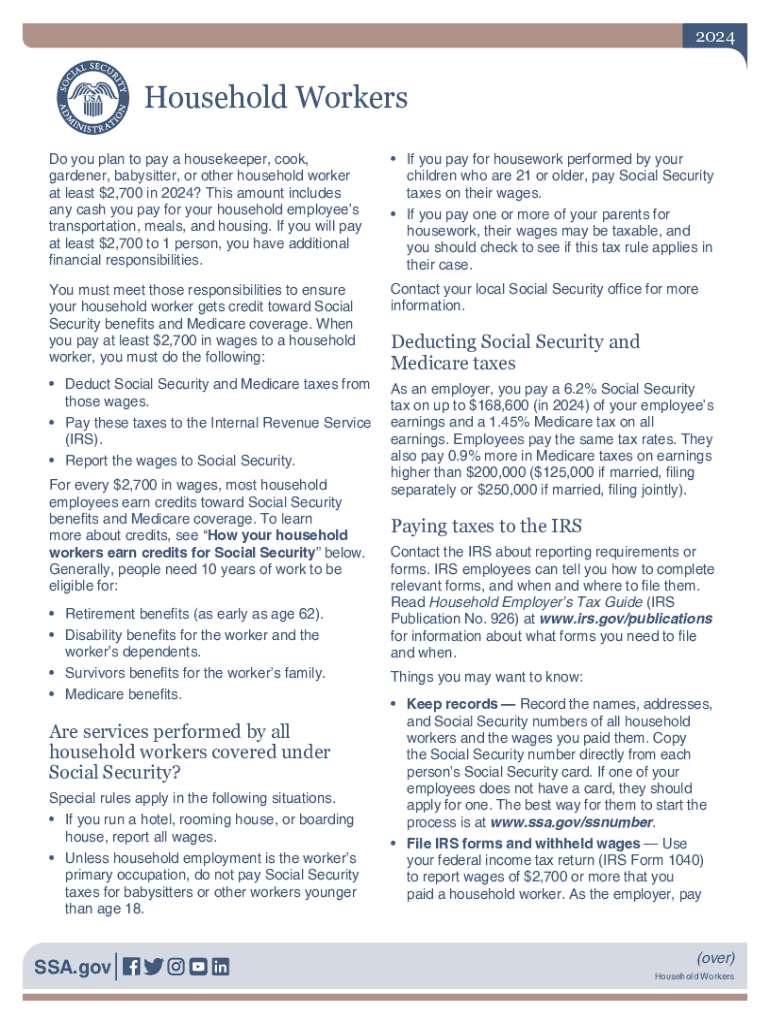
The nanny tax refers to the federal tax obligations that employers must fulfill when they hire household employees, such as nannies, housekeepers, or gardeners, and pay them above a specific threshold. For 2024, this threshold is set at $2,700. The nanny tax encompasses several components, including Social Security, Medicare, and federal unemployment taxes. Employers must adhere to these tax requirements to ensure compliance with U.S. federal law, thereby aiding domestic workers in accumulating Social Security credits for future benefits.
Determining Eligibility for the Nanny Tax
To ascertain whether you need to pay the nanny tax, consider the following criteria:
- Payment to a household employee exceeds $2,700 in the calendar year.
- The worker is classified as an employee, not an independent contractor.
- The employment arrangement is for household-based tasks or duties.
Understanding these criteria is crucial for compliance, as misclassification or misunderstanding your obligations can lead to penalties or legal issues.
Examples of Household Employees
- Nannies or au pairs who care for children.
- Personal attendants for elderly family members.
- Housekeepers or maids responsible for cleaning and maintaining the home.
- Gardeners or landscapers providing services on the homeowner's property.
Steps to Comply with Nanny Tax Requirements
Employers must take several steps to ensure they meet nanny tax obligations accurately and on time:
- Obtain Employer Identification Number (EIN): Employers must get an EIN from the IRS to report tax contributions.
- Collect and Report Employee's Information: Use IRS Form W-4 to collect the employee's tax details.
- Calculate and Withhold Taxes: Include Social Security and Medicare contributions from the employee’s paycheck.
- File Schedule H with Your Tax Return: Report household employment taxes using Schedule H of IRS Form 1040.
- Deposit Taxes: Use the Electronic Federal Tax Payment System (EFTPS) or pay through other IRS-approved methods.
Required Documents for Filing Nanny Taxes
To comply with nanny tax regulations, employers must complete and maintain several important documents:
- IRS Form W-4: To obtain employee's tax withholding information.
- Schedule H (Form 1040): Filed annually with your tax return to report household employment taxes.
- Form W-2: Issued annually by the employer to the employee, detailing total wages and taxes withheld.
- Form W-3: A summary form filed with the Social Security Administration.
Maintaining accurate and thorough records will ensure a smooth filing process and help avoid discrepancies.
Filing Deadlines and Important Dates
Employers must adhere to the following key deadlines to remain compliant:
- January 31: Distribute Form W-2 to employees.
- April 15: File Schedule H with your annual tax return.
- Quarterly Tax Payments: Depending on the size of payroll; consult IRS guidelines for specific requirements.
Meeting these deadlines helps prevent penalties and keeps you in good standing with tax authorities.
State-Specific Nanny Tax Rules
While the federal requirements are uniform across the United States, state-level details may vary:
- State Unemployment Insurance (SUI): Employers may need to contribute to their state’s unemployment fund, with requirements differing from one state to another.
- Income Tax Withholding: Some states require income tax withholding from employee wages in addition to federal taxes.
Understanding your state's specific requirements ensures full compliance and avoids any potential legal issues.
Consequences of Non-Compliance with Nanny Tax Obligations
Failure to adhere to nanny tax obligations can lead to significant penalties:
- Fines and Interest Charges: Late payments or underpayments are subject to interest and financial penalties.
- Legal Repercussions: Non-compliance can result in legal actions and damage to reputation.
- Loss of Employee Benefits: Failure to report wages correctly may impact the employee's ability to earn Social Security credits.
Employers should be diligent in understanding and fulfilling their responsibilities to prevent these outcomes.
Software Tools for Simplifying Nanny Tax Management
Numerous software solutions offer streamlined management of nanny tax obligations:
- QuickBooks: Features payroll services that can automatically calculate and withhold taxes.
- TurboTax: Guides employers through the Schedule H filing process.
- Nanny-specific Payroll Services: Offers comprehensive services tailored to household employment, including tax form submissions and calculations.
Utilizing these tools can simplify processes, reduce administrative burden, and ensure accuracy.


