




01. Edit your new jersey fire prevention online
Type text, add images, blackout confidential details, add comments, highlights and more.

Type text, add images, blackout confidential details, add comments, highlights and more.

Draw your signature, type it, upload its image, or use your mobile device as a signature pad.

Send it via email, link, or fax. You can also download it, export it or print it out.
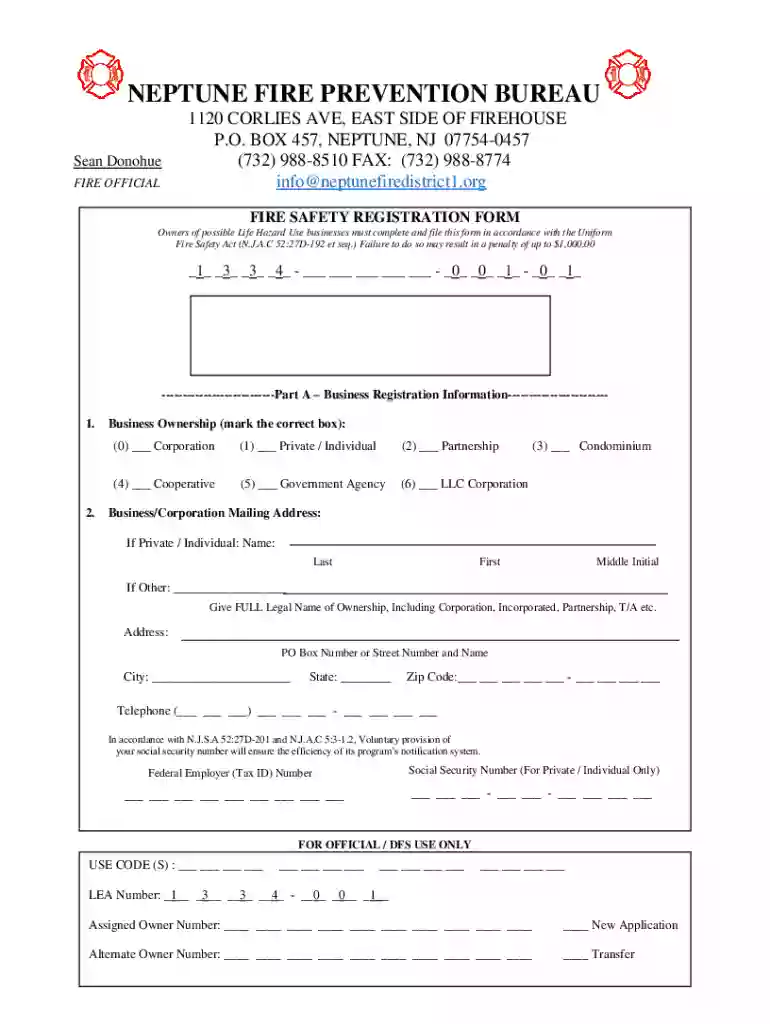
New Jersey fire prevention efforts are essential in safeguarding life and property against fire hazards. These measures are governed by the Uniform Fire Safety Act, which mandates specific protocols and standards for businesses and residences to minimize fire risks. The primary objective is to ensure that business owners, especially those categorized as Life Hazard Use, comply with the necessary fire safety requirements. This includes the submission of fire safety registration forms to the Neptune Fire Prevention Bureau, encompassing detailed information on ownership, business operations, and certification by the relevant authorities.
Implementing fire prevention measures in New Jersey is not just a legal requirement but a critical safety decision. These measures help reduce the risk of fires that can result in significant property damage, personal injury, or loss of life. For business owners, especially those in Life Hazard Use categories, adherence to fire safety protocols ensures a safer environment for employees, customers, and the general public. By maintaining compliance with fire safety regulations, businesses can prevent costly damages, potential shutdowns, and legal repercussions.
The process of acquiring the fire safety registration form involves contacting the Neptune Fire Prevention Bureau or accessing it through their official channels. Businesses categorized under Life Hazard Use must file this form to remain compliant. The form requires comprehensive details about the business, including ownership information, physical location, and specific operations. Timely submission is crucial to avoid penalties. The registration process is a step toward demonstrating due diligence in fire safety management.
The fire safety registration form consists of several critical sections that must be completed accurately. These include:
Businesses failing to comply with fire prevention measures in New Jersey can face severe penalties. The Uniform Fire Safety Act outlines the necessary legal framework for compliance, emphasizing the need for accurate and timely submission of registration forms. Penalties for non-compliance may include fines, increased insurance premiums, or operational shutdowns until compliance is achieved. Legal accountability extends to both business owners and their designated agents, underscoring the importance of precise documentation and adherence to fire safety regulations.
New Jersey's fire safety laws are designed to accommodate the state's unique risks and demographics. Regulations are derived from both state and federal guidelines, considering regional factors such as population density, industrial activities, and historical fire incidents. Businesses must familiarize themselves with these specific regulations and ensure that their operations align with state mandates. Local fire departments and prevention bureaus may offer additional guidance to aid businesses in meeting state-specific requirements.
Consider a restaurant owner in Neptune, New Jersey. By adhering to the fire safety regulations, the owner ensures fire extinguishers are accessible and regularly inspected, emergency exits are clearly marked and unobstructed, and staff is trained in fire response protocols. As a result, the restaurant operates smoothly, mitigates fire risks, and assures customers of their safety. Such proactive measures exemplify the real-world application of New Jersey's fire prevention standards and highlight the importance of maintaining compliance for business continuity and safety.
We've got more versions of the new jersey fire prevention form. Select the right new jersey fire prevention version from the list and start editing it straight away!
| Versions | Form popularity | Fillable & printable |
|---|---|---|
| 2022 | 4.8 Satisfied (40 Votes) | |
| 2022 | 4.8 Satisfied (61 Votes) | |
| 2021 | 4.8 Satisfied (126 Votes) | |
| 2021 | 4.8 Satisfied (174 Votes) | |
| 2021 | 4.8 Satisfied (20 Votes) | |
| 2021 | 4.3 Satisfied (32 Votes) | |
| 2021 | 4.8 Satisfied (114 Votes) | |
| 2020 | 4.9 Satisfied (22 Votes) | |
| 2020 | 4.7 Satisfied (45 Votes) | |
| 2020 | 4.8 Satisfied (156 Votes) | |
| 2017 | 4.9 Satisfied (44 Votes) | |
| 2015 | 4.4 Satisfied (46 Votes) | |
| 2015 | 4.8 Satisfied (39 Votes) | |
| 2014 | 4.1 Satisfied (26 Votes) | |
| 2012 | 4.5 Satisfied (57 Votes) |
At DocHub, your data security is our priority. We follow HIPAA, SOC2, GDPR, and other standards, so you can work on your documents with confidence.
The Fire Safety Manager Program is specifically designed to provide students with the information, and education necessary to succeed with the Jersey City FireRead more
The Bureau of Fire Department Services is responsible for the training and education of New Jerseys fire service, fire incident reporting,


