







Definition and Meaning
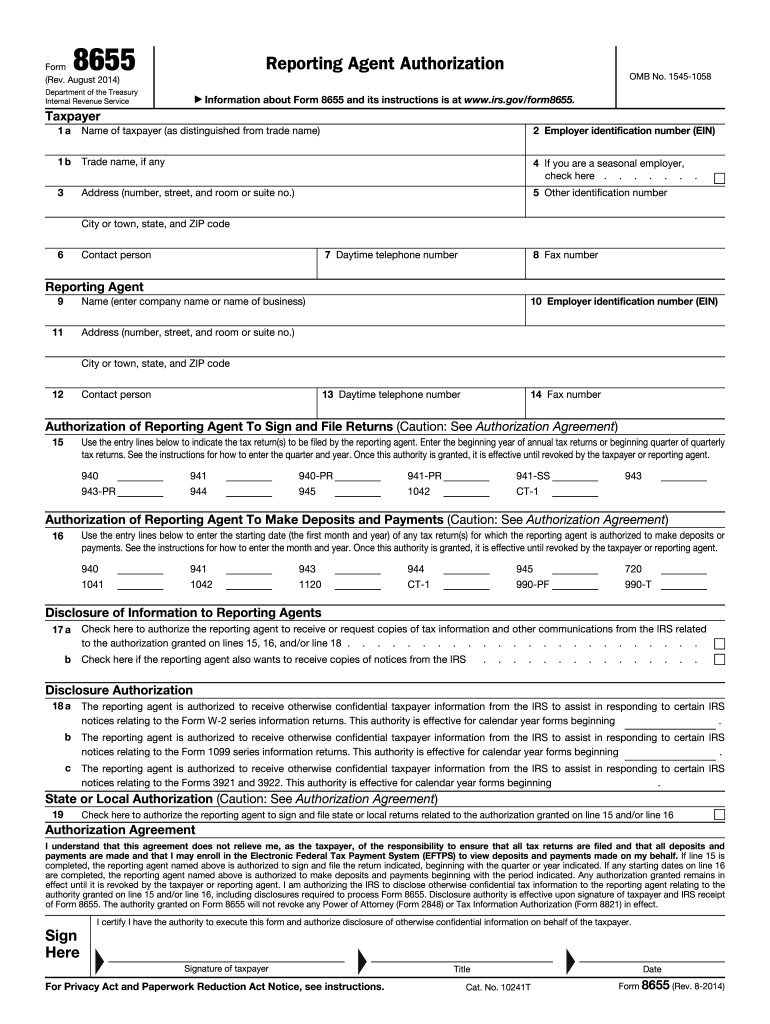
Form 8655, officially known as the Reporting Agent Authorization, allows a taxpayer to designate a reporting agent to perform certain tax-related tasks on their behalf. This form is pivotal for businesses and individuals who seek assistance in handling particular tax matters efficiently. A reporting agent can file returns, make deposits, and engage in other essential communication with the IRS as authorized by the taxpayer. This arrangement streamlines tax administration and ensures that all designated responsibilities are executed promptly and correctly.
How to Use Form 8655
When using Form 8655, taxpayers grant authority to a reporting agent via detailed instructions within the form. Here's a simplified breakdown:
-
Complete Authorization Details: Provide the taxpayer's name, identification number, and contact information. Ensure accuracy, as these details are crucial for authorization validation.
-
Designate Permissions: Specify the tax returns and related duties the reporting agent is authorized to handle. This section may include payroll deposits, tax form filings, or retrieving tax information.
-
Signature and Submission: The taxpayer or their official representative must sign the form to confirm the authorization's validity. Once signed, submit the form to the IRS according to their filing guidelines.
This form's proper usage allows seamless collaboration between the taxpayer and their chosen reporting agent, ensuring compliance and minimizing errors in tax handling.
Steps to Obtain Form 8655
Obtaining Form 8655 is a straightforward process. This form is accessible through multiple channels, ensuring ease for the taxpayer:
-
IRS Website: Download the form directly from the IRS official website. The digital copy is the most up-to-date version, reflecting any recent changes.
-
Tax Professional: Request the form from a certified tax professional, who can also provide insights into its completion and submission.
-
Physical IRS Locations: Visit a local IRS office to acquire a printed version of the form. This method ensures personal assistance if needed.
Acquiring Form 8655 is an essential step for businesses that prefer delegating specific tax responsibilities to professional agents.
Steps to Complete the Form 8655
Completing Form 8655 requires attention to detail to ensure all information is accurately recorded:
-
Filling Out Taxpayer Information:
- Input the taxpayer's legal name, address, identification numbers, and contact details.
-
Identifying the Reporting Agent:
- Enter the full name and address of the reporting agent authorized to act on the taxpayer's behalf. Mention the agent's Employer Identification Number (EIN) for clarity.
-
Specifying Authorized Responsibilities:
- Clearly outline which tax-related tasks the reporting agent can perform. Each task should be checked off as appropriate to ensure clear delegation.
-
Signing the Form:
- The form must be signed and dated by both the taxpayer and the reporting agent, confirming mutual consent for the outlined authorization.
-
Submission:
- Follow IRS submission guidelines to file the completed form securely and promptly.
Adhering to these steps ensures the form is properly filled out and accepted by the IRS.
Why You Should Use Form 8655
Utilizing Form 8655 can yield significant benefits for taxpayers:
-
Streamlined Tax Management: Delegating responsibilities to a knowledgeable reporting agent can simplify the tax filing process, especially for businesses with complex financials.
-
Expert Guidance: Many reporting agents possess specialized knowledge, providing valuable insights and minimizing potential errors.
-
Time Efficiency: By assigning routine tax duties to a reporting agent, businesses and individuals can focus on core activities, knowing their tax obligations are managed.
-
Compliance Assurance: Tax professionals familiar with current regulations help ensure compliance with IRS requirements, reducing penalties or issues.
For businesses looking to optimize their tax management, Form 8655 presents a practical solution.
Legal Use of Form 8655
The legal implications of Form 8655 are significant, as it authorizes access to the taxpayer's sensitive tax information:
-
Authorized Disclosure: The form allows the IRS to share specific tax information with the reporting agent, ensuring that all actions are informed and accurate.
-
Bound by IRS Rules: Both the taxpayer and the reporting agent must adhere to IRS regulations governing the authorized tasks, ensuring no misuse of permissions.
-
Revocation Rights: Either party may rescind the authorization, balancing flexibility with legal responsibility.
Understanding these legal aspects is crucial for both the taxpayer and the reporting agent, ensuring all parties fulfill their roles legally and ethically.
Key Elements of Form 8655
Several key elements make up Form 8655, each contributing to its function:
-
Taxpayer Identification: Clearly defines who the taxpayer is and ensures there's no confusion regarding authority.
-
Agent's Roles and Responsibilities: Lists the specific tax functions the reporting agent can address, ensuring clarity of duties.
-
Signature of Authorization: A crucial element that validates the form, representing mutual agreement and understanding.
-
Effective Date of Authorization: Specifies when the reporting agent's authority begins, ensuring the timing aligns with the taxpayer's needs.
Understanding and correctly filling out each of these elements is essential for the form's functionality.
IRS Guidelines and Compliance
Form 8655 operates within strict IRS guidelines, ensuring the authorization is used correctly:
-
Compliance with IRS Protocols: The form is specifically designed to comply with IRS regulations, making compliance efforts straightforward.
-
Subject to Audit: As with any IRS documentation, the authorization and actions taken by the reporting agent under Form 8655 may be subject to IRS audits, emphasizing the need for meticulous record-keeping.
-
Updates and Amendments: The IRS frequently updates forms and guidelines, so both taxpayers and reporting agents should stay informed about any changes that may affect the form's usage.
Adherence to these guidelines is crucial for maintaining compliance and minimizing legal risks.


