
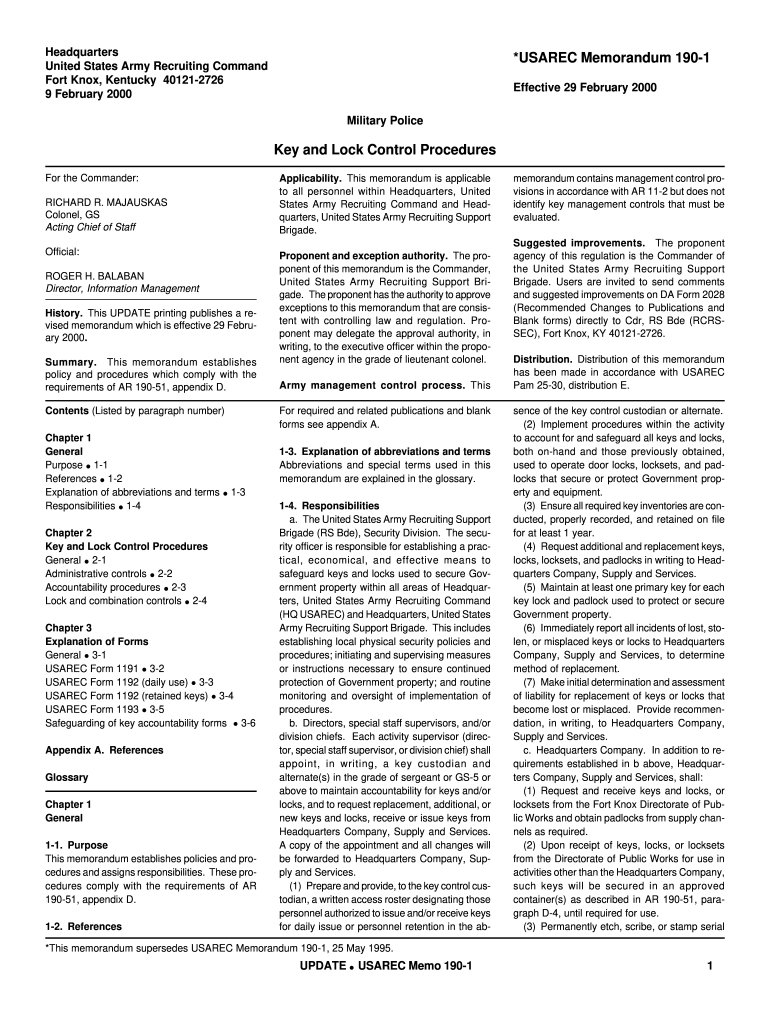







Understanding the Army Key Control Memo
The Army key control memo example outlines essential procedures for managing keys and locks in accordance with military policies. This document serves as a vital tool for maintaining security and safeguarding government property. Below are critical aspects that should be included in an effective army key control memo.
Key Responsibilities and Policies
A well-structured army key control memo should clearly delineate the responsibilities of personnel involved in key management:
- Custodian Duties: Define the roles of key custodians responsible for issuing, tracking, and controlling keys. Custodians must complete necessary training and adhere to existing policies.
- Access Control: Establish who is authorized to access keys and under what circumstances. This helps prevent unauthorized access to secure areas.
- Inventory Management: Highlight the importance of maintaining an accurate inventory of keys, including timely updates to reflect any changes, such as lost or replaced keys.
Administrative Controls Required
Administrative controls play a fundamental role in the effectiveness of key management within military settings. These controls include:
- Documentation: All key transactions should be properly documented using forms such as the DA Form 5513 example or a key control log army. This ensures a clear record of who has keys and when they were assigned.
- Periodic Reviews: Regular inspections and audits must be conducted to ensure compliance with the army key control regulations. Identify additional checks for reconciliations between issued keys and inventory logs.
- Incident Reporting: Procedures for reporting lost or stolen keys should be articulated, including immediate notification to supervisors and security personnel.
Procedures for Issuing and Returning Keys
The memo must outline standardized procedures for issuing and returning keys to streamline operations:
-
Issuance Procedure:
- Validate the requestor’s need for the key.
- Ensure completion of a key request form, detailing the reason for issuance.
- Record the issuance date and sign it out in the key control form army.
-
Return Procedure:
- Require a signature upon key return to confirm the return transaction.
- Update the key inventory log immediately after the key is returned to maintain an accurate record.
-
Lost Key Procedures:
- Outline specific steps to follow if a key is lost, including documenting the incident, notifying superiors, and conducting a risk assessment for security implications.
Security Measures for Key Management
Security remains paramount in managing keys within military facilities. The army key control memo should include:
- Physical Security: Discuss the necessity of secure storage for keys, such as locked cabinets or safes, to prevent unauthorized access.
- Access Logs: Maintain detailed access logs indicating who used the keys and for what purpose, providing accountability.
Compliance with Army Regulations
The memo must stress the importance of complying with army regulations relating to key control:
- Understanding AR 190-51: Reference Army Regulation 190-51, which governs key and lock control procedures to ensure all personnel are informed.
- Training Requirements: Ensure that individuals responsible for key control participate in regular training sessions to remain up-to-date with policies and best practices, fostering a culture of security awareness.
Example Situations in Key Management
Incorporating practical scenarios can provide clarity on procedures:
- Scenario of Unauthorized Access: An inquiry about a theft incident reveals inadequate key tracking. The response should include reviewing documentation and improving key control processes by increasing audit frequency.
- New Facility Opening: When a new facility opens, a detailed key control plan must be articulated, including initial key assignments, staff training, and establishing inventory systems.
Conclusion
An effective army key control memo serves as a comprehensive guide to secure management practices. It details responsibilities, administrative controls, procedural steps, and compliance requirements, ultimately ensuring the integrity and security of military property. Proper implementation of these elements is essential for sustaining operational efficiency and safety within army facilities.




