






Definition & Meaning of the Pacer Score
The pacer score is derived from the Progressive Aerobic Cardiovascular Endurance Run (PACER) test, a widely utilized fitness assessment aimed at evaluating cardiovascular endurance, particularly in school and youth programs. The test requires participants to run back and forth across a 20-meter course at increasing speeds, dictated by audio signals. The pacer score reflects the total number of laps completed before the participant is unable to keep up with the pace, indicating one’s aerobic capacity and endurance levels.
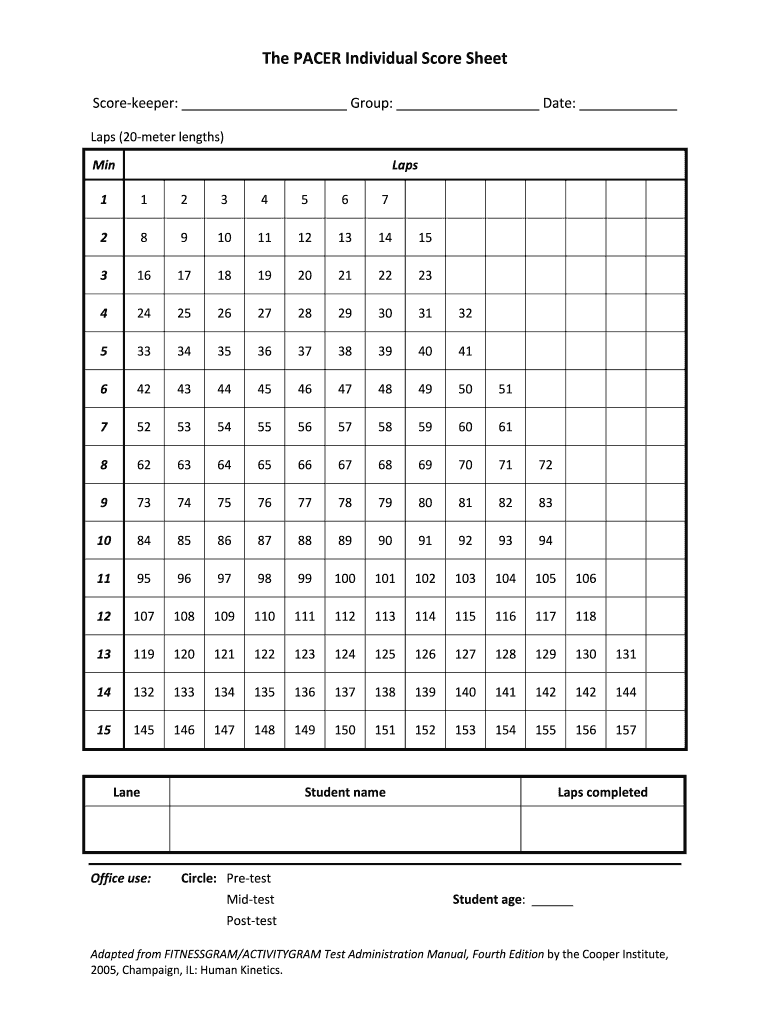
This metric is often recorded using a pacer score sheet, which includes crucial details such as the participant’s name, date, age, and steps completed during the test. Understanding your pacer score helps educators and fitness professionals assess an individual's fitness level, track improvements over time, and identify areas that require enhancement.
How to Use the Pacer Score
Using the pacer score involves a systematic approach to administering and scoring the PACER test. Here are key steps on how to effectively utilize the pacer score:
-
Prepare the Testing Environment: Ensure the 20-meter course is marked clearly. Position audio equipment to allow participants to hear the pace signals effectively.
-
Gather Necessary Materials:
- Pacer score sheet for tracking scores
- Stopwatch for timing the test
- Audio player with the PACER test audio track
-
Conduct a Pre-Test Briefing: Explain the test procedure, pacing, and how to record scores to participants. Encourage them to push their limits while also considering their safety.
-
Administer the Test:
- Start the audio track and allow participants to begin running once prompted.
- Track the number of laps completed by each individual until they can no longer match the required pace.
-
Record Scores Accurately: Fill in each participant's details thoroughly on the pacer score sheet for accurate scoring and future reference.
-
Analyze Results: Compare the scores against benchmarks for age and gender to determine fitness levels, which can also influence future training regimes.
Steps to Complete the Pacer Score
Successfully completing the pacer score involves several distinct steps that ensure accurate administration and scoring of the test. Below are the outlined steps:
-
Setting Up the Course:
- Mark a straight path of 20 meters.
- Ensure safety protocols are observed to prevent injuries during running.
-
Preparation of Participants:
- Gather participants and brief them on the test’s objectives and procedures.
- Ensure they wear appropriate footwear and clothing.
-
Execution of the Test:
- Start the audio track that signals the pace.
- Participants should begin running upon hearing the initial sound.
-
Monitoring Progress:
- As each participant completes laps, record the number of laps on the pacer score sheet.
- Observe the participants closely to determine when they can no longer maintain the pace.
-
Scoring:
- Once a participant fails to reach the designated line twice in a row, record their score.
- Compile results for analysis.
-
Post-Test Review:
- Offer helpful insights based on the results.
- Encourage goal-setting for future improvements.
Why Should You Pacer Score
The pacer score serves multiple purposes that enhance the understanding of physical fitness and health within various demographics. Its importance can be summarized as follows:
- Fitness Assessment: It provides a clear metric to evaluate cardiovascular endurance, essential for overall health.
- Progress Tracking: Regular testing allows individuals to monitor fitness improvements over time, motivating them and highlighting areas needing focus.
- Research and Development: In educational settings, analysis of collective pacer scores can guide program developments and physical education curriculum advancements.
- Setting Goals: Establishing benchmarks based on pacer scores enables individuals to set realistic fitness goals, tailoring their training accordingly.
Who Typically Uses the Pacer Score
The pacer score is predominantly used by:
- Educational Institutions: Schools utilize the PACER test as part of physical education programs, helping to assess student fitness levels and promote healthy lifestyles.
- Fitness Trainers: Personal trainers incorporate the score to evaluate clients' endurance and the effectiveness of training programs, adjusting workloads based on performance.
- Sports Coaches: Coaches use the score to gauge athletes’ fitness, optimize training schedules, and increase competition readiness.
- Health Professionals: Physical therapists and health educators utilize the data from the pacer score to design rehabilitation or health promotion initiatives.


Important Terms Related to Pacer Score
Understanding the pacer score requires familiarity with specific terminology that surrounds its use and administration:
- PACER Test: A fitness test measuring aerobic endurance through a shuttle run.
- Laps: The total number of complete 20-meter runs achieved by a participant.
- Aerobic Capacity: The maximum amount of oxygen the body can utilize during intense exercise, reflected in the pacer score.
- Score Sheet: A document used to record participant details and scores throughout multiple trials.
- Benchmarks: Standardized scores that indicate average, good, or excellent performance levels for comparison.
Examples of Using the Pacer Score
Numerous applications of the pacer score demonstrate its effectiveness in assessing cardiovascular fitness:
- In a middle school physical education class, teachers utilize the pacer score to establish baseline fitness levels for students, with each student completing and reporting their test scores.
- A personal trainer implements the PACER test to assess a new client's fitness level, using the pacer score as a metric to tailor subsequent exercise regimes.
- School sports teams may utilize repeated PACER testing throughout the season to monitor athletes’ endurance progression and adjust training intensity accordingly.
Each of these instances showcases how the pacer score can inform fitness strategies and enhance performance tracking, ultimately contributing to improved health and fitness outcomes.