






Definition and Meaning of Corn Growth Stages
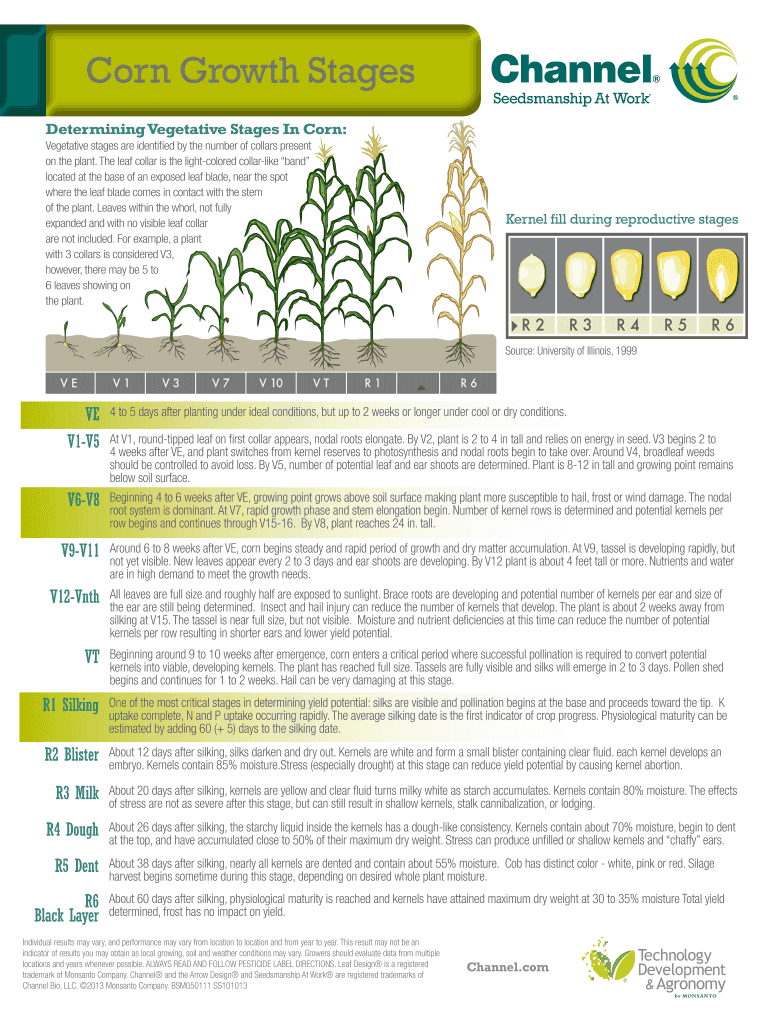
Corn growth stages refer to the developmental phases that a corn plant undergoes from planting to maturity. These stages are generally divided into two main categories: vegetative and reproductive. The vegetative stages focus primarily on the growth of the plant structure, such as leaves and stem, while the reproductive stages concentrate on the development of flowers and kernels. Understanding these stages is crucial for farmers and agricultural professionals because each stage has specific management practices to optimize yield and crop health.
Vegetative Stages Overview
- Emergence (VE): This stage marks the initial growth where the corn seed germinates, and the coleoptile reaches the surface.
- Leaf Stages (V1 to VT): These stages are characterized by the number of visible leaf collars on the plant. During these stages, the plant rapidly increases in size and complexity.
- V6 Stage: Approximately six leaves are fully developed. At this stage, the growing point moves above ground, making the plant sensitive to environmental stress.
- VT Stage (Tasseling): This signifies the final vegetative stage where the tassel fully emerges. It precedes the reproductive stages and is crucial for pollination.
Reproductive Stages Overview
- Silking (R1): Silks become visible, and pollination occurs when the tassel sheds pollen grains.
- Blister (R2): Kernels have a fluid-filled blister appearance. The plant is still vulnerable to environmental stresses that can affect yield.
- Milk (R3), Dough (R4), Dent (R5), and Maturity (R6): These stages represent the development and hardening of kernels. Nurturing plants during these stages ensures quality grain production.
Understanding corn growth stages enables timely agricultural interventions such as nutrient applications, irrigation, and pest management.
How to Use the Corn Growth Stages
Using corn growth stages effectively means implementing stage-specific agronomic practices that optimize crop development and yield. Farmers should regularly monitor their crops to align their management practices with the growth stages.
Practical Applications Based on Growth Stages
- Fertilization: Apply nitrogen fertilizers during the V6-VT stages when the demand is highest. Ensuring plants have adequate nutrients at this time supports healthy growth and prepares plants for the reproductive stages.
- Pest and Disease Control: Identify threats early and implement control measures. For example, treating for leaf diseases during late vegetative stages prevents transmission to kernels during silking.
- Irrigation Management: Water requirements peak at the reproductive stages, particularly during silking and grain fill stages. Properly managing water during these periods enhances kernel development and prevents stress-related yield losses.
Farmers can use stage-specific forecasts to anticipate and respond to crop needs, avoiding overuse or underuse of resources.
Steps to Complete the Corn Growth Stages
Completing corn growth stages successfully involves a series of step-by-step agronomic practices that need to be adhered to depending on the growth phase.
- Prepare the Soil: Start with soil testing to determine nutrient needs. Ensure the field is well-prepared for planting.
- Planting: Select an optimal planting time based on location and climate to ensure emergence aligns with the growing season.
- Monitor Vegetative Growth: Regularly check for leaf development and growth progress up to the tasseling stage.
- Fertilize Appropriately: Follow a fertilization schedule that matches nutritional demand at various growth stages.
- Observe Tasseling and Silking: Ensure conditions are optimal for pollination, making adjustments to irrigation or pest controls as needed.
- Focus on Kernel Development: Provide sufficient water and protect against pests and disease as kernels mature.
- Harvest: Monitor maturity to determine the ideal harvest time to maximize yield and grain quality.
Each step builds upon the previous one, highlighting the continuous care needed for successful corn production.
Why Understanding Corn Growth Stages is Important
Understanding corn growth stages is essential for optimizing agricultural productivity and achieving economic returns. Different growth stages represent different times of nutritional need, water demand, and susceptibility to pests and diseases. By knowing what a plant requires throughout these stages, farmers can implement precise management strategies.
Benefits of Stage-Specific Management
- Improved Yield: Matching inputs to growth stage needs avoids waste and increases plant productivity.
- Resource Efficiency: Efficient use of water, fertilizers, and pest control measures reduces costs and environmental impact.
- Risk Mitigation: Anticipating and addressing potential challenges at each growth stage strengthens resilience against climatic and biological pressures.
Incorporating knowledge of growth stages into farming strategies results in healthier plants and higher-quality corn.
Key Elements of Corn Growth Stages
Understanding the key elements of corn growth stages helps in making informed management decisions. The elements include environmental factors, plant physiology, and necessary agricultural practices.
Environmental Considerations
- Temperature: Corn growth is largely driven by temperature, with specific ranges optimal for different growth stages.
- Rainfall and Irrigation: Adequate water supply during critical stages ensures proper development, particularly during silking and kernel fill.
- Soil Health: Healthy soils provide essential nutrients and support root development, which is crucial during vegetative stages.
Agricultural Practices
- Timing of Interventions: Applying fertilizers, irrigation, and pest controls at the right stage ensures healthy crop progression.
- Monitoring Growth: Regular assessments of crop condition allow for timely management responses.
Reconciling these elements with growth stages informs better crop management and productivity.
State-Specific Considerations for Corn Growth Stages
Corn growth can vary based on geographic and climatic conditions. Farmers need to consider state-specific guidelines that may affect growth stages and management practices.
Regional Variations
- Northern States: Shorter growing seasons may require earlier planting and faster maturing hybrids.
- Southern States: Longer growing seasons allow for more flexible planting schedules and potentially multiple cropping cycles.
- Midwestern States: These areas often have staple corn production, and understanding local pest cycles and diseases contributes to effective management.
Incorporating local extension service advice and regional best practices ensures compliance with state regulations and maximizes local yield potentials.
Examples of Using Corn Growth Stages in Practice
Practical examples illustrate how understanding corn growth stages can significantly impact agricultural practices and outcomes.
Scenario One: Precision Agriculture
Using satellite imagery and growth models, a farmer calculates the exact nitrogen requirement during the V6 stage to avoid over-fertilization, significantly reducing costs.
Scenario Two: Pest Management
A grower utilizes the VT stage as a marker for implementing a targeted pesticide program, reducing the incidence of tassel-eating pests and ensuring better pollination results.
Scenario Three: Disease Prevention
Based on leaf collar stage monitoring, a farmer predicts and applies fungicide just before conditions favor disease outbreaks, preserving leaf area for photosynthesis.
These real-world applications demonstrate the potential for improved crop management through precise understanding and use of growth stages.