




01. Edit your form penal code online
Type text, add images, blackout confidential details, add comments, highlights and more.

Type text, add images, blackout confidential details, add comments, highlights and more.

Draw your signature, type it, upload its image, or use your mobile device as a signature pad.

Send petition relief via email, link, or fax. You can also download it, export it or print it out.
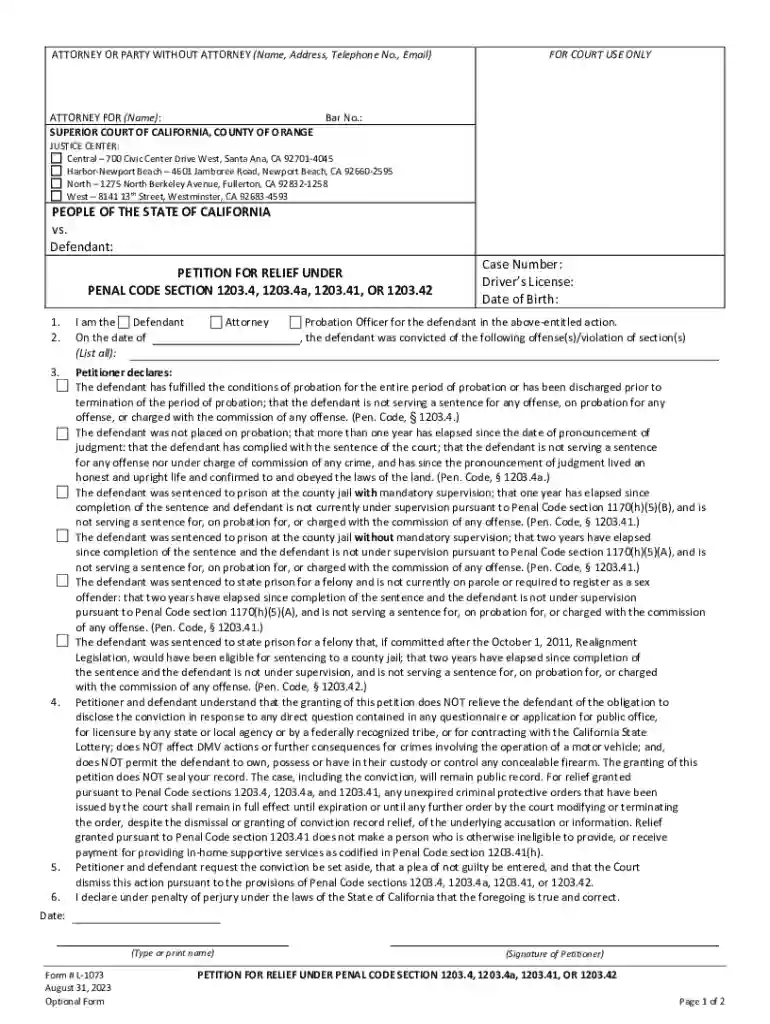
The California Petition Penal Code allows individuals convicted of a crime to seek relief by requesting the court to set aside the conviction and dismiss the case. This process is applicable under sections like 1203.4, 1203.4a, 1203.41, or 1203.42. It's a legal remedy for those who have either successfully completed probation or whose sentences do not include probation. Although granting a petition does not seal records or eliminate disclosure requirements, it can facilitate a fresh start by dismissing the conviction in certain contexts.
When seeking to use the California Petition Penal Code, individuals must first confirm their eligibility based on criteria such as the completion of probation or passage of a required period since sentencing. The petition process involves submitting necessary documentation to the court, requesting relief. It's beneficial for individuals to use tools like DocHub to fill out and organize these documents. This platform ensures that the process is streamlined by facilitating document editing, signing, and collaboration.
Verify Eligibility: Ensure that you meet the criteria, such as the successful completion of probation or the elapse of a specified time period.
Prepare Documents: Gather required documents, such as the original conviction record, proof of probation completion, or evidence of good behavior.
Fill Out the Petition: Utilize platforms like DocHub to import, annotate, and complete the petition form. This ensures accuracy and ease in sharing for review.
Submit to the Court: File the completed petition with the appropriate California court. Depending on the court’s requirements, submission might be possible online, by mail, or in person.
Attend a Hearing: Some cases might necessitate a court appearance to address the petition. Be prepared to present your case.
Await Decision: After review, the court will inform you of its decision. If approved, the conviction is set aside, but certain disclosure obligations might remain.
Eligibility to file under the California Petition Penal Code typically requires that individuals:
Individuals should thoroughly review their personal circumstances to ensure they meet these criteria before proceeding.


Expungement: Often used interchangeably in casual discussions, but technically differs as true expungement fully erases a record, whereas this dismissal does not eliminate all disclosure obligations.
Probation: A court-imposed sanction that must be fully completed before seeking relief.
Dismissal: The act of setting aside a conviction under certain Penal Code sections, offering relief but not a total record erasure.
Conviction: A formal declaration from a court that an individual is guilty of a criminal offense, potentially eligible for dismissal under this petition.
This petition serves a legal function by allowing former defendants to request that a court dismiss their conviction. While it facilitates relief and potential societal reintegration, it does not obliterate the obligation to disclose past convictions in certain circumstances, such as applying for state licenses or serving on a jury. Employers, however, cannot legally use these past convictions as grounds for adverse employment actions once dismissed.
California's rules on this type of relief are distinct, with variable eligibility conditions based on the specific section under which relief is sought. Each section—1203.4, 1203.4a, 1203.41, etc.—carries definitions and prerequisites specific to the convicted individual's situation. Additionally, legal amendments and rulings may alter procedural aspects and impacts, necessitating periodic review of current statutes.
Individuals who have undergone probation for non-violent offenses and completed all related conditions often successfully utilize this petition. A former convicted person's ability to set aside a petty theft conviction, post a spotless record during the probation, highlights the petition's utility. Preparing a meticulous documentation trail and potentially leveraging legal counsel can enhance the likelihood of a successful petition. Using platforms like DocHub can aid in managing and organizing form submissions sensibly and efficiently.
To file under the California Petition Penal Code, individuals must prepare:
These documents support the petition by verifying eligibility and demonstrating adherence to court mandates.
We've got more versions of the form penal code form. Select the right form penal code version from the list and start editing it straight away!
At DocHub, your data security is our priority. We follow HIPAA, SOC2, GDPR, and other standards, so you can work on your documents with confidence.
California Penal Code section 1473.5 allows incarcerated victims of domestic violence who, prior to 1996, were convicted of killing their abusers to submit aRead more
Petitioner requests reduction of the applicable felony charge(s) to misdemeanor(s) per Penal Code section 17 (separate moving papers are attached). Petition


