
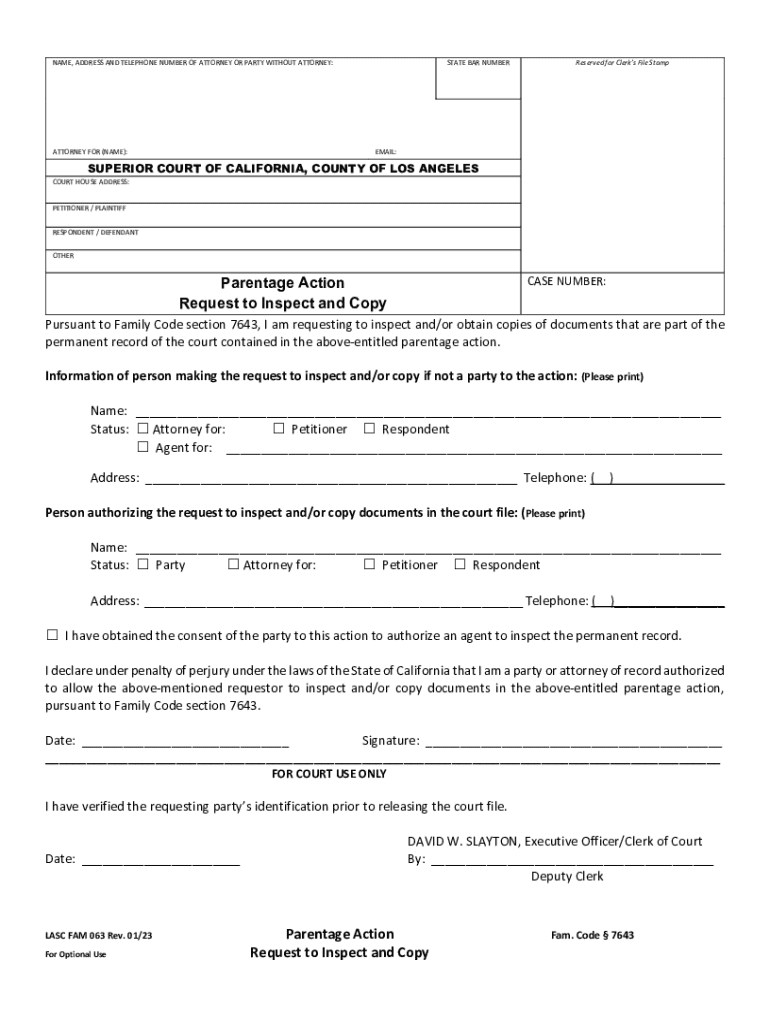







Definition and Meaning of Parentage Action
Parentage action refers to legal proceedings initiated to establish or contest the parentage of a child. This type of legal action is critical in determining a child's biological or legal parents, which can directly affect child support, custody, and inheritance rights. The process is typically conducted in a family court, and specific procedures can vary widely depending on jurisdiction.
A parentage action often involves scientific testing, such as DNA tests, to establish definitive biological relationships. Once the parentage is confirmed, courts may issue orders regarding custody, visitation, and financial support. This ensures that the child's rights and well-being are prioritized within legal boundaries.
How to Use the Parentage Action Form
Utilizing the parentage action form involves a series of detailed steps aimed at collecting and presenting necessary information to the court. First, individuals must accurately fill out sections related to personal information, including the details of the parties involved. It’s important to complete fields pertaining to the child or children whose parentage is under question.
Users must also delineate the specific parental matters they wish to address through the court. This can include requests for child support, custody, or visitation rights. Completing the form with precision and ensuring that all information is truthful is essential to prevent delays or dismissals.
How to Obtain the Parentage Action Form
Gaining access to a parentage action form can usually be achieved through a few common methods. The form is often available at the local family court’s office, where clerks can provide guidance on any immediate questions related to completion. Additionally, many jurisdictions offer downloadable versions of the form on their official court websites.
This ensures that parties have continuous access to the necessary paperwork and can begin the process without needing to physically visit the courthouse. For those unable to access the form online, requesting a mailed copy from the court office is another viable option.
Steps to Complete the Parentage Action Form
-
Gather Required Information: Ensure all necessary personal details and documentation are on hand, including full names, addresses, and dates of birth for involved parties.
-
Complete Personal Information: Fill out sections relating to the petitioner and respondent, providing accurate and current details.
-
Detail the Child's Information: Accurately list each child’s name and date of birth whose parentage is questioned in the action.
-
Specify Legal Requests: Clearly define what legal outcomes you are seeking, such as acknowledgment of paternity or orders for child support.
-
Review Legal Requirements: Check the family code sections relevant to your jurisdiction to ensure compliance with specific procedural requirements.
-
Submit the Form: Forms should be submitted to the appropriate family court either in person, by mail, or electronically if the option is available.
Before submission, reviewing your entries for any potential errors or omissions is critical.
Why Use the Parentage Action
Utilizing the parentage action is crucial for formalizing the legal parent status, which has significant implications for both parents and children. This process ensures legal clarity regarding parental responsibilities, especially in scenarios involving disputed paternity or maternity. The results directly impact the welfare of the child, securing rights to financial support and family relationships.
Initiating a parentage action is also fundamental for individuals who seek custodial rights or wish to establish parental duties. It is a formal path to securing legal recognition and court orders that dictate ongoing parental obligations, including financial contributions.
Important Terms Related to Parentage Action
Understanding the specific language used within a parentage action is vital:
- Petitioner: The individual who initiates the parentage action.
- Respondent: The individual who responds to the action brought against them.
- Custody: Legal responsibility for the care and decision-making for a child.
- Visitation Rights: Scheduled time allocated for a non-custodial parent to spend with their child.
- Child Support: Financial contributions required to support a child’s upbringing.
Recognizing these terms helps ensure proper completion of the form and comprehension of any court orders issued.
Legal Use of the Parentage Action
The legal utilization of a parentage action extends beyond mere determination of biological parentage; it directly addresses custody, visitation, and child support orders. Courts employ this action to formalize relationships between parents and children, necessitating adherence to both procedural and substantive law.
Legal professionals may assist in the preparation and presentation of a parentage action, ensuring all aspects of related family law are addressed adequately. This includes meeting statutory requirements, such as those outlined in sections like Family Code section 7643 in California.
Key Elements of the Parentage Action
Specific components are essential in any parentage action, which include:
- Filing Procedure: Initiating the action with correct and complete documentation.
- Notification Periods: Properly notifying all involved parties within set legal timelines.
- Legal Representation Consideration: Optionally engaging an attorney for guidance through the complexities of family law.
- DNA Testing Procedures: Arranging court-approved tests to establish biological relationships.
- Court Hearings: Preparing for and attending court appearances where evidence and testimonies will be evaluated.
Understanding these elements ensures comprehensive preparation and adherence to legal standards.
State-Specific Rules for Parentage Action
While overarching processes for parentage actions share similarities across the United States, state-specific statutes introduce variations. For example, California’s approach may differ notably from that in Texas or New York, particularly concerning timeframes for filing or types of permissible evidence.
It’s crucial to consult the specific family court guidelines in your state to ensure compliance with all relevant procedural rules. This may include considerations around statutory limitations or different filing requirements unique to state-level family codes.




