







Definition & Meaning
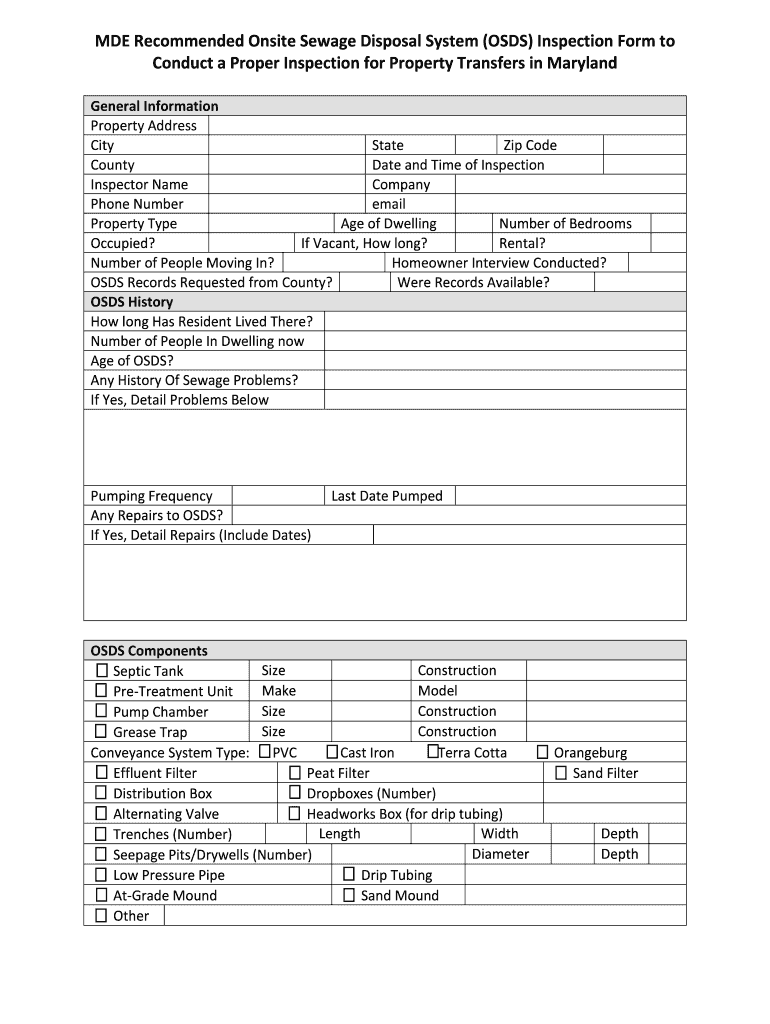
The Recommended Onsite Sewage Disposal System (OSDS) Inspection Form is a critical document used primarily during property transfers in Maryland to ensure that the sewage disposal system is functioning correctly. This form serves as a comprehensive checklist for inspectors to evaluate the condition and history of an OSDS, detailing the system's components, operational integrity, and any deficiencies. It emphasizes the collection of records from local health offices and meticulous inspections to safeguard environmental health and property value.
How to Use the Recommended OSDS Inspection Form
To effectively use the Recommended OSDS Inspection Form, inspectors should follow a structured approach:
- Gather Preliminary Data: Collect relevant information about the property and the existing sewage system, including previous inspection reports and maintenance records.
- Conduct a Visual Inspection: Begin with a thorough examination of the onsite sewage disposal system, looking for visible signs of damage or malfunction.
- Complete the Form: Document all findings meticulously on the OSDS Inspection Form, including general information, system components' status, observations, and recommendations for repairs or maintenance.
Visual Inspection Key Points
- Look for leaks or seepage around the tank area.
- Check for evidence of tank overflows or backups.
- Inspect mechanical components like pumps and alarms.
Steps to Complete the Inspection Form
Completing the Recommended OSDS Inspection Form involves the following detailed steps:
-
Identify Property Details:
- Input the property's address and ownership information.
- Record the inspection date and the inspector's credentials.
-
Examine System Components:
- Assess each element of the sewage disposal system, including tanks, pipes, and distribution boxes.
- Ensure each part is functioning and meets regulatory standards.
-
Record Observations:
- Document any operational deficiencies or potential safety hazards.
- Mark problematic areas for further investigation or maintenance.
-
Provide Recommendations:
- Suggest necessary repairs or improvements.
- Offer a projected timeline for remedial actions.
Key Elements of the OSDS Inspection Form
The OSDS Inspection Form encompasses several essential elements:
- Property Information: Details the location and ownership of the property.
- System Overview: Describes the type, capacity, and age of the sewage system.
- Inspection Checklist: Lists each component and its assessed condition.
- Comments Section: For additional notes and observations by the inspector.
Important Terms Related to OSDS
When dealing with the OSDS Inspection Form, understanding key terminologies is crucial:
- Leach Field: The area where wastewater is distributed for soil absorption.
- Effluent: The liquid waste or sewage discharged from the system.
- Distribution Box: A component that evenly distributes effluent from the septic tank to the leach field.
Legal Use of the OSDS Inspection Form
The use of the OSDS Inspection Form is legally mandated for property transactions in Maryland to ensure the environmental safety and public health standards are met. Non-compliance in completing and submitting the form can lead to legal implications, including the delay or cancellation of property sales.
State-Specific Rules in Maryland
In Maryland, the administration and requirements of the OSDS Inspection Form are governed by state regulations ensuring:
- Regulatory Compliance: Inspections must be conducted by certified professionals adhering to Maryland Department of the Environment (MDE) standards.
- Timely Submission: The form should be completed and submitted before the closing date of any property transfer involving an OSDS.
Example of Using the OSDS Inspection Form
Consider a residential property in a rural area of Maryland with an older sewage system installed. The owner, wanting to sell, must engage a licensed inspector to complete the OSDS Inspection Form as part of the sale process. The inspector evaluates the system, noting that the tank needs pumping and the leach field shows signs of saturation. Recommendations are documented on the form, facilitating necessary repairs before sale completion, thereby protecting the buyer from future liabilities.




