




01. Edit your psc 35 fillable online
Type text, add images, blackout confidential details, add comments, highlights and more.

Type text, add images, blackout confidential details, add comments, highlights and more.

Draw your signature, type it, upload its image, or use your mobile device as a signature pad.

Send psc 35 form via email, link, or fax. You can also download it, export it or print it out.
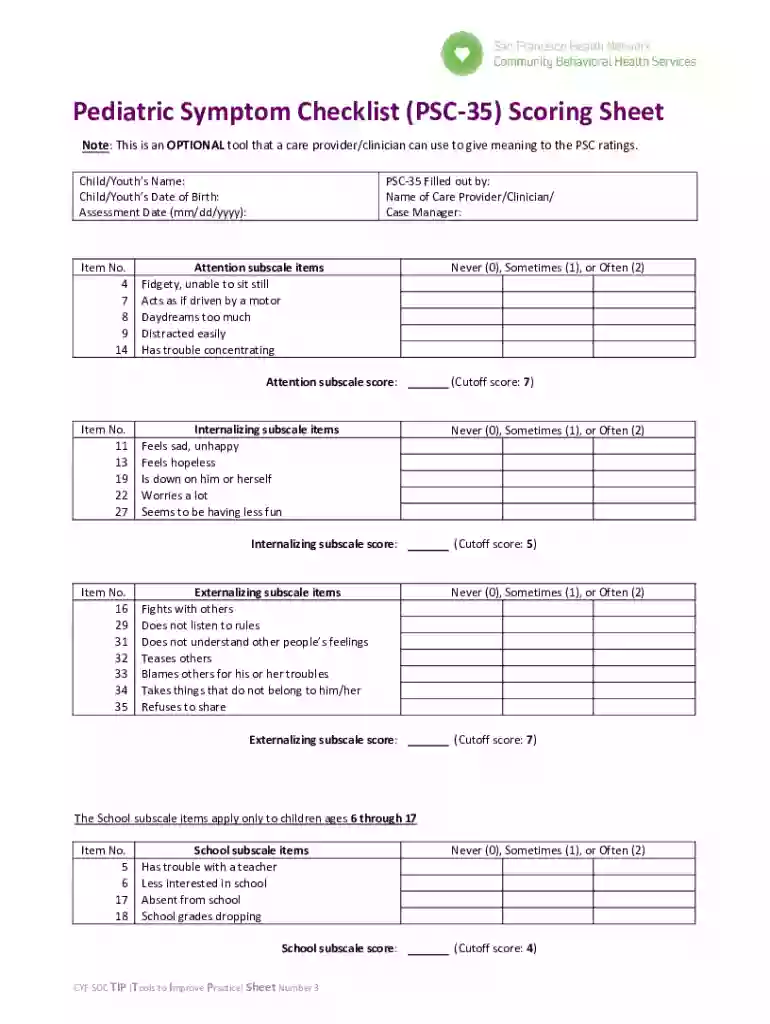
The Pediatric Symptom Checklist (PSC-35) is a psychological screening tool used to identify and evaluate behavioral and emotional functioning in children. Typically administered by clinicians in pediatric settings, the PSC-35 aims to assess various domains such as attention, internalizing and externalizing behaviors, and school-related issues. Each item on the checklist is scored on a scale of 0 to 2, providing an aggregated total score that can help identify potential psychological concerns that may require further evaluation.
The PSC-35 scoring sheet is designed to guide the scoring and interpretation process. It assists clinicians in systematically evaluating a child's responses and determining if the aggregated scores suggest potential psychological impairment. This process involves tallying individual item scores to calculate a total score, which is then compared against cutoff scores for different age groups to ascertain whether additional diagnostic assessment is necessary.
The PSC-35 scoring sheet can be acquired through professional healthcare networks or direct contact with organizations specializing in child mental health. Educational institutions and pediatric healthcare facilities often have access to these forms, allowing easy distribution to relevant practitioners.
Utilizing the PSC-35 is crucial for early detection of psychological issues that can impact a child's development and daily functioning. It offers a standardized method for screening that can lead to timely interventions, potentially mitigating long-term adverse effects on mental health and academic performance.
The PSC-35 is primarily used by clinicians, including pediatricians, child psychologists, and school counselors. It is particularly beneficial for professionals who regularly engage with children in educational or healthcare settings, as it provides a reliable method for assessing psychological well-being.
The scoring sheet includes various subscales that address distinct behavioral and emotional domains:
The use of the PSC-35 must adhere to ethical guidelines and requires informed consent from the child's guardians. It is crucial that the results are shared and discussed sensitively, ensuring confidentiality and discussing potential outcomes and next steps with parents or guardians openly.
Consider a scenario where a clinician observes a child displaying symptoms of anxiety and poor academic performance. By employing the PSC-35, they can obtain a structured assessment that highlights areas of concern, thus validating the need for targeted interventions, such as counseling or changes in the educational approach.
While the PSC-35 is a widely recognized tool, other screening instruments such as the Child Behavior Checklist (CBCL) or the Strengths and Difficulties Questionnaire (SDQ) may also be used based on specific clinical scenarios or practitioner preference. Each tool has unique features that cater to different aspects of child behavior and emotional assessment.
This comprehensive coverage outlines the key elements and practical aspects of the PSC-35 scoring sheet, emphasizing its role in facilitating early intervention and ensuring children's psychological health is monitored effectively.
We've got more versions of the psc 35 fillable form. Select the right psc 35 fillable version from the list and start editing it straight away!
At DocHub, your data security is our priority. We follow HIPAA, SOC2, GDPR, and other standards, so you can work on your documents with confidence.
Pediatric Symptom Checklist (PSC-35) Scoring Sheet Note: This is an OPTIONAL tool that a care provider/clinician can use to give meaning to the PSC ratings.
Jan 1, 2025 Patients are assigned an ASA score of 1-6 at time of surgery. Patients with an ASA score of 1-5 are eligible for. NHSN SSI surveillance.


