




01. Edit your exhibit template for court online
Type text, add images, blackout confidential details, add comments, highlights and more.

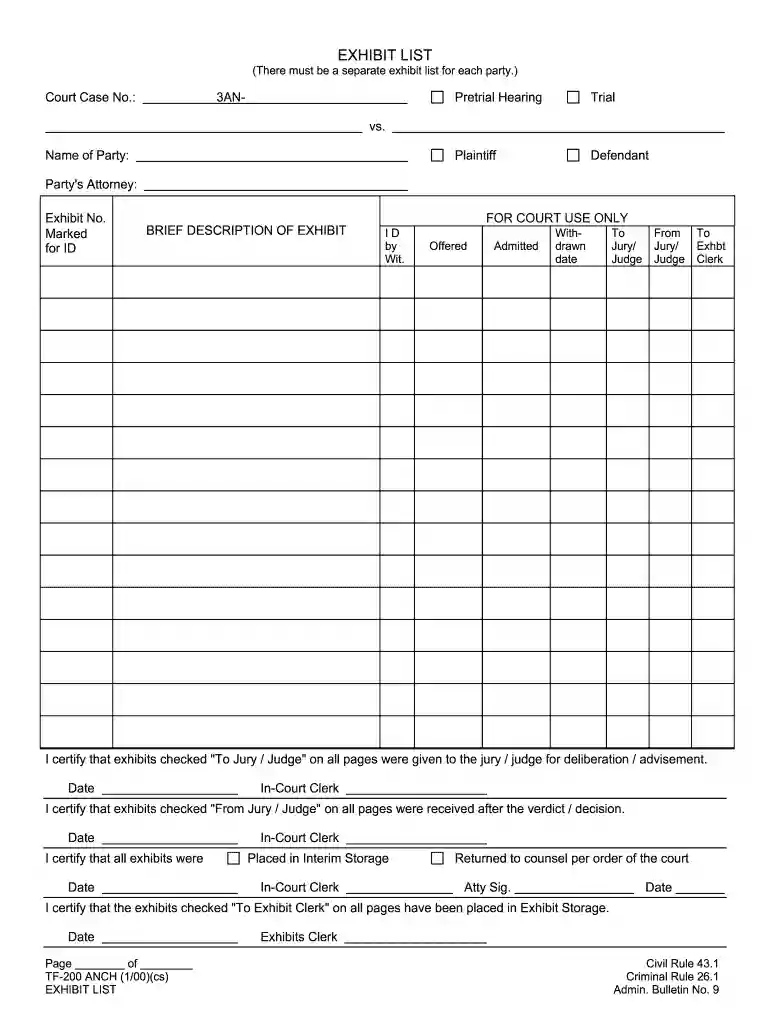
Type text, add images, blackout confidential details, add comments, highlights and more.

Draw your signature, type it, upload its image, or use your mobile device as a signature pad.

Send court exhibit template via email, link, or fax. You can also download it, export it or print it out.
Exhibit forms for court are standardized documents used to present evidence during legal proceedings. These forms play a crucial role in both civil and criminal cases, enabling attorneys to submit various types of evidence, including documents, photographs, and physical items. The forms help maintain an organized method for tracking the evidence presented by both parties, ensuring that all exhibits are properly marked and cataloged for the court's reference. Each exhibit is typically assigned a unique exhibit number or letter to facilitate easy identification throughout the trial process.
Key functions of exhibit forms for court include:
Understanding specific terminology is vital when dealing with exhibit forms for court. Common terms include:
Familiarity with these terms is essential for effectively using exhibit forms, allowing all parties involved to communicate clearly and professionally throughout the legal process.
Completing exhibit forms for court entails several methodical steps to ensure accuracy and compliance with court guidelines.
An organized approach ensures that all evidence is adequately documented, thus reducing the risk of disputes related to the admissibility of the exhibits during trial proceedings.
Exhibit forms for court serve a fundamental role in the legal process by providing a formal method of submitting evidence for review. The legal validity of these forms is enhanced by their compliance with the following considerations:
Throughout legal proceedings, understanding the requisite legal framework surrounding exhibit forms ensures that all evidence is handled correctly and competently.
Utilizing exhibit forms for court can vary significantly based on the nature of the case and the evidence presented. Here are a few illustrative examples:
Each example highlights how the exhibit forms enable clear presentation and preservation of evidence pertinent to the legal arguments being made.
It is critical to note that requirements for exhibit forms can vary by state, which lawyers must consider when preparing for trial. Here are several key distinctions:
Remaining cognizant of these state-specific rules is essential for legal compliance and successful presentation in court.
We've got more versions of the exhibit template for court form. Select the right exhibit template for court version from the list and start editing it straight away!
At DocHub, your data security is our priority. We follow HIPAA, SOC2, GDPR, and other standards, so you can work on your documents with confidence.
Promptly after execution of this Settlement Agreement by the Parties, counsel for the Parties shall present this Settlement Agreement to the Court for review.Read more
Exhibits required. Evidence consists of affidavits, transcripts of depositions, documents, and things. All evidence must be filed in the form of an exhibit.Read more
Jul 1, 1987 Exhibit and Witness List Civil Forms Court Reporter Forms Criminal Forms CJA Forms Human Resources Forms Jury Forms Other Forms.Read more


