







Definition and Meaning of the Ultrasound Worksheet Form
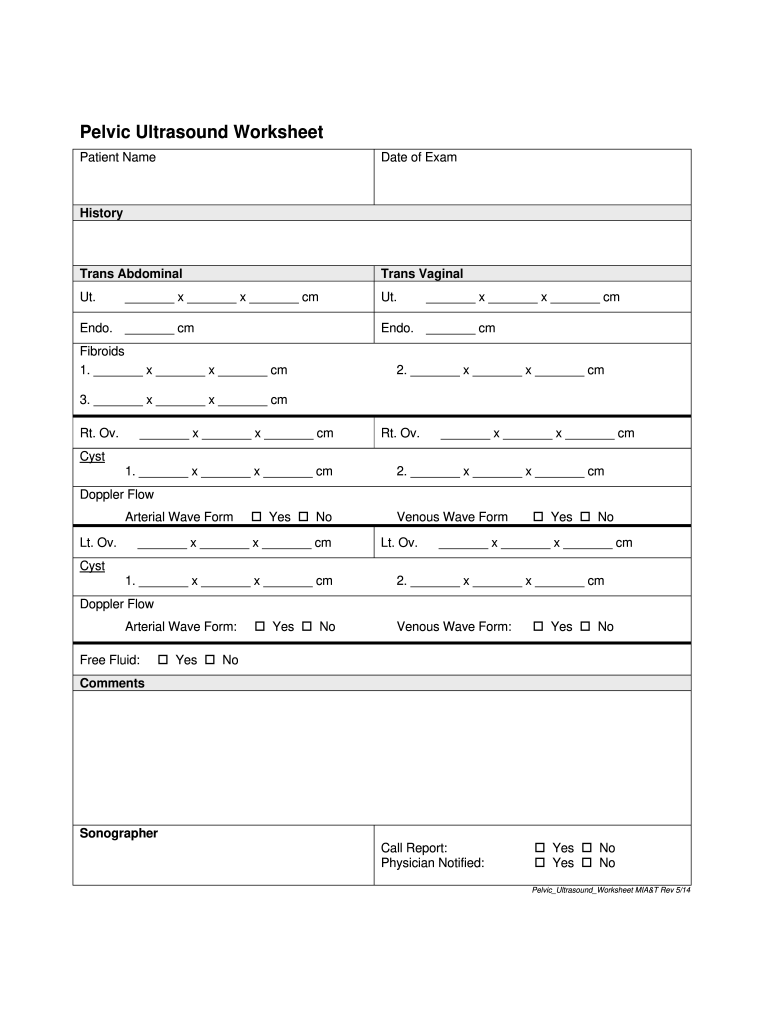
The ultrasound worksheet form is a specialized document used in the medical field, particularly in radiology and obstetrics, to record and summarize ultrasound findings. This form is primarily utilized by sonographers and healthcare practitioners to document patient information, ultrasound results, and specific measurements related to diagnostic imaging procedures. The ultrasound worksheet serves as a vital tool for effective communication between healthcare providers, helping ensure that critical data is captured systematically and accurately.
Typically, this form includes sections for recording demographic information, details about the procedure performed, and the findings related to various structures, such as the uterus, ovaries, and any abnormalities observed, like fibroids or cysts. The worksheet may include pre-defined fields for Doppler flow results, transabdominal assessments, and transvaginal assessments. By standardizing the format, the ultrasound worksheet enhances consistency in reporting and interpretation, which aids in clinical decision-making.
Key Elements of the Ultrasound Worksheet Form
Several essential components make up the ultrasound worksheet form, each significantly contributing to its overall utility. Understanding these elements is crucial for proper use.
- Demographic Information: This section captures essential patient information, including name, age, sex, and medical record number, ensuring the worksheet is linked to the correct individual.
- Procedure Details: Here, the type of ultrasound performed — whether it’s a pelvic, abdominal, or other types — is noted. This information is critical for understanding the context of the results.
- Findings: This section is dedicated to documenting observations made during the ultrasound, including measurements and potential abnormalities. It often has predefined areas to fill in data such as the size and appearance of organs.
- Sonographer Comments: Space for additional notes allows the sonographer to communicate any relevant observations or concerns that may not be covered in standard fields.
- Sign-off Section: This may include a signature area for the sonographer and the reviewing physician to validate the findings and ensure accountability.
Thorough documentation of these key elements not only supports accurate diagnostic reporting but also provides a legal record of the procedure and its outcomes.
How to Obtain the Ultrasound Worksheet Form
Obtaining the ultrasound worksheet form can be accomplished through various methods, depending on institutional resources and personal preferences. Healthcare facilities often have standardized forms they use across their departments, which can be accessed through electronic health record (EHR) systems. For those seeking to personalize or create their worksheets, there are options for free printable ultrasound worksheets available online.
To acquire the ultrasound worksheet form:
- Hospital or Clinic: Check directly with the imaging department of local hospitals or clinics, as they typically have their own versions.
- Online Resources: Various websites offer free printable ultrasound worksheets that can be downloaded and customized. Simply searching for "ultrasound worksheet templates" can yield useful results.
- Medical Supply Companies: Some medical suppliers offer printed forms for purchase, ensuring they meet industry standards.
Accessing the correct version of the ultrasound worksheet form is essential for compliance with specific medical standards and regulations.
Steps to Complete the Ultrasound Worksheet Form
Filling out the ultrasound worksheet form accurately is critical for maintaining the quality and reliability of medical records. Below are specific steps to guide practitioners through completion:
- Gather Patient Information: Start with the patient's demographic details, ensuring that the name, date of birth, and medical history are accurate.
- Indicate Ultrasound Type: Clearly state whether the ultrasound is transabdominal, transvaginal, or another type. This information helps categorize the findings appropriately.
- Document Findings: Enter measurements and observations meticulously, using clear, objective descriptions. If needed, utilize abbreviations standardized in medical documentation.
- Make Notations: Use the comments section to provide any additional relevant information regarding the examination. This may include challenges faced during the procedure or significant variations from the norm.
- Review and Sign: After completion, double-check the form for gaps or errors. Both the sonographer and the interpreting physician should sign the document to confirm authenticity.
Following these precise steps helps ensure that the ultrasound worksheet form is filled out correctly, leading to enhanced patient care.
Important Terms Related to the Ultrasound Worksheet Form
Familiarity with the terminology associated with ultrasound worksheets is essential for accurate communication within medical settings. Here are some important terms:
- Ultrasound: A diagnostic imaging technique that uses high-frequency sound waves to visualize internal organs.
- Sonographer: A certified healthcare professional trained to perform ultrasound examinations and interpret the imaging results.
- Transabdominal Ultrasound: An ultrasound procedure performed through the abdomen to visualize internal structures.
- Transvaginal Ultrasound: An ultrasound performed with a transducer inserted into the vagina, providing detailed images of pelvic organs.
- Doppler Flow Studies: A specific type of ultrasound used to measure the direction and speed of blood flow within vessels.
Understanding these terms will aid professionals in effectively utilizing the ultrasound worksheet while communicating findings. Proper usage of terminology contributes to better collaboration and patient outcomes.
Examples of Using the Ultrasound Worksheet Form
Practical examples illustrate how healthcare professionals use the ultrasound worksheet form in real-world scenarios. Here are a few illustrative cases:
- Routine Pelvic Examination: In a scenario where a patient undergoes a routine pelvic ultrasound, the sonographer records the size of the uterus, checks for cysts or fibroids, and documents the findings in the worksheet. This information is then reviewed by the gynecologist for follow-up decisions.
- Assessment of Abnormalities: When a patient presents with specific symptoms, such as pelvic pain, the ultrasound worksheet is used to detail the ultrasound findings that may indicate potential abnormalities, such as ovarian masses or, fibroid formation. Comments and observations provided by the sonographer are crucial in these instances.
- Monitoring Fertility Treatments: For patients undergoing fertility treatments, completed ultrasound worksheets are vital for tracking follicular development and uterine lining. Each ultrasound generates a worksheet that contributes to the overall treatment plan, helping physicians make informed decisions.
These examples underscore the importance of the ultrasound worksheet form in diverse clinical contexts, demonstrating its role in facilitating accurate diagnosis and patient management.




