




Definition and Meaning of the Job Hazard Analysis Form
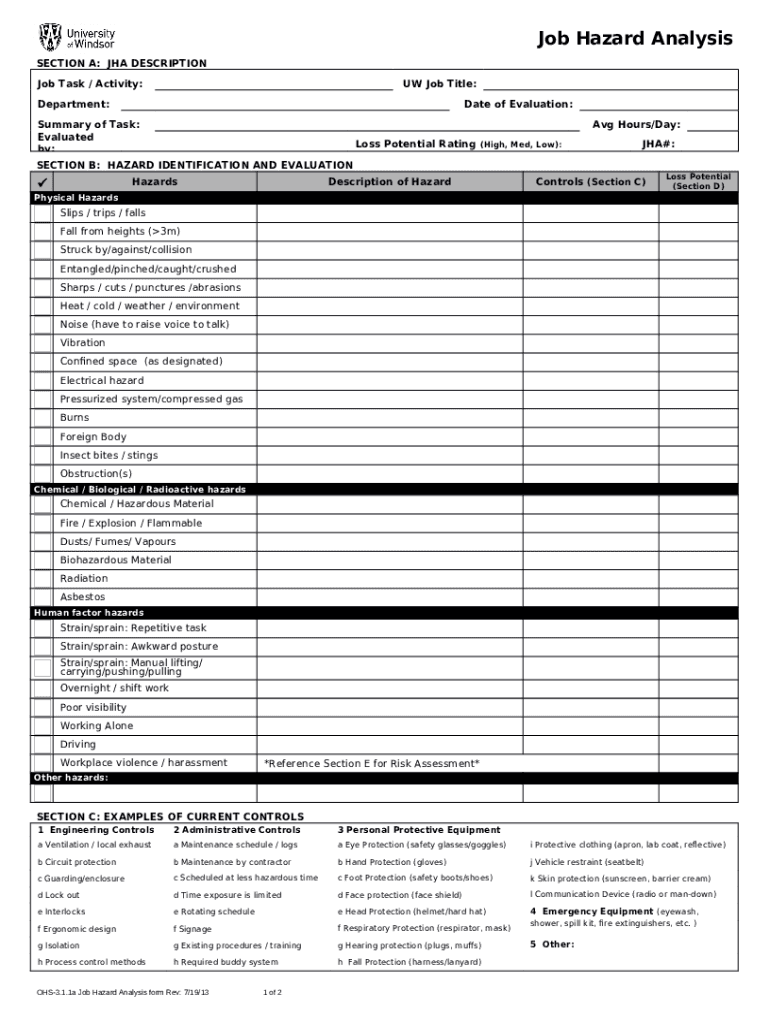
A Job Hazard Analysis (JHA) form is an essential tool employed in various industries to systematically identify, evaluate, and mitigate hazards related to specific job tasks. By outlining potential risks associated with job activities, the form helps organizations enhance safety protocols and decrease workplace incidents. The JHA form typically includes sections for detailing job descriptions, pinpointing hazards—such as physical, chemical, biological, and ergonomic risks—and documenting current control measures to reduce those hazards.
Job Hazard Analysis Components
- Job Description: A clear overview of the job tasks, outlining the specific activities involved.
- Hazard Identification: Identification of various hazard types:
- Physical Hazards: Risks from the environment, such as machinery and slips or falls.
- Chemical Hazards: Exposure to harmful substances, including toxic chemicals or hazardous materials.
- Biological Hazards: Risks posed by biological agents, such as bacteria or viruses.
- Ergonomic Hazards: Issues arising from workplace layout or repetitive motions that could cause strain or injury.
Importance of a JHA
Conducting a Job Hazard Analysis not only ensures compliance with legal safety requirements but also fosters a culture of safety within the organization. It helps in prioritizing risks, enhancing training programs, and ultimately protecting employees from injury.
Steps to Complete the Job Hazard Analysis Form
Completing a Job Hazard Analysis form involves a structured process that ensures thorough evaluation and documentation. The following steps outline the key actions needed to effectively fill out the form:
- Choose a Job Role: Identify the specific job or task to be analyzed.
- Gather a Team: Assemble a team of employees involved in the task, including supervisors and safety personnel, to provide insights into potential hazards.
- Describe the Job: Clearly record the job function, including details about the tasks performed.
- Identify Hazards: Collaborate with the team to identify potential hazards linked to each component of the job.
- Evaluate Risks: For each hazard, assess the level of risk based on severity and likelihood of occurrence, categorizing them accordingly.
- Document Control Measures: Detail existing controls in place to mitigate risks and suggest additional measures if necessary.
- Review and Revise: Ensure the JHA form is reviewed periodically to accommodate changes in job processes or legislation.
Tips for Effective Hazard Analysis
- Engage employees in the identification process to leverage their firsthand experience.
- Use clear, simple language to ensure understanding of hazards and safety measures.
- Regularly update the JHA to reflect any changes in responsibilities or equipment.
Key Elements of the Job Hazard Analysis Form
The Job Hazard Analysis form incorporates several key elements that provide a structured approach to hazard identification and mitigation. Understanding and documenting these components is vital for an effective analysis.
- Job Details Section: This area captures important information such as the job title, department, and description of tasks performed.
- Hazard Identification Section: Here, specific hazards are categorized and documented, including:
- Hazard type (physical, chemical, biological, ergonomic)
- Possible consequences of exposure
- Likelihood of occurrence
- Control Measures Section: This segment lists safety measures currently in place, such as personal protective equipment (PPE), engineering controls, or administrative policies aimed at reducing the risk of hazards.
- Training Requirements: Noting what training is needed for employees to recognize and mitigate risks associated with their tasks ensures informed compliance.
- Review Signatures: Involving management in the review and approval of the JHA promotes accountability and prioritizes safety within the organization.
Who Typically Uses the Job Hazard Analysis Form
The Job Hazard Analysis form is utilized across various sectors and job roles. Understanding specific users helps tailor the analysis to meet the needs of different industries. Typical users include:
- Safety Officers: Responsible for overseeing safety management and compliance within the organization, using the JHA to identify areas for improvement.
- Supervisors and Managers: Engage in the JHA process to ensure their teams understand risks associated with their tasks and develop appropriate training and safety measures.
- Employees: Direct involvement in hazard identification helps employees recognize risks and take ownership of their safety in the workplace.
- HR Professionals: Utilize the JHA to enhance onboarding processes and ongoing employee training regarding workplace safety.


Sectors Benefiting from JHA
- Construction: High-risk environments where physical, chemical, and ergonomic hazards are prevalent.
- Manufacturing: Various hazards arise from machinery, materials, and handling processes.
- Healthcare: Exposure to biological hazards and need for safe handling of chemicals are critical in this sector.
- Education: Ensuring safety in laboratories and during physical education classes necessitates a strong emphasis on hazard analysis.
Examples of Using the Job Hazard Analysis Form
The practical application of the Job Hazard Analysis form can vary based on job functions. Here are some illustrative scenarios showcasing how organizations implement this form:
- Construction Site: Before starting a new project, the construction manager conducts a JHA that identifies risks such as falls from heights, equipment operation hazards, and potential exposure to toxic substances. Based on the analysis, the team establishes safety measures, such as harness use and appropriate training.
- Manufacturing Facility: Employees involved in operating machinery fill out a JHA focusing on mechanical hazards, noise exposure, and chemical handling. The resulting safety measures include machine guarding, use of hearing protection, and chemical safety training.
- Laboratory Environment: Scientific teams utilize the JHA to identify biological hazards associated with handling samples. The analysis necessitates the use of PPE, biosafety cabinets, and specific protocols for managing chemical spills.
Benefits of Real-World Applications
Completing JHAs in these scenarios leads to enhanced awareness of onsite risks, improved safety culture, and reduction in the number of workplace injuries.
Legal Use of the Job Hazard Analysis Form
Legal compliance is a critical component of conducting a Job Hazard Analysis. Organizations are required by law to ensure a safe work environment, and the JHA serves as a foundational document in achieving that goal. Relevant laws and regulations include:
- Occupational Safety and Health Administration (OSHA) Standards: Employers must adhere to OSHA regulations, which include conducting JHAs to identify and control hazards linked to job activities.
- State-Specific Regulations: Depending on location, additional state laws may apply, dictating further safety requirements that must be addressed in a JHA.
- Documentation: Maintaining accurate records of each JHA conducted not only allows organizations to track compliance but can also serve as evidence in case of legal scrutiny following an injury.
Importance of Documentation
Properly documenting the JHA process ensures that organizations can demonstrate their commitment to safety and provides a reference for ongoing safety training and improvements. Through adherence to legal requirements, organizations protect their employees and minimize liability risks.