




01. Edit your printable ssa 10 form online
Type text, add images, blackout confidential details, add comments, highlights and more.

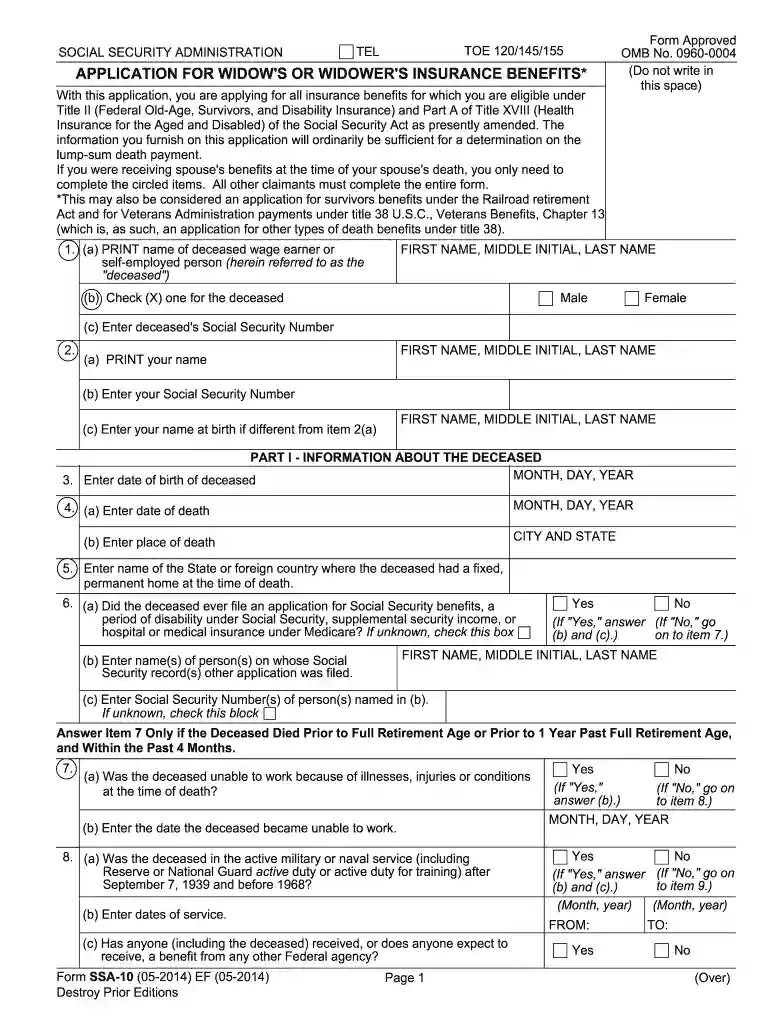
Type text, add images, blackout confidential details, add comments, highlights and more.

Draw your signature, type it, upload its image, or use your mobile device as a signature pad.

Send form ssa 10 via email, link, or fax. You can also download it, export it or print it out.
The Form SSA-10, also known as the application for widow's or widower's insurance benefits, is a crucial document for individuals seeking benefits under the Social Security Administration (SSA). This form serves to collect necessary personal information about the applicant and the deceased spouse, as well as details regarding any previous marriages. Understanding the components and requirements of the SSA-10 form is essential for a successful application.
When completing the SSA-10 form, applicants must provide a range of information that ensures the timely processing of their claims. The key elements include:
Completing this section accurately is critical, as it directly impacts the eligibility and benefit amount.
Properly filling out the SSA-10 form is essential for avoiding delays. Here are the primary steps to take:
Following these instructions is crucial to ensure a smooth application process.
The SSA-10 form can be submitted through several methods, each with specific guidelines:
Selecting the right submission method can enhance the efficiency of the application process.
Timely submission of the SSA-10 form is critical to ensuring that benefits commence without undue delay. Consider the following:
Awareness of deadlines and filing protocols is vital to ensuring continuous support.
To qualify for benefits under the SSA-10, applicants must meet specific eligibility criteria, including:
Clearly understanding the eligibility requirements can aid applicants in meeting necessary standards.


Applicants may encounter several challenges while filling out the SSA-10 form. Addressing these can prevent application delays:
Identifying potential challenges can assist applicants in effectively navigating the process.
Various resources are available for individuals needing help with the SSA-10 form:
Leveraging available resources ensures compliance and understanding throughout the application process.
This guide aims to provide a well-rounded understanding of the Form SSA-10 application process while addressing key elements such as necessary information, submission methods, and potential challenges. Each section emphasizes the importance of accuracy and timeliness, making the application process smoother for those seeking benefits.
We've got more versions of the printable ssa 10 form form. Select the right printable ssa 10 form version from the list and start editing it straight away!
Electronic signatures are a perfect replacement for traditional signing, as they save time, effort, and costs people spend on printing, scanning, and paper delivery. You can electronically sign your ssa 10 form utilizing a trustworthy and powerful online document processing tool like DocHub. It complies with main eSignature policies (ESIGN and UETA), so all forms approved there are legally binding and have the same validity as physically signed ones.
If you want to edit your ssa form 10 online swiftly, it does not matter what web browser you employ. DocHub’s straightforward editing instruments are available using any internet browser. Simply open the appropriate tab in the editor, add your file, and fill it out without stress.
At DocHub, your data security is our priority. We follow HIPAA, SOC2, GDPR, and other standards, so you can work on your documents with confidence.



§ 404.335. How do I become entitled to widow's or widower's benefits? We will find you entitled to benefits as the widow or widower of a person who died fully ...
You can apply for benefits by calling our national toll-free service at 1-800-772-1213 (TTY 1-800-325-0778) or visiting your local Social Security office.
APPLICATION FOR WIDOWS OR WIDOWERS INSURANCE BENEFITS*. (Do not write in this space). With this application, you are applying for all insurance benefits


