







Definition and Meaning
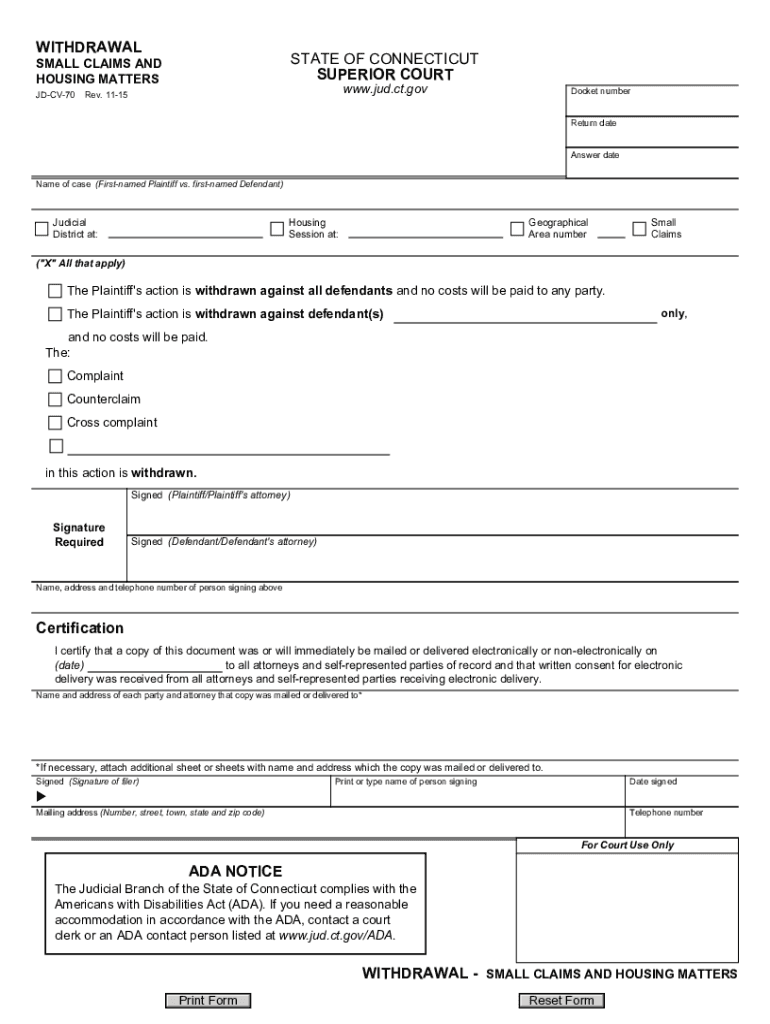
The "forms justia connecticutstatewideJustia :: Withdrawal - Small Claims And Housing Matters" refers to a legal document used in the Connecticut Superior Court system. This form allows a plaintiff to formally withdraw their legal action in cases related to small claims and housing matters without incurring additional costs. It is a crucial tool for terminating legal proceedings voluntarily.
How to Use the Form
To effectively use the Withdrawal Form, begin by filling out the necessary sections, including the case information and parties involved. The primary aim is to clearly indicate the intention to withdraw the claim. Each party involved should understand their role in the case, ensuring a smooth withdrawal process without discrepancies. Once completed, it should be signed by the plaintiff or their attorney to validate the withdrawal.
How to Obtain the Form
The Withdrawal Form can typically be obtained through the Connecticut Superior Court's official website or directly from the court's clerk office. It's important to use the current version of the form to avoid processing delays. Digital availability may vary, so it's advisable to confirm with the relevant court division.
Steps to Complete the Form
- Fill Out Plaintiff Information: Enter your full legal name and contact details.
- Complete Defendant Details: Provide accurate information regarding the defendant(s) in the case.
- Enter Case Number: Ensure the case number matches the court records for accurate processing.
- State the Reason for Withdrawal: Clearly articulate why the case is being withdrawn.
- Certification and Signatures: Sign the form and certify that copies have been delivered to all relevant parties.
- Submit the Form: Deliver it to the appropriate court for official processing and maintain a copy for your records.
Who Typically Uses the Form
The form is primarily used by plaintiffs or their legal representatives involved in small claims or housing disputes in Connecticut. It helps plaintiffs who wish to terminate proceedings either due to resolution outside of court or changes in circumstances affecting the case's viability.


Key Elements of the Form
- Plaintiff and Defendant Details: Accurate completion of personal and case-related information.
- Reason for Withdrawal: A concise explanation for withdrawing the case.
- Signatures: Authenticating the form with necessary signatures to ensure acceptance.
- Certification of Service: A section to confirm that all parties have been informed about the withdrawal.
Legal Use of the Form
The form grants the plaintiff the ability to stop legal proceedings without ongoing costs. It is essential to ensure that the form is filled out comprehensively to reflect an official withdrawal. Legal standards require that all parties involved receive notification, fulfilling court requirements for procedural fairness.
Form Submission Methods
- Online: Some courts may allow digital submission through official portals.
- Mail: Postal submission is often accepted; ensure proper address and documentation.
- In-Person: Direct delivery to the court's clerk office can confirm immediate receipt.
State-Specific Rules
This form applies strictly within the jurisdiction of Connecticut. State-specific variations may influence its use, thereby requiring users to comply with local rules and precedents. Any state updates or revisions will impact the format and legal requirements for submission.
Examples of Using the Form
- Case Settlement: A plaintiff might withdraw a case after reaching an out-of-court settlement.
- Changed Circumstances: If the defendant fulfills their obligation, removing the need for court proceedings.
- Resource Constraints: The plaintiff cannot continue the litigation due to financial or personal reasons, necessitating withdrawal.


