




01. Edit your form online
Type text, add images, blackout confidential details, add comments, highlights and more.

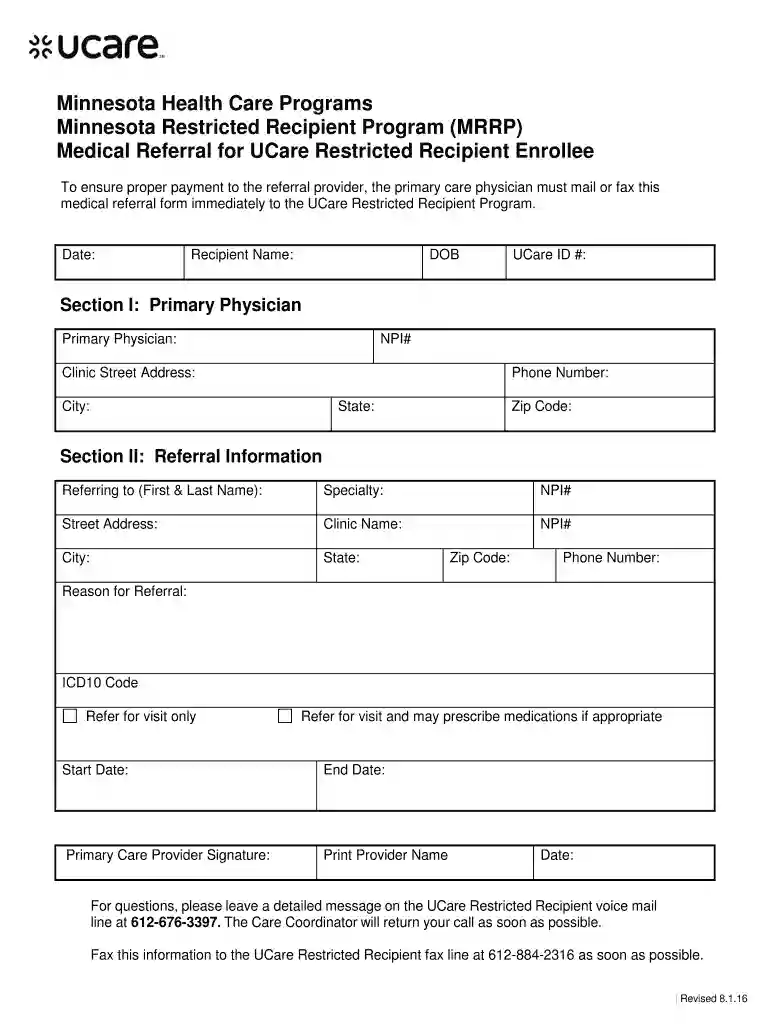
Type text, add images, blackout confidential details, add comments, highlights and more.

Draw your signature, type it, upload its image, or use your mobile device as a signature pad.

Send it via email, link, or fax. You can also download it, export it or print it out.
The "Revised 8 1 16" is a specific version of a document or form that underwent changes or updates on August 1, 2016. Understanding the exact nature of these revisions often requires comparing this version to previous ones. Such forms might be used in legal, medical, or administrative contexts where precision is crucial. For example, in a healthcare setting, this could involve procedural changes, updated guidelines, or new requirements for documentation. The term itself doesn't convey the document's purpose, demanding a contextual reading to ascertain its full meaning.
Using the "Revised 8 1 16" requires first identifying the context in which the form is applied. Users should review the sections closely, focusing on any instruction changes. For instance, if it's a medical form, specific attention should be given to changes in patient data fields or submission protocols. Users often benefit from cross-referencing with previous versions, noting significant revisions that could impact their work process or submission requirements. Ensuring accurate completion of the form may necessitate consulting guidelines issued with the revisions.
Essential elements of the form include sections detailing user information, procedural data, and any legally required declarations. New sections introduced in this revision may add clarification on processes or address legal compliance issues. Users must understand these elements to adhere closely to the form's intended use. For example, if the revised form is for a financial application, sections related to income declarations might have received updates that users need to address pointedly.
Legally, the "Revised 8 1 16" must be used in compliance with updated regulatory standards. Adhering to the revisions ensures that the document fulfills any legal requirements like authentication or timely submission. Misuse or misinterpretation of the form due to overlooking these revisions can lead to legal challenges or rejection of the submissions. It's crucial to consult legal advisors when in doubt about how revisions impact the form's legality.
In a medical context, the "Revised 8 1 16" might involve new referral processes requiring explicit consent documentation. In financial settings, it could dictate updated tax calculation methods or deductions. These examples highlight that practical use involves understanding both the content changes and their implications on everyday applications. Such practical usage examples often guide users in effectively implementing the form within their specific context.
Key terminologies typically associated with this form might include "submission deadline," "mandatory fields," "authorizations," and "revision history." Each term plays a pivotal role in understanding the form's requirements, such as deadlines for submission to avoid penalties. Authorizations might refer to permissions granted or required for processing the form, highlighting the necessity of adhering to legal statutes.
This version is likely used by professionals in settings where documentation accuracy and compliance are paramount. Common users might include healthcare providers, financial consultants, and administrative bodies responsible for processing sensitive or critical information. Understanding the typical users helps shape an informed approach to completing or issuing the form, ensuring stakeholders know the significance of changes enacted on August 1, 2016.


We've got more versions of the Revised 8 1 16 form. Select the right Revised 8 1 16 version from the list and start editing it straight away!
At DocHub, your data security is our priority. We follow HIPAA, SOC2, GDPR, and other standards, so you can work on your documents with confidence.
Jan 16, 2026 This interim final rule (IFR) amends U.S. Department of Homeland Security (DHS) regulations to remove the requirement that R-1 religious
(a) A prescription as defined by the Public Health Law means: (1) an official New York State prescription;. (2) a written prescription; or. (3) an oralRead more


